
















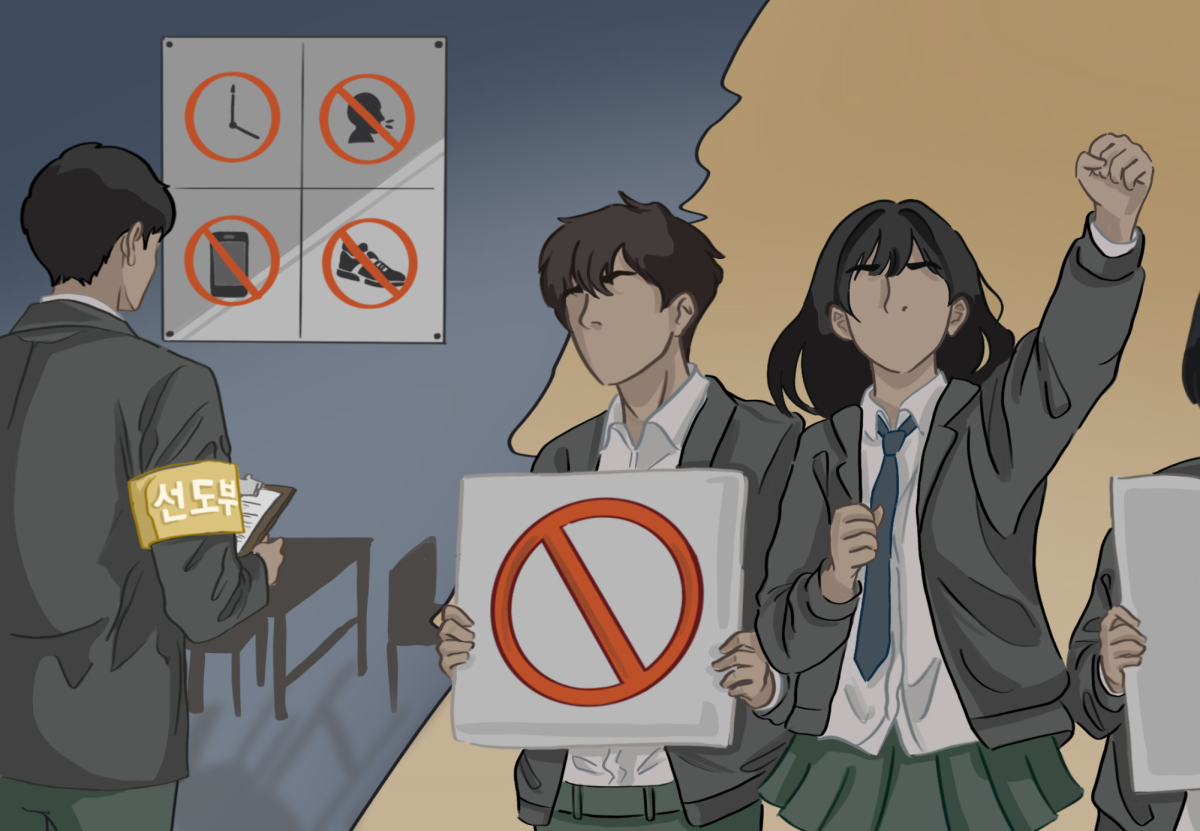




























After the 12:50 bell, students pour into the halls, down the stairs and rush toward the cafeteria lobby. The smell of the day’s menu hits before the tray line comes into view. At the helm, cafeteria staff work at the same pace they always do – as fast as anyone could reasonably expect. The problem isn’t them – it’s the 100-something students who exit their lunch clubs all at the same time and now collectively wait for a line that grows longer than it moves.
Going into semester two of the 2025-2026 school year, the DIS administration notified the lunch club leaders and advisers of the schedule. All high school groups must hold their students until 12:50 pm. High school lunch begins at 12:45 pm, giving non-club students a five-minute advantage on the line before the rest of their peers flood in.
The reminder aimed to achieve two main objectives: stagger the entry, and ensure fairness among lunch club advisers. Before the change, some advisers kept students for the full time period while others dismissed early, which created an unbalanced workload over time. “Lunch club advisers do get paid, so there’s a time commitment to that,” secondary principal Dr. Willette said. “It’s unfair for some lunch clubs to end early.”
The policy proved effective in ensuring consistency among clubs; however, its impact on congestion remains less clear. With most students enrolled in lunch clubs nearly every day, large groups now enter the cafeteria at the same time, often resulting in longer lines than first semester. “Compared to before, a lot of students come in all at once around 12:50, so sometimes it stretches all the way to the entrance,” the manager of the cafeteria Yeonjeoung Kim said.
Overcrowding cuts into the time students actually get to eat, forcing many to rush their meals. It takes about 20 minutes for the stomach’s fullness signal to reach the brain, which means that most people – who exit their clubs at 12:50 and clear the line many minutes later – are left with insufficient time to eat properly. Research also reveals that, when lunch periods get shortened, faster consumption increases the risk of overeating.
Interestingly, some days see disproportionately longer lines than others. This is due to an imbalance in the concentration of clubs over the week. On Mondays and Thursdays, roughly 14 clubs are scheduled; on Fridays, as few as six. Because some days release the entirety of high school all at once, they result in longer wait times.
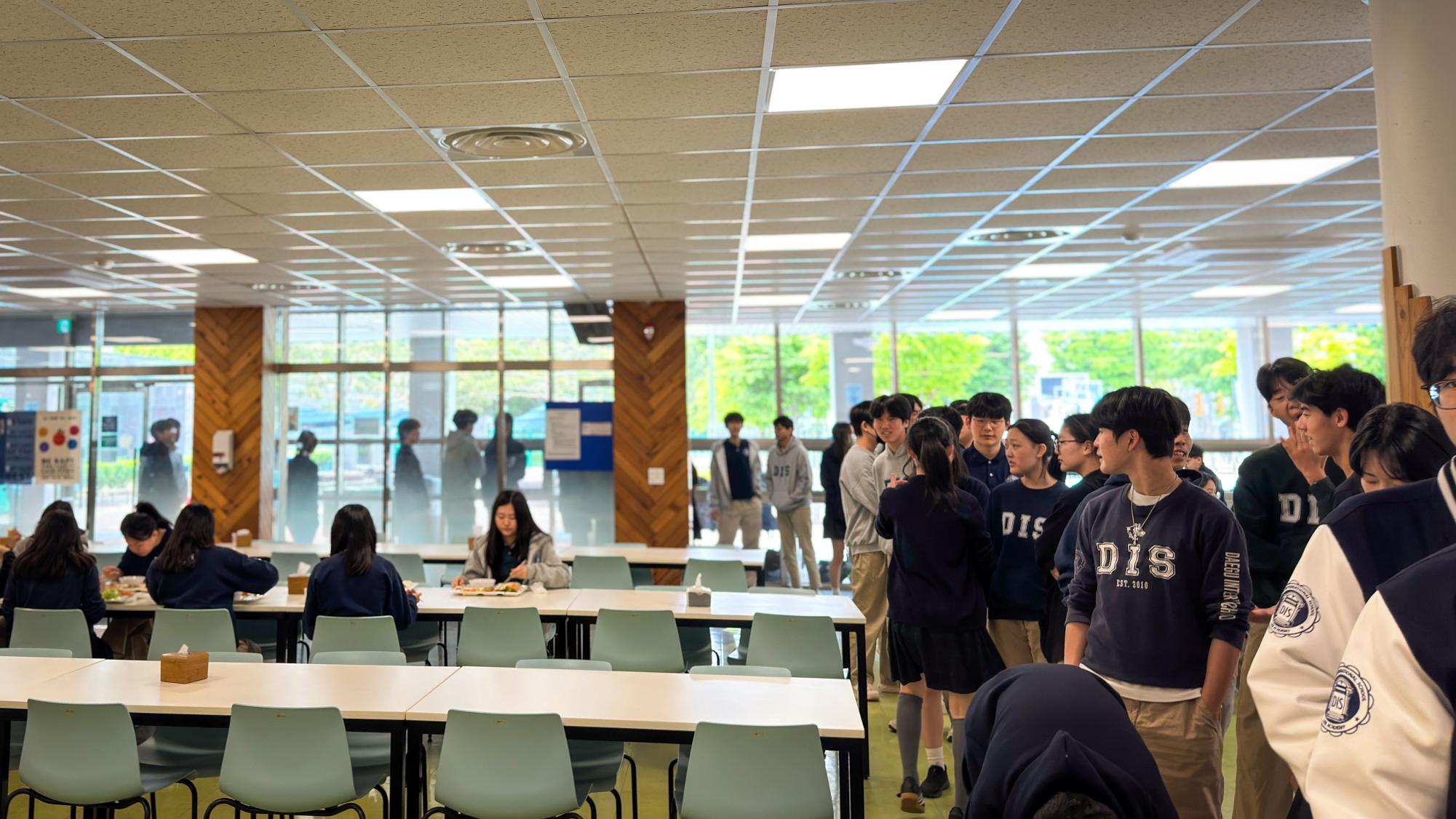
To resolve the crowding, then, the advisors, club leaders and activities director should distribute the clubs more evenly, which would relatively decrease the amount of students rushing into the cafeteria at the same time. “That would help reduce the spikes in congestion,” said Dr. Willette.
Still, student efforts stand crucial in easing the overflow. Most are enrolled in four or five clubs throughout the week, which concentrates the surge around 12:50 p.m.
However, people don’t have to maximize their number of clubs in order to get into good schools. “Throughout my high school, I had five full lunch clubs, every single day. But I ended up putting only one or two in my application,” senior Jerome Kwon said. “My friend who got into an ivy league wrote zero lunch clubs.”
As such, students shouldn’t feel obligated to fill every lunch period with clubs, especially if their involvement lacks hard work or genuine enjoyment. “It’s a choice individuals have to make. Lunch club is one of the many opportunities you get, but it doesn’t mean that you have to take that chance to succeed,” Kwon said. With a more selective approach, we can alleviate the lunch traffic without forcing students to give up the most meaningful activities.
Beyond the lunch line issue, this structure also raises questions on how effectively club times get used. In many cases, the final few minutes consist of waiting rather than proactive participation, especially when activities wrap up early. In extreme cases, clubs waste the majority of time doing fruitless activities just for the clock to reach 12:50 p.m.
What’s strange is that students now have more time, not less, yet the time still gets wasted. “Before, when kids could leave once they finished their work, they’d actually focus and get through it before heading out,” senior Amy Shim said. “Now everyone’s just waiting until 12:50. Even though we have more time, focus drops and efficiency as well,” said Shim. The fixed end time, without any expectations about pace, removed the pressure on students that kept the clubs moving in the first place.
That said, this concern stems not from the policy itself, but rather from the lack of preparation within some clubs. Club leaders and members should ensure each meeting runs productively until dismissal, through well-planned activities, planning, or reflections. “If a club isn’t using its time meaningfully, then we have to question its purpose,” Dr. Willette said.
At a broader level, however, the policy’s impact becomes more apparent. A semester into its implementation, all advisers are now held to the same standard, but at the cost of increased congestion on certain days. Given the limits of the school schedule, the most effective solution to alleviate the issue is the even distribution of clubs and more balanced student participation in lunch clubs. “It’s not a problem to fix – it’s a problem to be managed,” said Dr. Willette.