














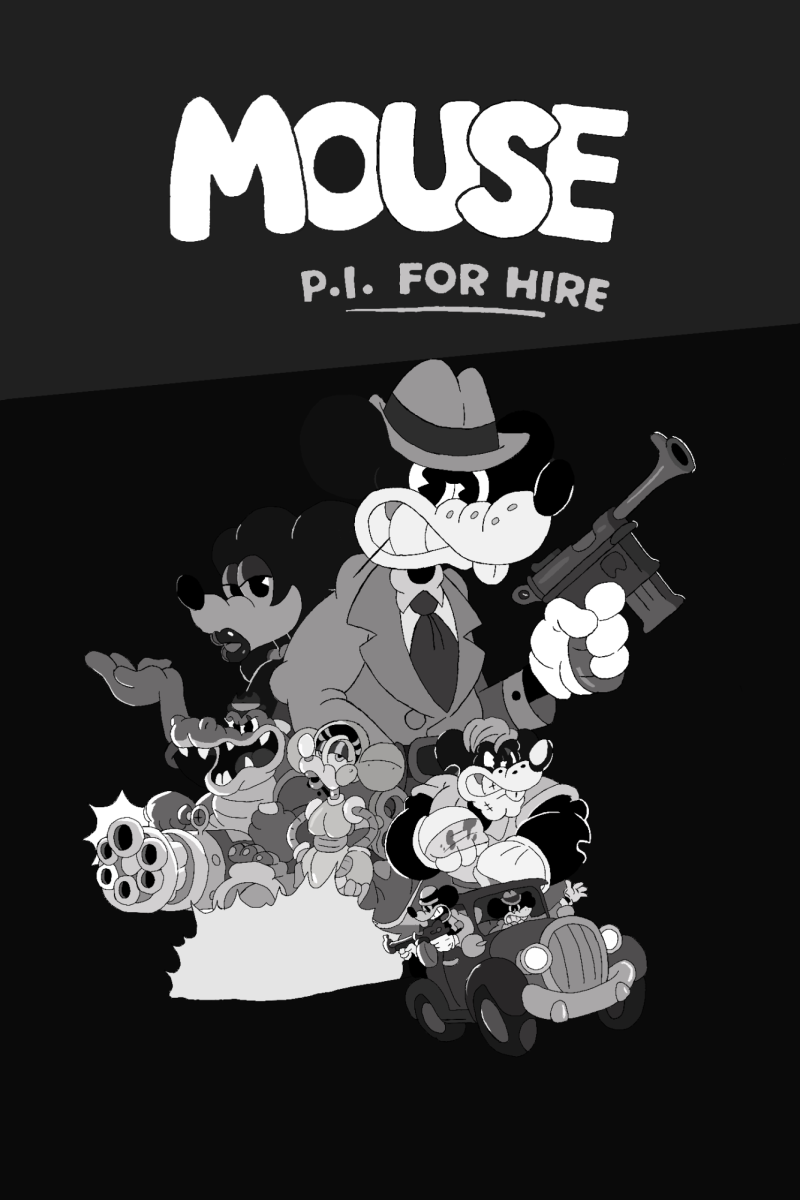
























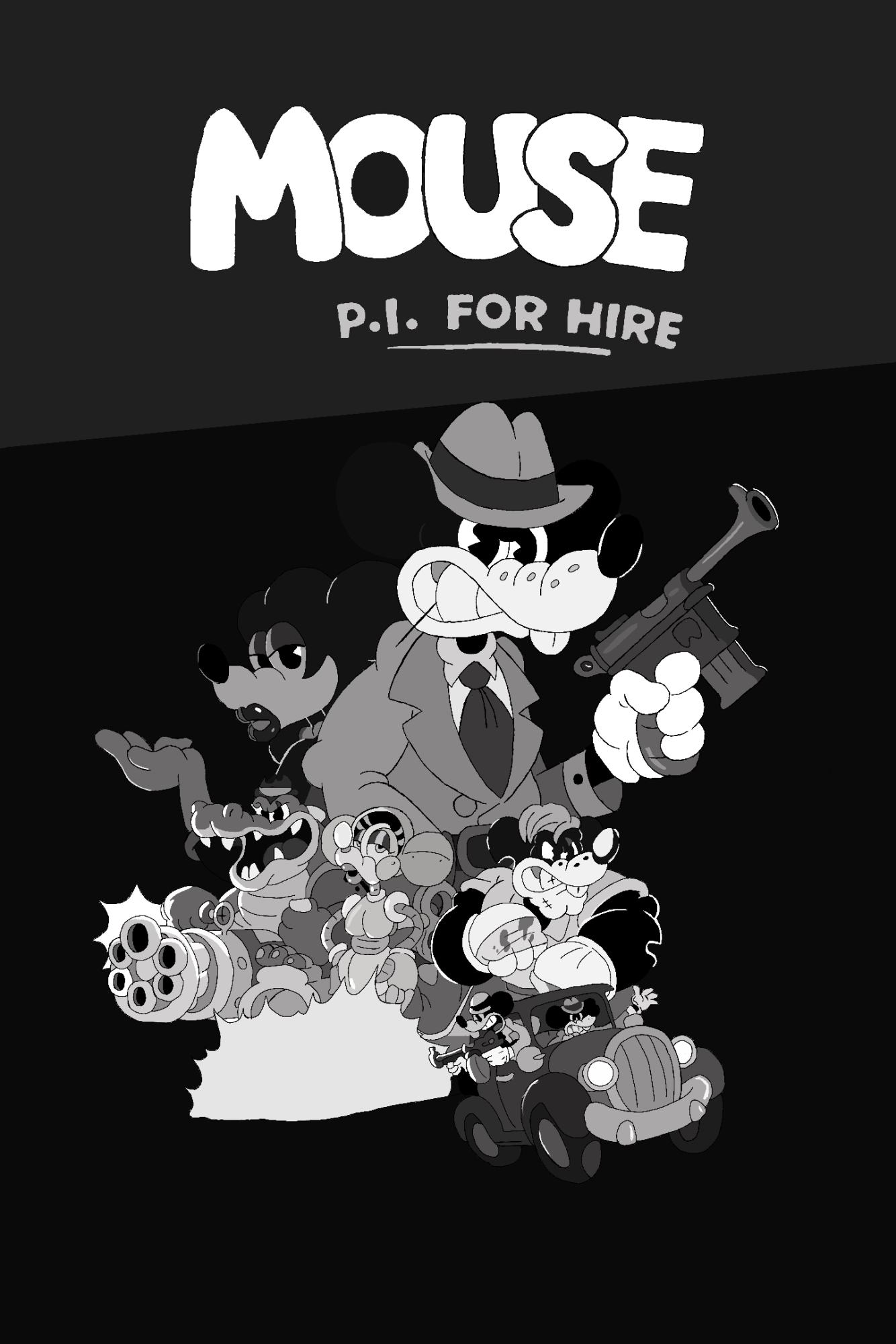
Mouse: P.I. For Hire (stylized MOUSE: P.I. For Hire) is one of those rare games that commits so fully to its vision that you feel it within minutes of starting. Set in a gritty, black-and-white world inspired by 1930s rubber-hose animation, it blends hardboiled detective storytelling with fast-paced first-person shooter gameplay and somehow makes that unusual combination feel natural and good to play around in.
The narrative follows Jack Pepper, a down-on-his-luck private investigator on the case of a missing magician which quickly unravels into a conspiracy set in the city of Mouseburg. The setting is rich with ideas: political corruption, social tension between rodents, and a layered mystery involving multiple factions vying for power.
The game leans into classic noir themes like corruption, desperation, moral gray areas, and even on some deep-seated topics like discrimination and life for veterans during the interwar period, while maintaining a distinctive personality through its stylized presentation and sharp dialogue. While the story follows familiar noir beats, it’s delivered with enough sincerity and charm to remain engaging throughout.
But the selling point of this game doesn’t rely much on the story beats, but rather the combat. The combat system is well-designed and surprisingly deep. You’re highly mobile, able to dash, double jump, wall-run, glide, and grapple using his tail. Movement is essential, as enemies attack from all directions and standing still is rarely an option. You get fast, kinetic flow that feels satisfying in short bursts of mowing down enemies.
The arsenal reinforces the idea of “no-way-out-but-through,” weapons like the Boomstick, Tommy gun variants, and the can of Popeye’s spinach, packs a punch, fitting seamlessly within the game’s cartoon logic. Environmental interactions add further variety, letting players kick enemies into hazards or manipulate the environment for creative kills.
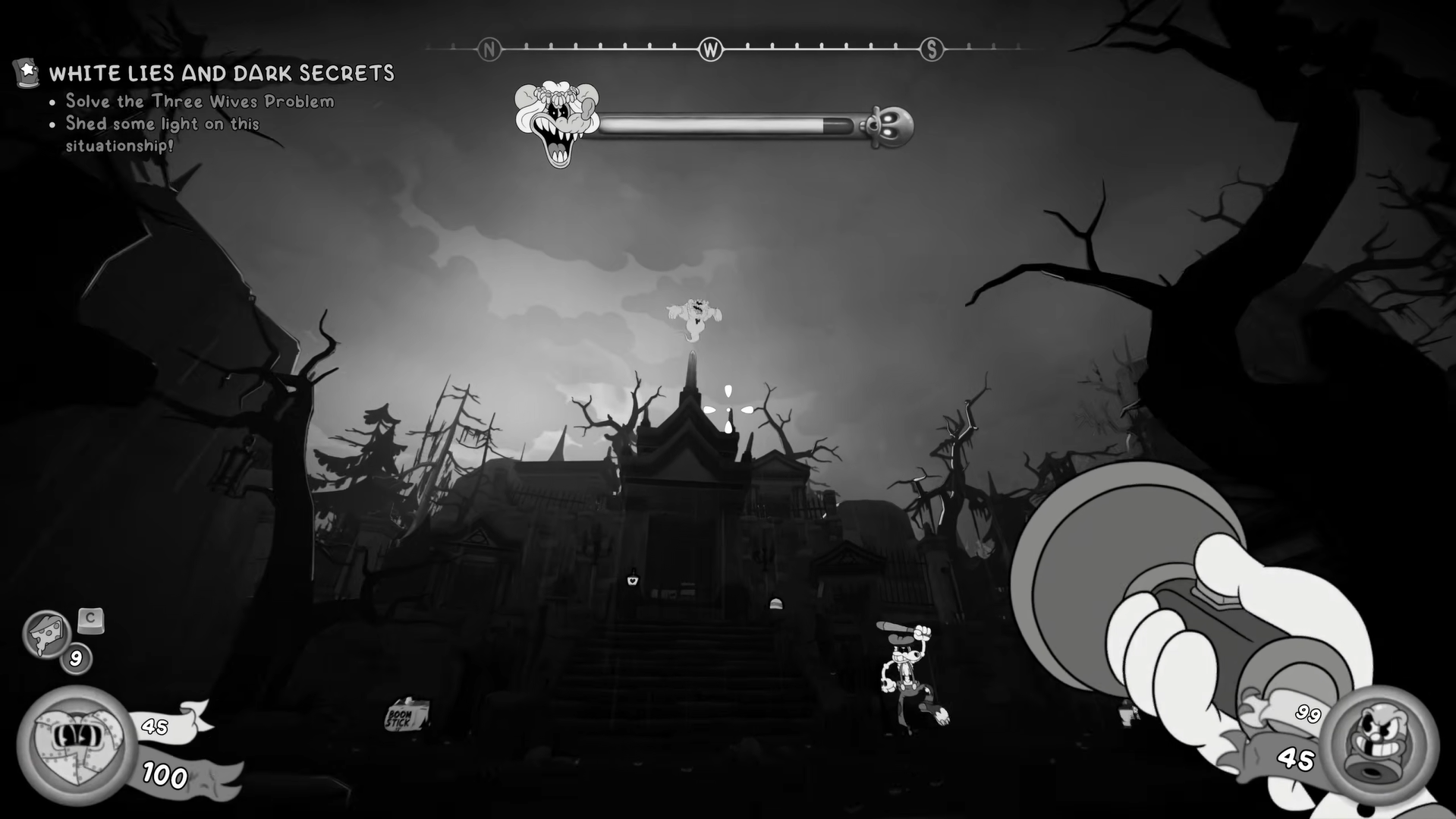
Level design supports exploration through hidden secrets, obstacles and creative layouts, and collectible “Schematics”, which allow for unlocking weapon upgrades and expanded combat options while other secrets . Progression systems gradually introduce new abilities, which helps maintain engagement across the campaign.
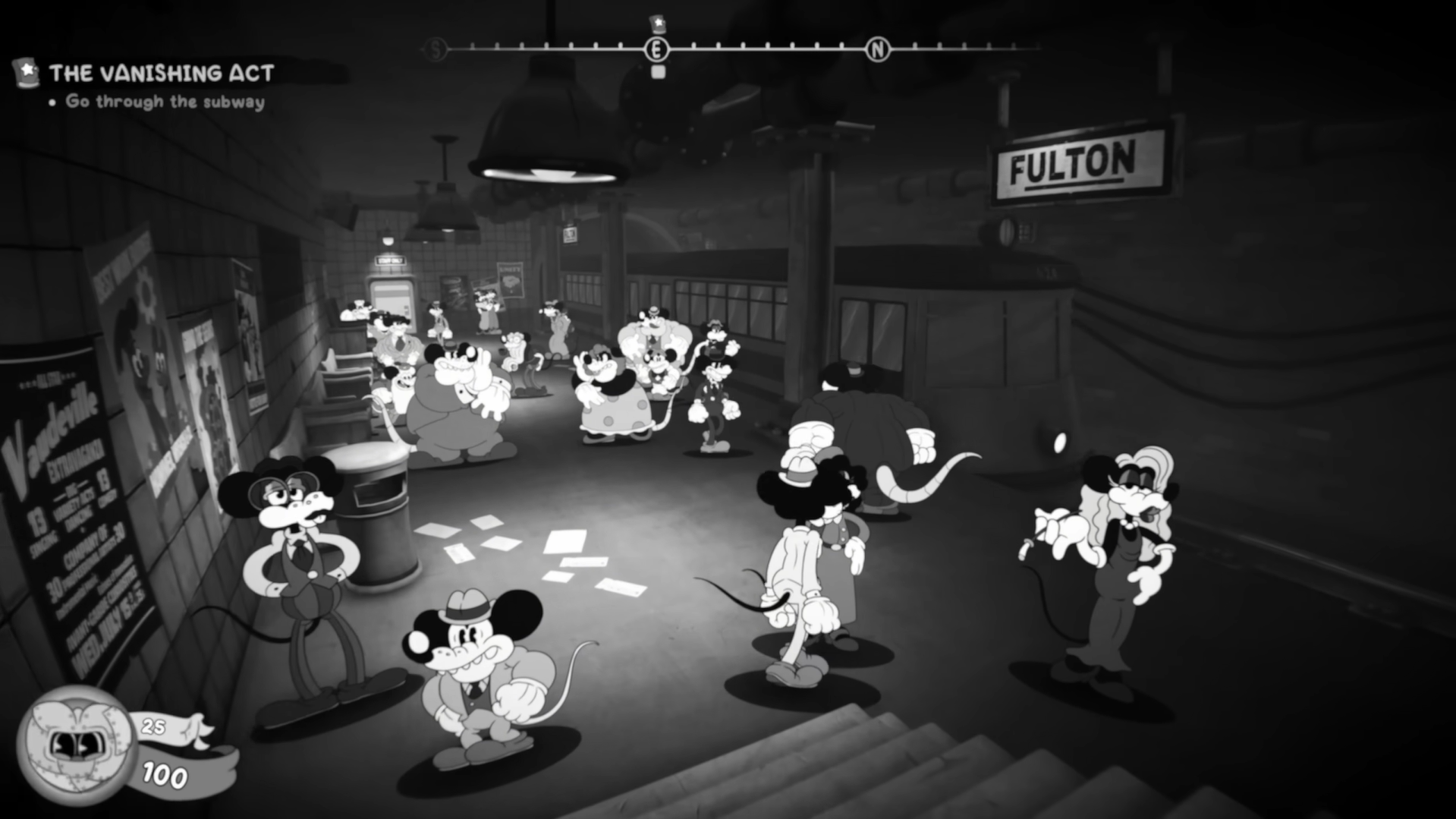
Where the game does shine is in its presentation. Its heavily stylized aesthetic, reminiscent of Cuphead, draws from old Walt Disney-esque cartoons, complete with exaggerated, bouncy motion. Combined with Doom-like 2D enemies and weapon models, the visual identity is distinct and memorable. Pairing that with a strong voice cast, a solid original soundtrack, and detailed environments all contribute to an atmosphere that feels lively and distinct. The hub area in Mouseburg, complete with explorable locations, NPC interactions, and side activities, adds a welcome layer of immersion between missions.
Between missions, players return to a hub area in Mouseburg that offers side activities, character interactions and investigation elements. This home-and-away structure of the hub adds immersion and things to do outside of missions while giving players space to process clues and upgrades.
Combat encounters also follow a repetitive structure, often placing players in arena-style fights against waves of enemies. While new abilities and weapons help maintain interest, the redundancy reduces momentum and fun over time.
But it’s not all sunshines and rainbows. You can’t replay levels once you beat them, mostly due to the focus on the “one-and-done” narrative-driven campaign. If you miss a side quest, a secret, or an essential piece of equipment needed to upgrade your weapon, it’s now unobtainable. You’ll have to reload your save if you want another chance.
MOUSE: P.I. For Hire is a great game, especially if you value originality in style over perfection in design. Although not the most mechanically innovative shooter or the most complex noir story ever, MOUSE is one of the most fun and creative in recent years.
Players seeking something different from mainstream FPS titles should give it a shot. In a gaming landscape often dominated by safe formulaic ludo, MOUSE proves that creative risktaking still matters.







Dylan • May 21, 2026 at 7:26 pm
I wanna try this game but I don’t have time :/