


























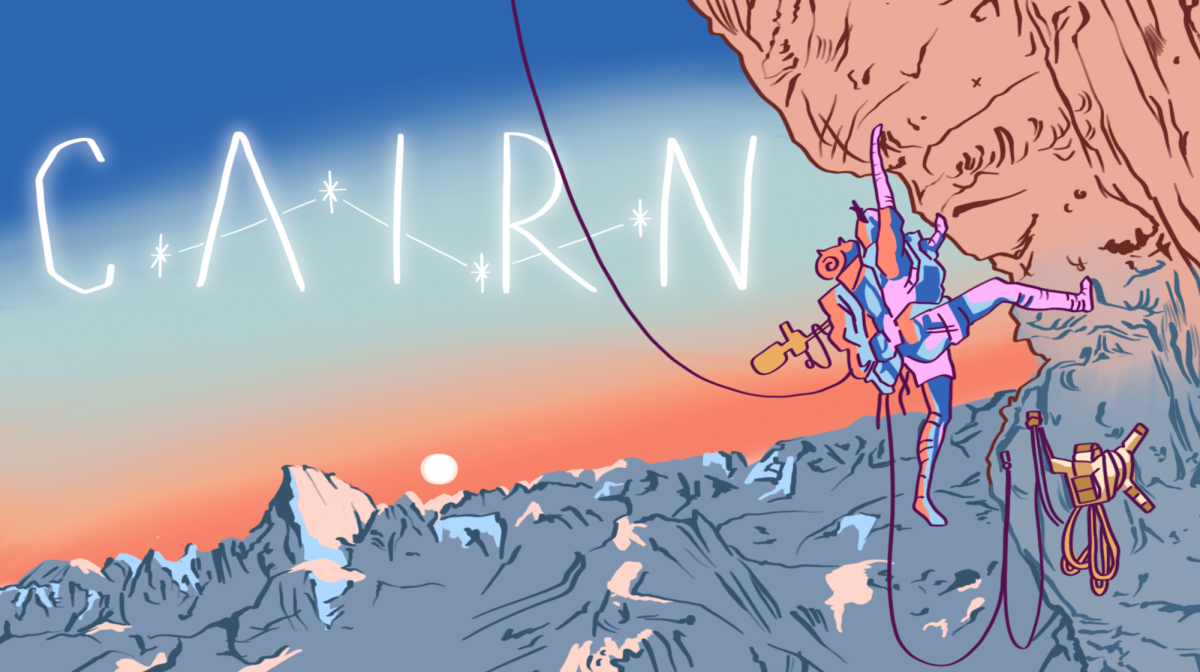
Cairn is a very polarizing game, to say the least. It flirts with nigh-Foddian punishment: one slip, one bad angle, and Aava ragdolls into the void. Yet the weird part is that the same brutality creates its most beautiful moments – moments of genuine reflection and awe. Thus raises the question: does its brutal difficulty truly capture the euphoria of obsession, or simply punishes players for the sake of challenge?
An indie adventure climbing game created by The Game Bakers in collaboration with comic artist Mathieu Bablet, Cairn delivers one of the most in-demand experiences in recent gaming. After a widely praised demo cycle in 2024, the full release landed January 29, 2026 to critical acclaim. You play as Aava, a pro climber attempting the first solo ascent of Mount Kami, a fictional peak deemed by most others as unclimbable.
The game’s core idea comes across as simple: Just climb up. Of course, that’s not the whole picture. Rather than pressing the up-button while facing a wall like most other games. Cairn has deceptively simple controls, reminiscent of the game Baby Steps, click to change limbs and WASD to move them around. After the tutorial, the mountain opens before you, and one thought hits immediately: I did not sign up for this.
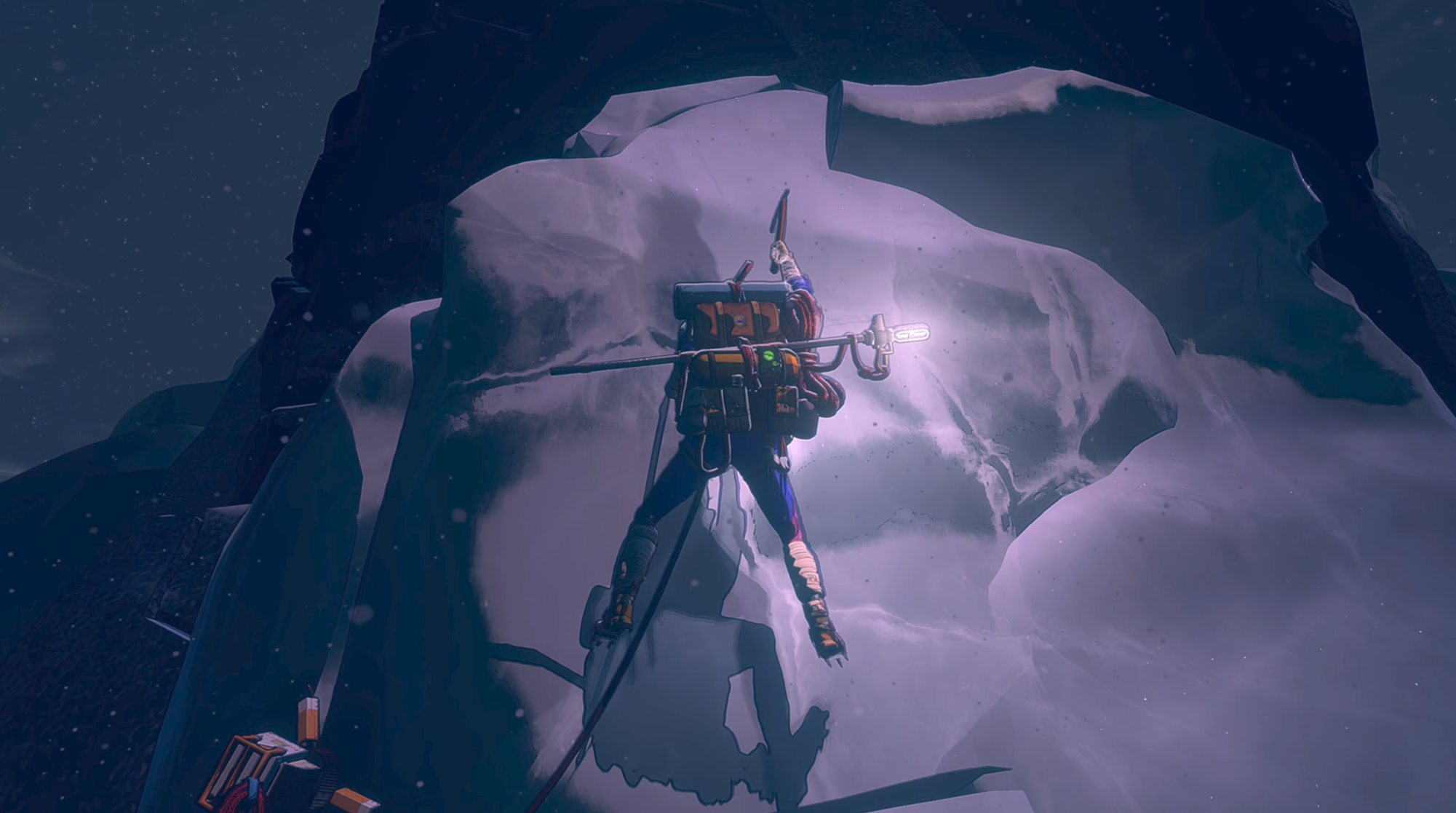
The actual game acts as a metaphorical Rubix cube, a physical puzzle of sorts. Players must search for stable grips in the ridges and jugs on the mountain face and distribute Aava’s body weight across walls and overhangs to balance and prevent slips. Sometimes, even a small miscalculation can send Aava tumbling down the mountain.
Items and tools exist in this game, allowing players to have an advantage while climbing or give the last push you need to grip onto the ledge and onto safety. Critical items like chalk and pitons are paramount to survival, while mechanics like hunger, thirst, and fatigue destroy Aava’s stamina when not maintained, especially during long ascents. Often, one must set up a bivouac during flat section to manage sleeping, cooking, finger taping, piton repair and overall take a break from the action.
Where other climbing games reward speed and efficiency, Cairn prizes hesitation, scanning, planning, and the power of sweating when you realize there might be no way out. In fact, there is zero handholding – it’s extremely clear from the start. You must eat and drink your food and supplies, reapply chalk each chance you get and jam that piton into the wall because you will fall later on. Falling means losing perhaps hours of progress, so prioritize saving often.
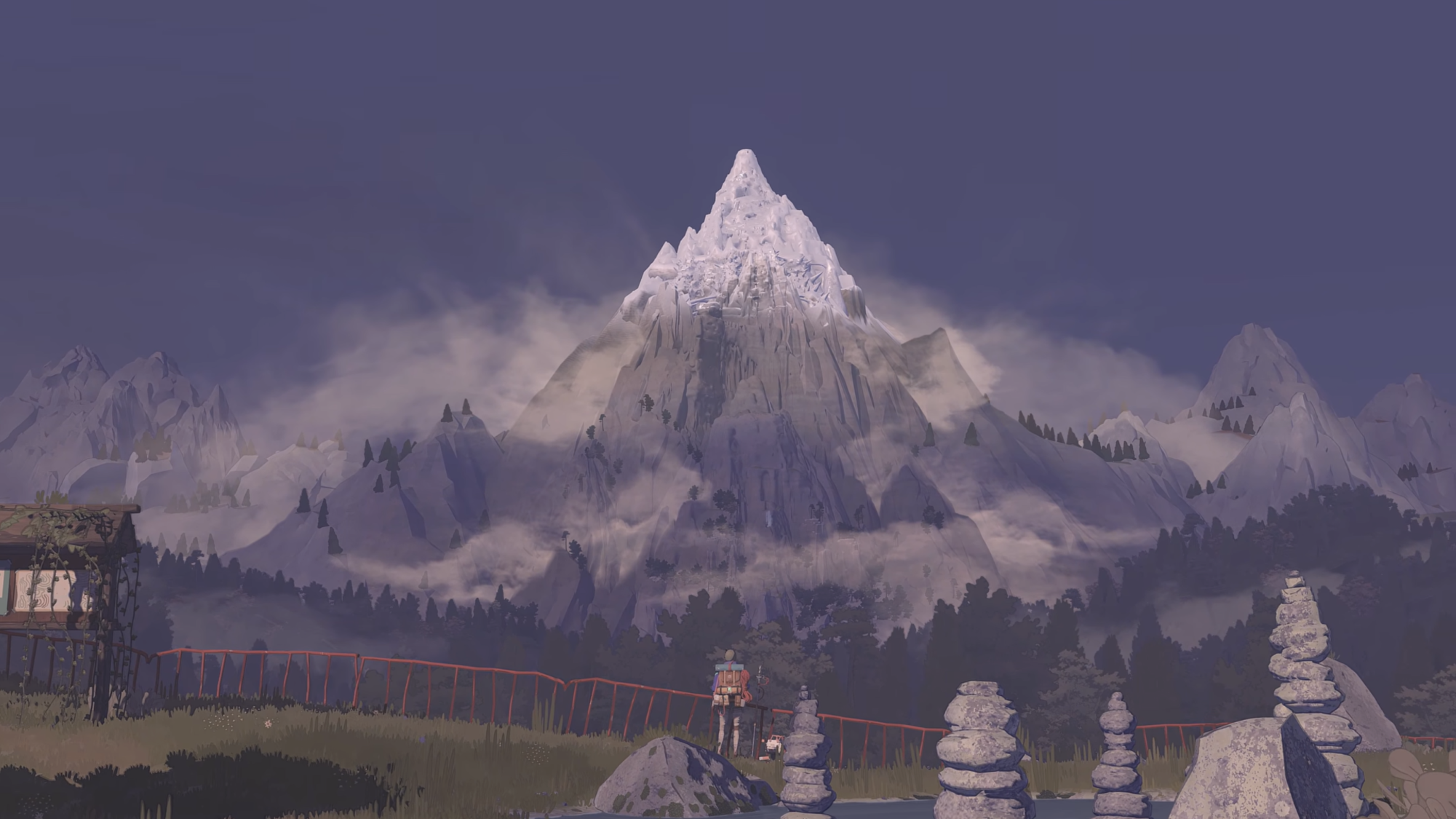
Moving on to the artistry, it’s nothing short of a chef-d’œuvre. Mathieu Bablet, an award-winning creator himself, was the artistic head behind Cairn. The stylized and saturated graphics sell the zen aspect of the game hard while still retaining a grounded tone and a sense of reality over fiction. It’s a dangerous yet serene climb, and the visual style reinforces that meditative feeling while still preserving and instilling the fear of falling.
The soundtrack reinforces the game’s sense of isolation. By that I mean there’s practically nothing there. The score surfaces during moments of tension rather than constant background noise. Silence dominates much of the climb, which pushes environmental audio into the foreground. These sparse moments with no music feels underused and boring, leaving only noises of gravel and wind to keep you company.
The story centers on obsession rather than heroism or the usual glory tied to reaching a summit. Aava scales Mount Kami with a determination that often borders on selfishness. Messages from her girlfriend Naomi and sponsor Chris arrive throughout the ascent. Both express concern while still encouraging her in their own ways. Aava rarely replies. She listens in silence, then continues the climb.
Aava also comes across as shrewd and recalcitrant. She acts rude to other NPCs when they appear, use socially awkward language, and seem singularly focused on reaching the summit. As the mountain grows steeper and the air thinner, the question shifts from whether she will reach the top to why she insists on trying.
Environmental storytelling carries much of the burden of revealing Mount Kami’s hidden history. Abandoned camps, cave dwellings, and the occasional cadaver of previous climbers scattered across the mountain, sometimes with gear you can still loot. Wildlife encounters also appear from time to time, especially bears. Near the summit, these discoveries start to feel almost hallucinatory, blurring the line between reality and imagination.
There are moments where the game’s own systems undermine the precision it demands. occasional camera stickiness, and a sudden shift in perspective can send Aava slipping off a hold in ways that feel unfair. The physics system also misfires at times. Aava’s legs jitter against the rock, or collision detection fails as she falls into empty space.
When the entire experience relies on careful, deliberate movement, even small technical issues stand out. Instead of reinforcing tension, those glitches amplify frustration. Frame-rate drops and physics jank create similar problems. During difficult climbs, performance hiccups stretch sections longer than intended and break the suspense the game tried so hard to cultivate.
It grows repetitive, annoying, and frustrating. Yet that struggle feeds the hunger to keep climbing. The urge to reach the next checkpoint or test a new strategy slowly settles into your mind. Ultimately, it’s not for everybody by a long shot. Players who want a casual climbing experience with friends should try PEAK. Those chasing non-stop adrenaline pumps while sprinting up walls may prefer White Knuckle instead. If you don’t have patience, an eye for detail or the joy of winning a war of attrition, Cairn is not for you.
Cairn gets a 4 out of 5 stars. It tells the story of a climber who is lost to their obsession. Someone who can never be healed. Building its entire structure around realistic climbing mechanics, the game creates moments of intense tension and genuine accomplishment but conversely creates frustration and hatred due to its unforgiving nature. But if drawn to these specific things, you might find something special here. For that audience, Cairn stands among the more distinctive indie releases of 2026.





the small tree in the background • Mar 19, 2026 at 7:29 pm
This looks like an incredibly fun game. What surprises me is that it is an Indie game. I have not seen many indie games that are as visually pleasing as this one. I do know it is difficult for indie games to have the right supplies to create games, this one is beautiful and sounds fun.
. • Mar 19, 2026 at 7:23 pm
is it me or does the cover page have a similar composition to botw photos lol