




























They harness Bobby to a bed and send him down a slope alone. Sixty seconds later he claws back up on all fours, fleeing something the camera never shows. The rope goes taut mid-crawl. His fingers tear through the carpet pile and then he is simply gone – the bed dragged after him, Clark and Kat sliding helplessly to the bottom of the slope, where Bobby’s body is already being pulled around a corner, which leaves only bloody streak across the carpet .
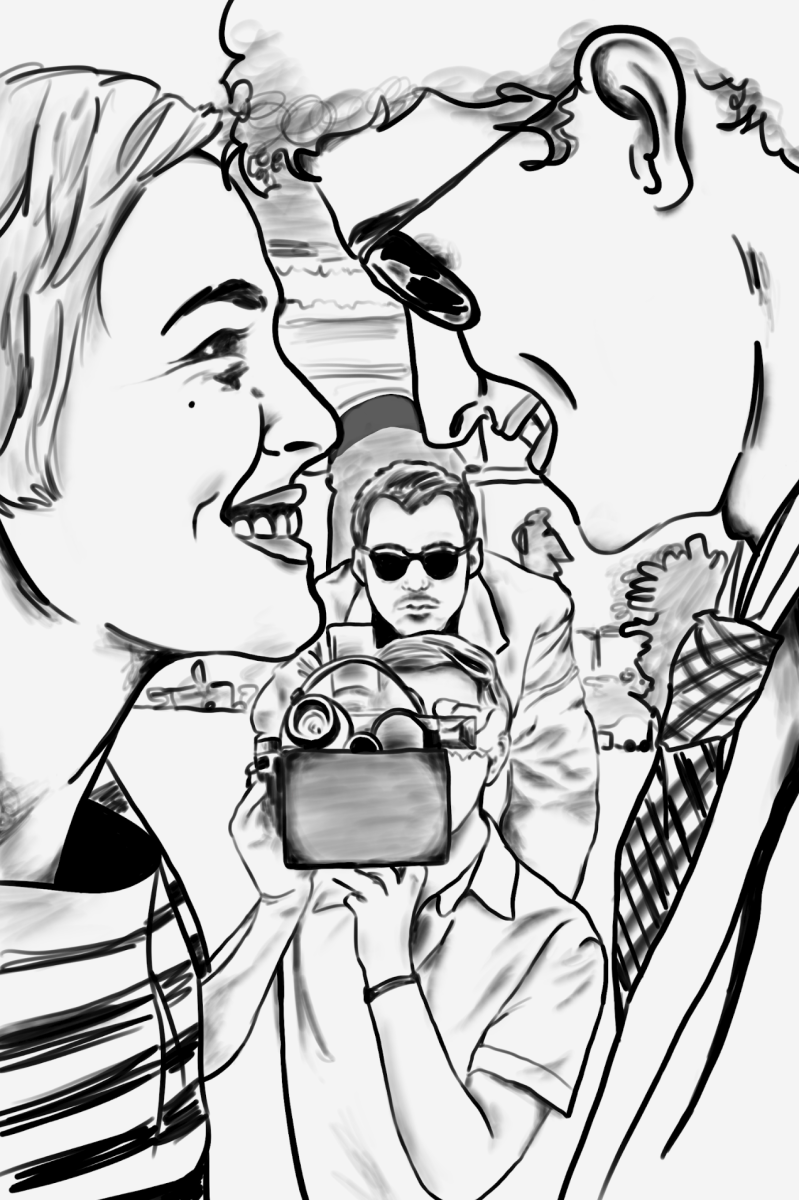
Clark (Chiwetel Ejiofor) sleeps in his showroom since his wife Barbara took the house. Early in the film, he shoots a commercial for the store, dressed as a ship’s captain — tricorn hat, peg leg, full regalia of mercantile authority. “Ahoy! Welcome to the Ottoman Empire.” Film student Bobby (Finn Bennett) operates the camera, while Clark delivers the lines with the face of a man who believes this his escape plan.
The film belongs to its director, though. Parsons, who goes by Kane Pixels online, was sixteen when he taught himself Blender and began the Creepypasta-turned YouTube series that would define a particular strain of horror: liminality. Now twenty, he has become one of the youngest directors to helm a major studio feature — an achievement that A24, never one to undersell a story, has not been shy about publicizing.
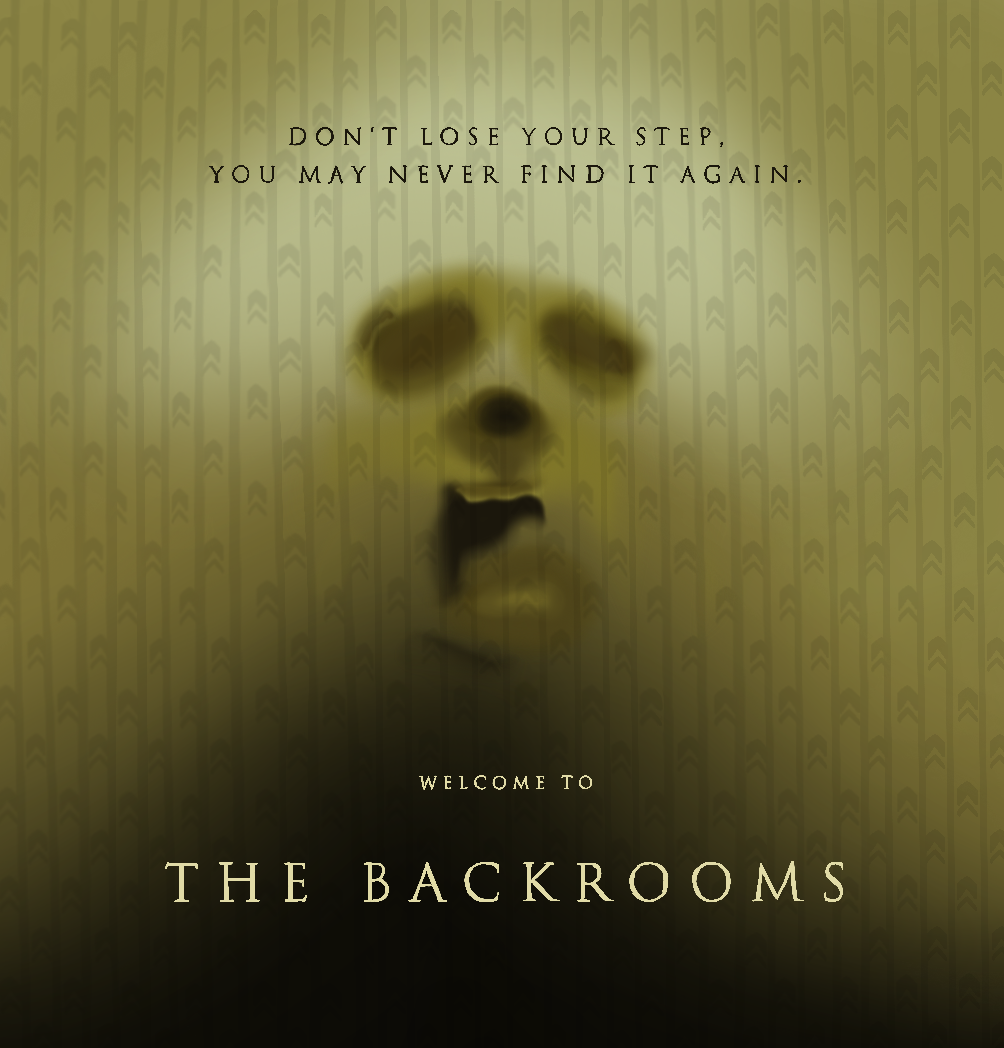
His Backrooms series, twenty-two found-footage shorts run through an actual VCR for grain and age, established the lore of the franchise: ASYNC, a fictional research institute that opens a portal into the backrooms in the late twentieth century, intending to use the infinite liminal space as a storage solution. The experiment goes very wrong.
The six-week feature, shot in Vancouver around two Oscar nominees, makes no attempt to orient newcomers to the Backrooms mythology. It drops Clark into the middle of everything — the mono-yellow corridors, the unpleasant hum of fluorescent lights, stop signs placed without reason, CCTV cameras that ASYNC monitors from somewhere outside — and simply watches what the labyrinth does with him.
Jeremy Cox, the director of photography, depicts the rooms with a peaceful chaos: long compositions where bare walls feel drained of emotion, and then, without warning, fluid and chasing. Threading through Edo Van Breemen’s score runs music by The Caretaker — the project of British artist Leyland Kirby, who degrades old ballroom recordings layer by layer until almost nothing survives. Their most sustained work, “Everywhere at the End of Time,” runs six hours, simulating dementia. Given what the backrooms turn out to be about, this choice reads not as obvious but inevitable.
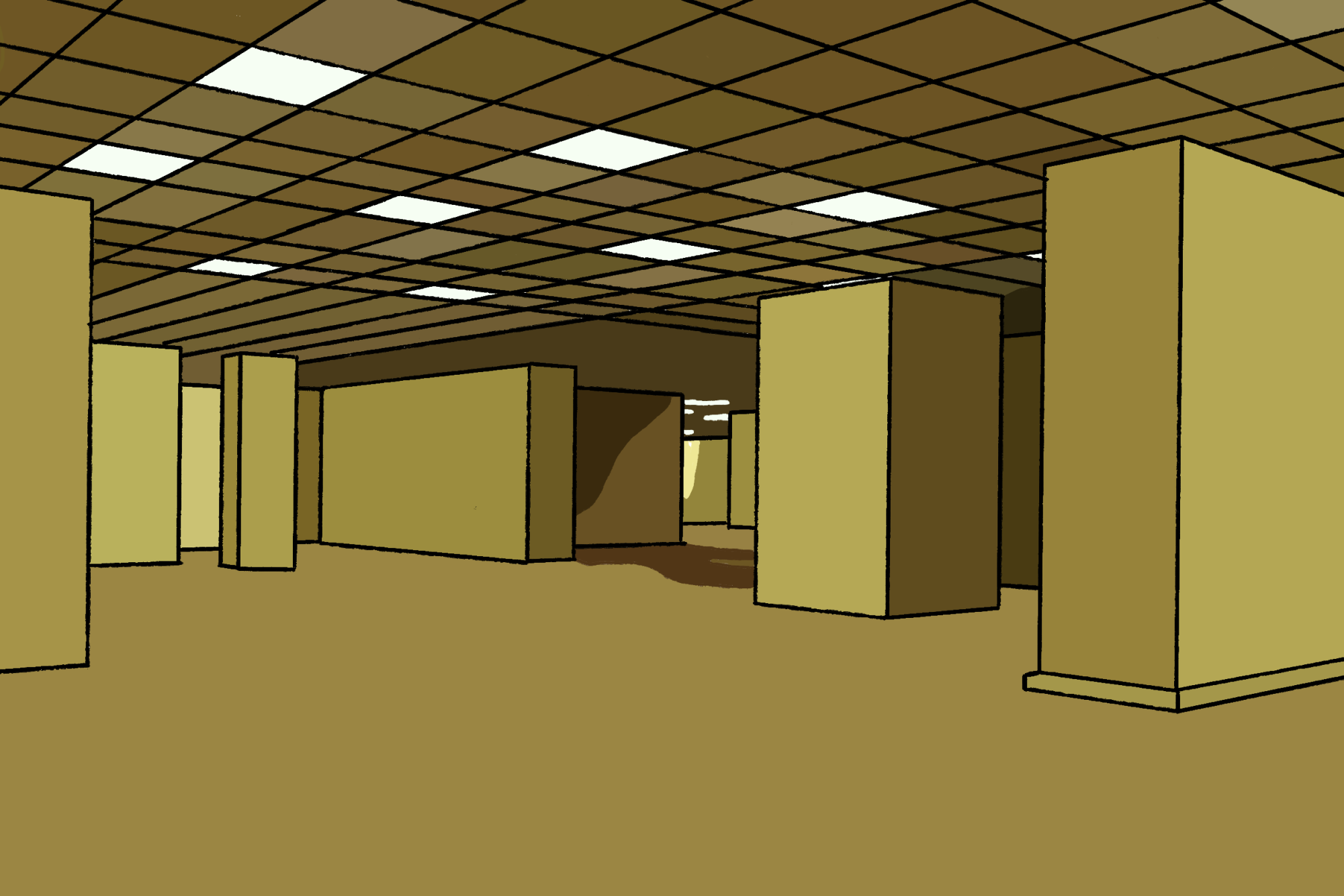
“This place remembers things,” Clark tells his therapist Mary Kline (Renate Reinsve) somewhere in the second act. “It just doesn’t remember them well.” He talks about the hallways, but also inadvertently about himself — a man who insists on the continuity of a marriage that ended before the film even started. In Parsons and screenwriter Will Soodik’s telling, the backrooms do not destroy what enters them. They remember it imperfectly. A warped echo of the Ottoman Empire exists somewhere inside the complex; Bobby, who follows Clark in with his VHS camera and dies, appears again — his entire house rendered inside the walls.
The third act reveals what the film built toward: the entity the backrooms produce towers enormous, wearing Clark’s tricorn and peg leg. The Lifeform from Parsons’s YouTube series — the black, spindly organism that terrorizes Earth visitors — evolved now into something that has taken Clark’s commercial persona as its shell. The backrooms tried to remember who he was and could only recover the costume. A captain of furniture. An Ottoman sultan who never owned anything. The creature lifts Clark by the shoulder, bites, and he dies in a place he decided to call home. The conclusion resolves not just the plot — it delivers what Ejiofor, in a performance of steady misdirection, built toward all along.
Reinsve, the Norwegian actress who broke through with Joachim Trier’s “The Worst Person in the World” (2021), brings to Mary a specific kind of dread: someone who always felt uncomfortably enclosed. Her backstory arrives in a wordless scene — a childhood bedroom, newspaper taped over every window, her single mother treating the outside as contagion.
This inverts Clark’s trajectory entirely. She ends up in the backrooms not to flee the world, but to return to her closed-in version of it. When the film closes, a remembered version of Mary sits idle inside an echo of her life, her face deformed into wrongness. Beyond the VHS grain and the ASYNC hazmat suits and the loud hum beneath the yellow wallpaper runs the conviction that these spaces hold the wrong things.
9.5 out of 10.




Volt • Jun 4, 2026 at 7:34 pm
I have watched the movie, and it was kind of hard to understand about the ending scene. As I haven’t known much about the background story of the Backroom. However, now I sort of understand what Backroom is and the ending means that the Clark is in the backroom as the remembered version of her. Thank you for the analysis of the movie.
Muh • Jun 4, 2026 at 7:26 pm
Imagine being trapped in backrooms.
Jio Kim • Jun 4, 2026 at 7:17 pm
I watched this movie and i have to say before i watched the videos explaining the basics or the background of the movie plot it was a little hard to understand, i didnt know this story had such a long history! Great article CJ!
. • Jun 4, 2026 at 6:18 pm
It’s really cool that the people who made the backrooms such a big creepypasta in the first place went on to become the main contributors of the film!