

















The DIS environmental club, Eco-Lution, transformed discarded coffee grounds into biofertilizer with their “Rebrewing Daegu” campaign that culminated on May 26. In an attempt to raise awareness on the effects of climate change through first-hand experience, Eco-Lution planted crops with repurposed coffee waste.
The project began when the team identified the community’s indifference towards the effect of climate change on Daegu’s agricultural industry. “Rebrewing Daegu” allowed members to combat the effects of global warming beyond simple classroom discussions through hands-on experience in the DIS garden.
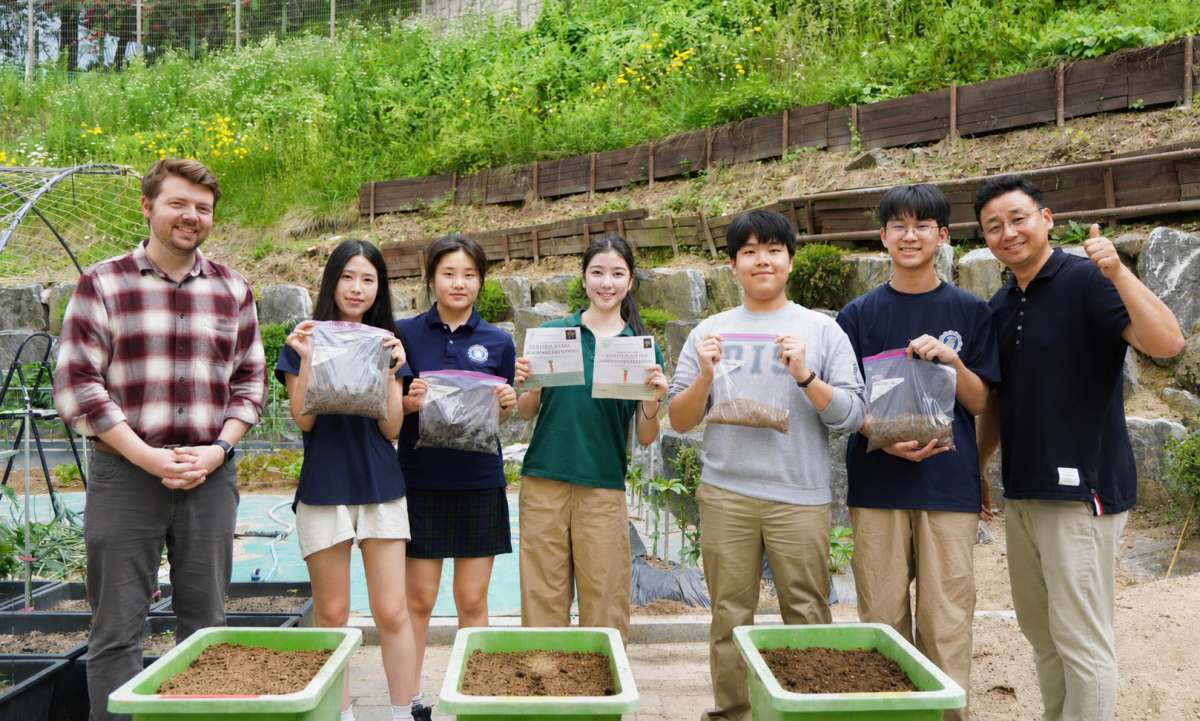
Since the beginning of the first trimester, Eco-Lution members gathered used coffee grounds from local cafés around Daegu. Members dried the grounds, mixed them with sesame cake for nutrients, added water, and monitored the compost over the course of three months. Then, they used the finished product to test their fertilizers and compare plant growth in compost-enriched soil and untreated soil.
“Just this last week, we tested out fertilizer and how well it works over the summer while comparing no-fertilizer and two other ratios of fertilizer and soil,” Minji Kim said.
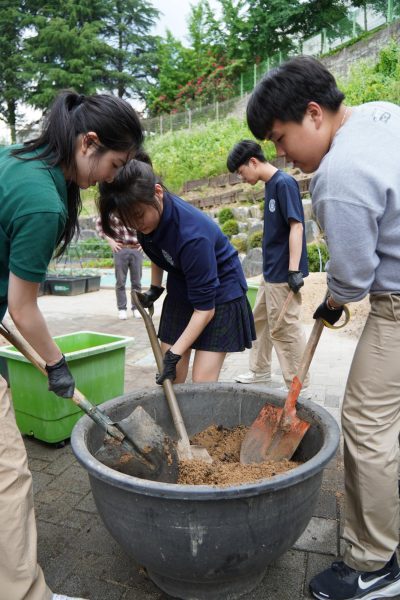
Mr. Bae, the Facility & Faculty Housing Director who oversees the agriculture and gardens at DIS, said, “Through this student-led process, members explored how different soil and compost conditions affect plant growth…the project encourages students to take ownership of their own learning.”
The project gave students practical experience beyond simple classroom discussions of sustainability. Yujun Piao, Vice President of Eco-Lution, said, “It’s the fact that today, youth and farms are very disconnected so we wanted to cultivate our club members themselves to have hands-on experiences…I got to actually see the coffee owners, to interact with them, get to travel around the agro in order to collect coffee grounds, dry the coffee grounds, mix them and, it’s kind of smelly but the organic smell from the coffee fertilizer and all of those experiences were very direct and hands-on. That was my favorite part of the initiative.”
Members actively participated in green agricultural practices and increased their understanding of environmental science. Thomas Kim, a sophomore in Eco-Lution, said, “I could learn about how small steps, like this project, can impact our larger community and help mitigate climate change overall.”
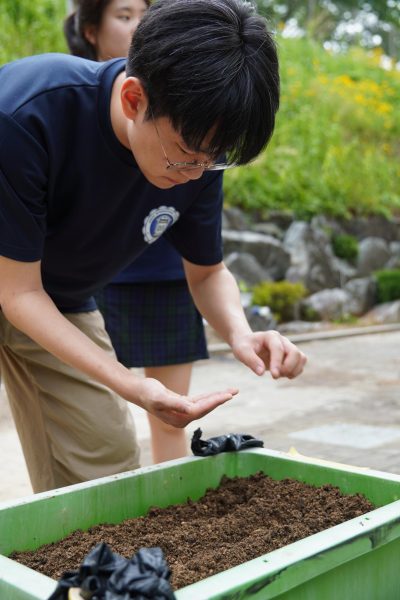
After the event, members began to look for ways to expand the project into the local community. Minji Kim said, “We’re planning on sending our fertilizer to small farms around Daegu if we make enough for next year…we’re just trying to reach out to our local community, especially farmers with less access to commercial fertilizers,” Minji Kim said.
The model’s simplicity allows for potential adoption by schools and families throughout the city. Thomas Kim said, “Everyone, even entire households, can make their own fertilizers if they have the time and the effort. This small action can have a big, measurable impact overall in Daegu.”
As compost continues to mature and new garden trials begin, Eco-Lution members plan to monitor plant growth and soil conditions throughout the year. Their results may determine whether coffee waste helps revitalize not only the DIS garden, but also the local farms around Daegu.