













































Affordable drink franchises such as Mega MGC Coffee and Paik’s Coffee serve overly sweetened beverages that provide an instant dopamine release. These low-cost sugar bombs gradually pervade young adults’ daily lives and threaten public health.
Recently, Mega MGC Coffee introduced four new drinks to its menu: Jasmine Tea with Mango Foam, Mango Guava Carrot Juice, Apple & Shine Muscat Yogurt Smoothie and Coffee Choco Chip Gelato Custard Cream Latte. All four exceed the daily recommended sugar intake of 30 grams. The worst offender, the Apple & Shine Muscat Yogurt Smoothie, contains 86.3 grams of sugar in a single serving – about 288% of the recommended amount.
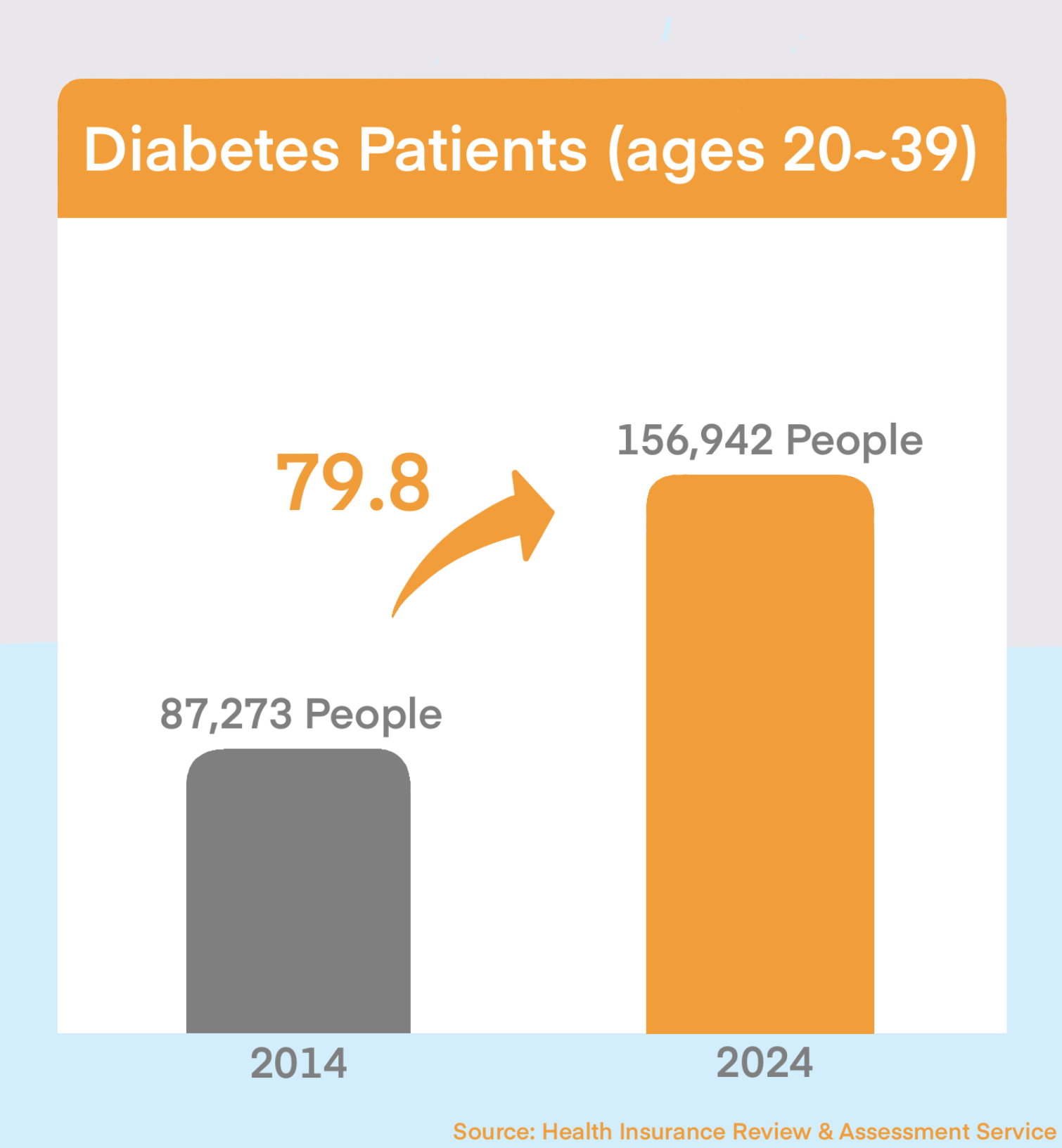
The rise of syrupy beverages came with an increase in young adults who suffer from type 2 diabetes. The Korea Association of Health Promotion reported that the number of people aged 20–39 with the disease increased by 79.8% over the 10 years since 2014.
Unhealthy dietary habits largely contribute to the trend. “The recent increase in the prevalence of diabetes among the younger population is due to the excessive consumption of isoglucose,” said Geun-gyu Park, professor of endocrinology at Kyungpook National University.
Among the various sources of isoglucose, sugary beverages pose especially high risks. “Isoglucose in drinks is easily absorbed by the body. Consistently drinking one glass of sugary drink every day increases the probability of developing diabetes by approximately 20%,” Park said.
The effects extend beyond diabetes alone. “Large fluctuations in blood sugar levels can impair brain function. Obesity, caused by excessive isoglucose, can trigger inflammatory responses in the body, which can lead to skin acne and liver disease,” Park said.
Despite the serious health repercussions, teenagers rarely pay attention to nutritional information before consuming such drinks. “I don’t look at the dietary facts. When I look at the chart, I feel guilty about eating it,” freshman Arin Lee said.
For younger populations, however, the consequences may seem distant and irrelevant. “I know that I need to be concerned about this, but I’m still young. I’ll think about it more when I get [older],” Lee said.
Despite teenagers’ indifference, parents remain concerned about the health risks of these beverages. “As a parent, of course, I don’t want my child to frequently drink unhealthy beverages, and I always worry that they might be negatively affected by them,” Hyesook Kwon, parent of third grader Roa Kwon, said.
Experts emphasize that healthier habits can help reduce the risks associated with excessive sugar consumption. “If you eat vegetables first, [they] can prevent a sudden spike in blood sugar. Also, since about 70% of our body’s glucose is consumed by lower body muscles, people with thick thigh muscles do not need to worry about diabetes,” Park said.
Cognizant of these concerns, franchises have begun to take action, albeit marginally. Although beverages remain the leading contributor to Koreans’ daily sugar intake—accounting for 47% of the total—the recent “zero sugar” trend reduced the amount of sugar consumed through drinks by one gram since 2020.
Despite these minimal changes, awareness surrounding the dangers of excessive consumption remains critical. “As competition among franchises intensifies, it seems that more mouth-watering beverages are being released. It is necessary for teenagers to avoid these drinks,” Park said.



Bibig • May 28, 2026 at 7:26 pm
The article is really good, I’m shocked how people get more diabetes