




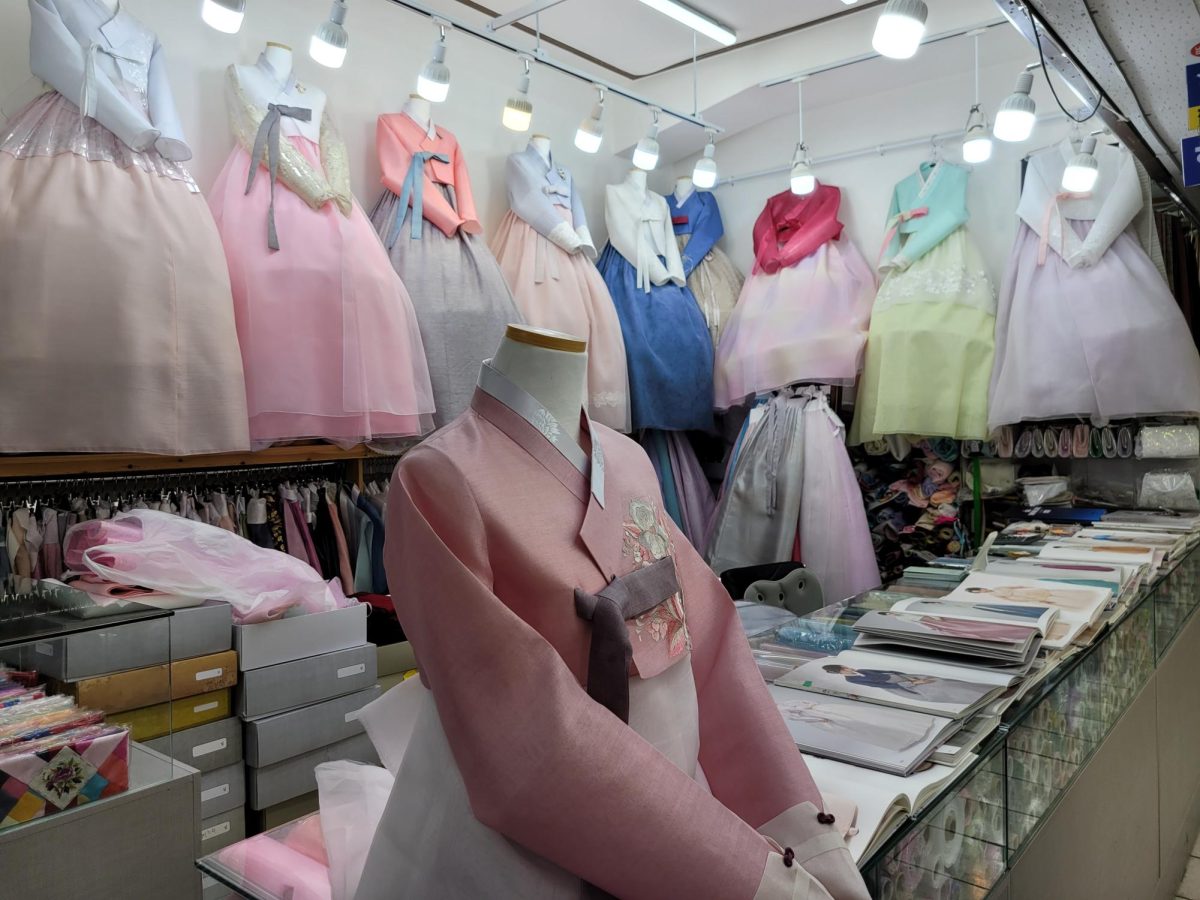
























The first floor bustles with commerce and lively exchange, but just above stands the once-vibrant hanbok stalls in striking emptiness. This contrast, apparent in the Daegu Seomun market, reveals a fading tradition Korea fails to preserve.
The hanbok, Korea’s traditional clothing, consists of vibrant colors and elegant lines. It serves as a 1,600-year archive of the nation’s culture and lifestyle. Fueled by the global rise of “K-culture,” the costume gained traction across the globe.
Despite the rising demand for the national costume abroad, the domestic Korean dress industry faces a major crisis. Over the past 14 years, market analysis revealed a 50% reduction in hanbok businesses. One major reason for this decline lies in the labor-extensive production process. The traditional costume requires careful stitching that demands expertise and long working hours unachievable with mass production. Due to the handcrafted artistry, an average order charges around 350,000 won per set and reduces the appeal of the sophisticated yet expensive dress to present-day consumers.
“I agree that the hanbok is important to our culture but it’s also really hard to wear them because it’s not exactly the best for extreme weather conditions and it also takes a long time to get it set up to wear them. Even on special occasions I don’t see why hanboks would be an appealing choice when there are so many other more practical and cheaper alternatives,” sophomore Claire Kim said.
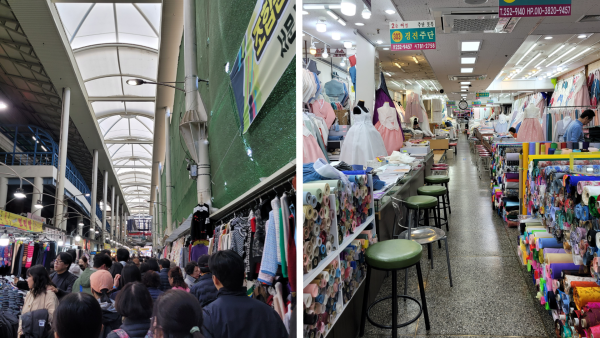
Covid-19 further intensified this decay. Hanbok shop owner Gyeong Ok Park said, “The pandemic changed our culture so much that it even erased paebaek (Korean Traditional Wedding Ceremony) from our life…People think it’s bothersome and uncomfortable, so they don’t wear hanboks anymore. I hope governments can set up policies to rejuvenate the market.”
While organizations like the Korea Heritage Service and the Korean Hanbok Promotion Institute work to preserve and popularize the cultural attire, their effort has yet to fully reach the public. “I personally believe that, above all else, it is most important to make wearing hanbok more common in our culture. If people naturally encounter and experience hanbok more often through various aspects of daily life, public interest will grow as well,” said Jae-hyun Park from the Korean Hanbok Promotion Institute.
Gyeong Ok Park said, “I think we might be the last generation to work in this industry. Our children refuse to learn how to create hanboks and tell us that it won’t make money. Hanbok is our traditional clothing so I hope we’d normalize wearing them.”
To address this issue, a viable alternative includes the contemporary hanbok, a redesigned version of the clothing with lighter fabrics and adjustable length. Such modern reinterpretations prioritize functionality and practicality for everyday wear while still preserving distinctive traditional elements.
An aficionado of modern Chosun garments, Jin-yi Jung said, “I am proud of hanbok. I believe their beauty is unique to Korean culture, and I get a lot of compliments when I’m wearing a modernized hanbok. These versions are genuinely comfortable and look neat as well.”
Some schools, like Minjok Academy high school, implement these redesigned costumes in classroom settings. The distinctive uniforms embrace elements from the traditional attire while ensuring comfort for academic performance. “I think…wearing hanbok as daily uniforms…is a really good culture because it naturally promotes our culture to students. I hope we can see more schools doing this in the future,” Kim said.
Although these initiatives demonstrate how hanbok can remain relevant to modern society, younger generations still grow disconnected from the Chosun apparel as exposure and tradition fades over time. To preserve a nationwide connection to Korean heritage, local communities should promote consistent interaction with hanbok and educate the public on its craftsmanship and historical significance. Without stronger public appreciation, Korea risks losing one of its most valuable legacy beneath ignorance and modernization.