




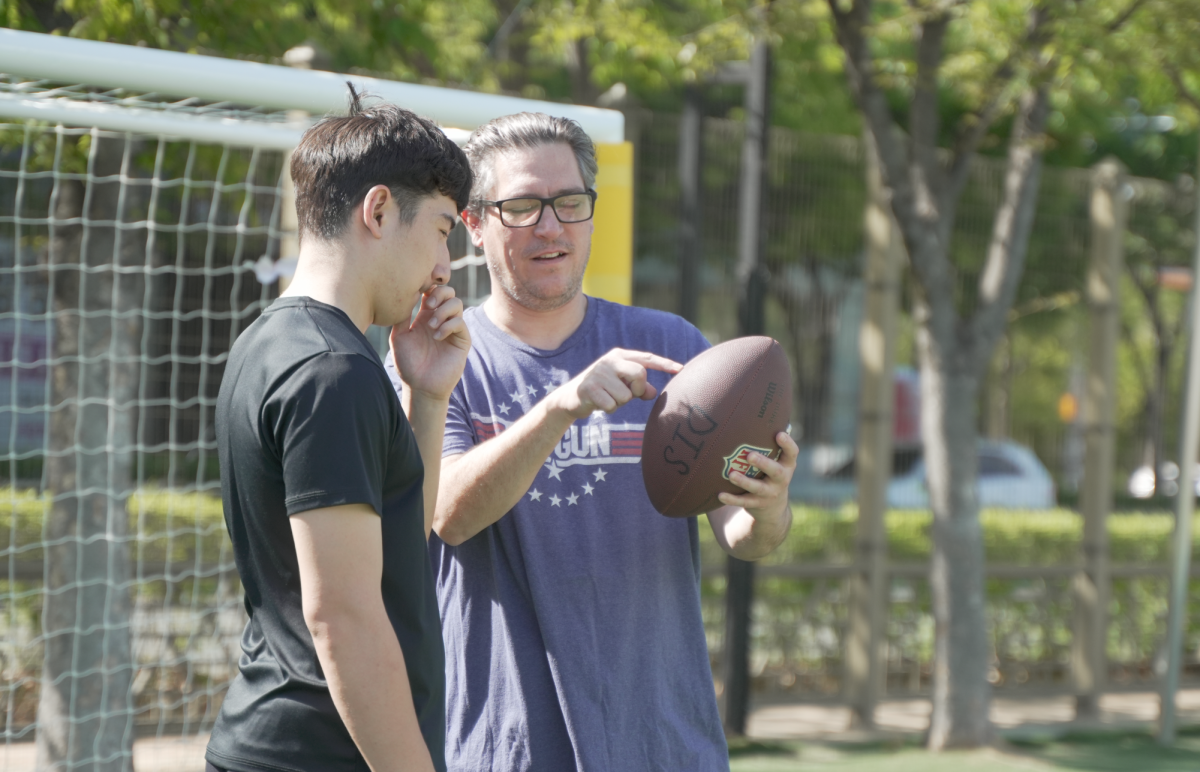














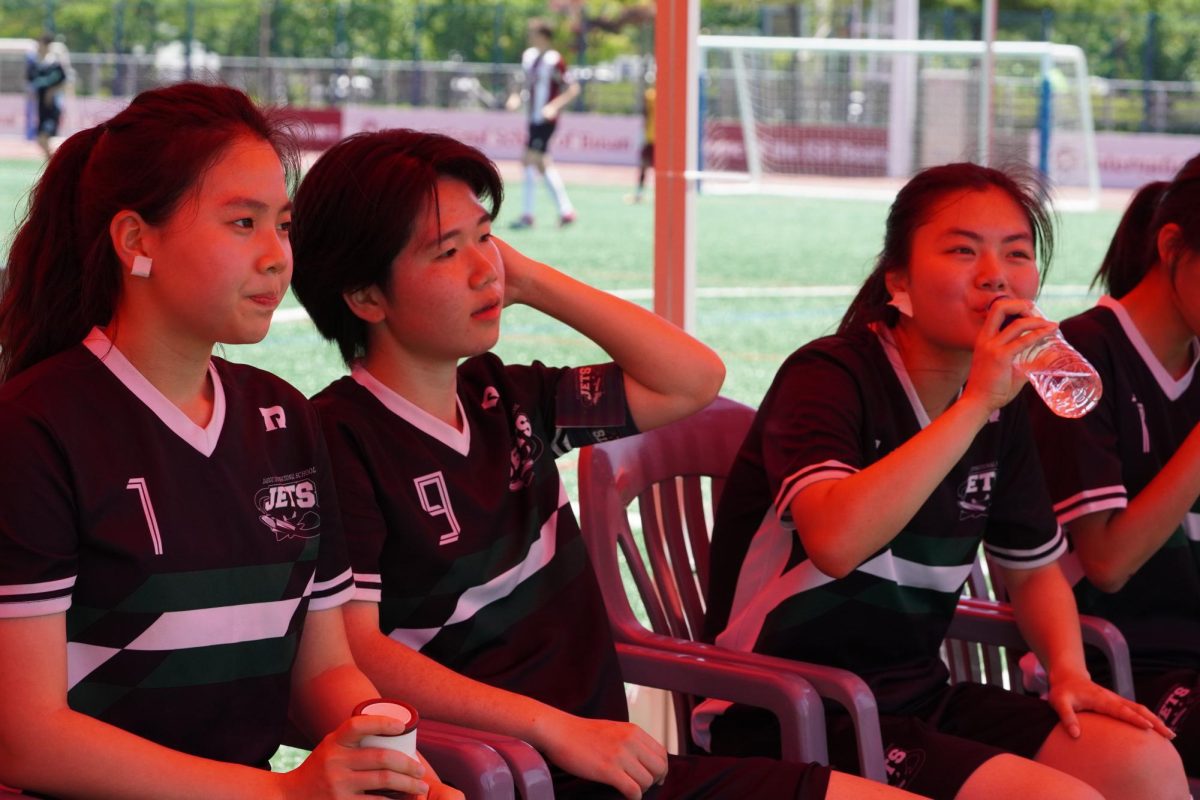
















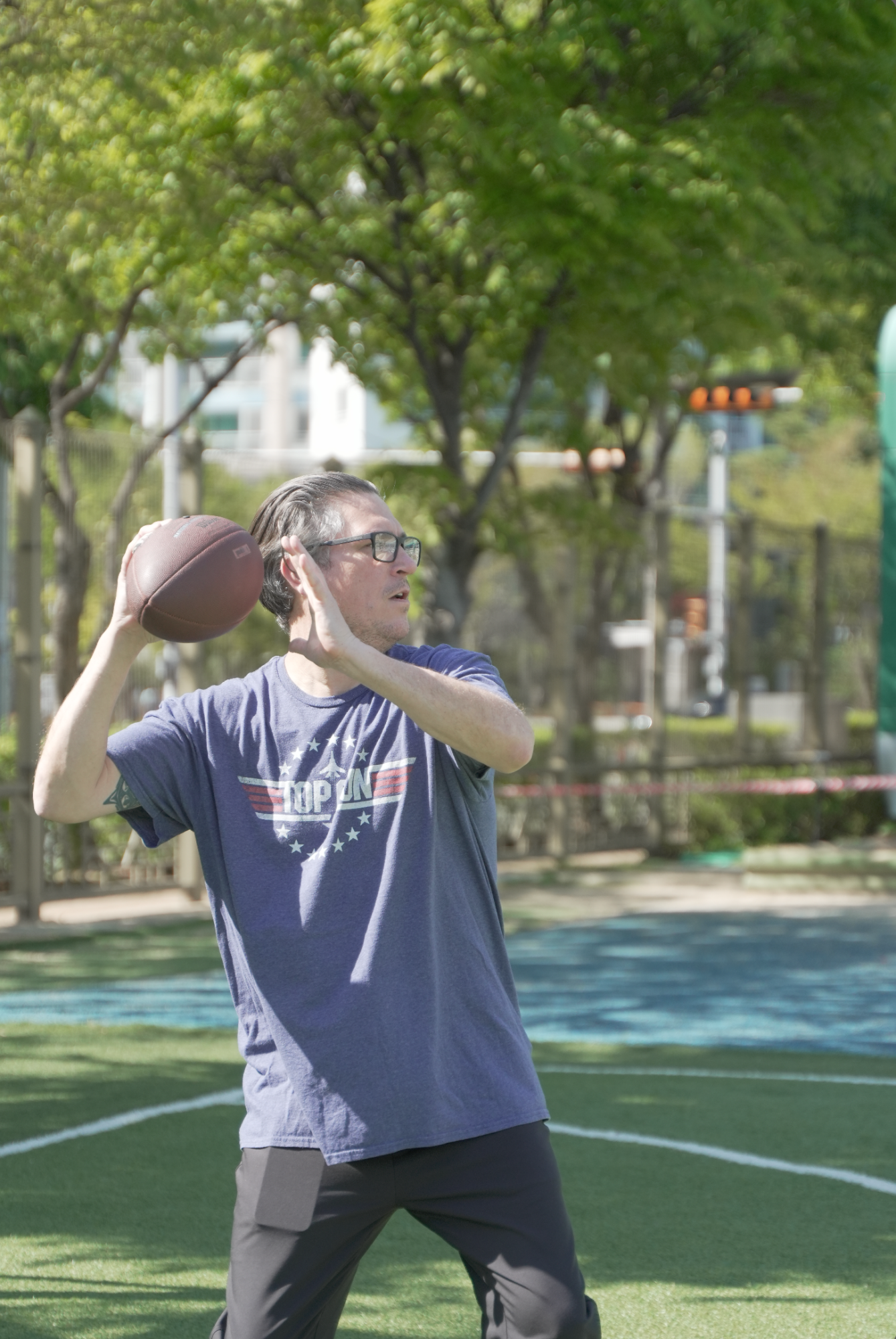
Dr. Willette shouts tactics from the sidelines as beads of sweat roll down the faces of excited high school students as they run for one touchdown after another. Every Thursday after school, Coach Willette hosts the flag football After School Activity (ASA) at the front futsal field for students to get some exercise and enjoy the game. On days with foul weather, the club heads indoors to enjoy the sport through screening footage from the NFL’s Super Bowl and the NCAA’s Rose Bowl.
The club initially formed from the idea of sophomore Ruby Fuhriman, an avid fan of the New York Jets. Her initial frustration when none of her Korean school classmates knew about American football sparked inspiration when she found peers at DIS who shared her passion. “I saw Joe walking around with the ball, a football, and so I was like, okay, so I’m not the only one who knows what this sport is,” Fuhriman said.
When Fuhriman found out the school did not have a flag football team, she proposed to start an ASA to Dr. Willette, who welcomed the initiative.
Dr. Willette explains that the safety and inclusivity of flag football, unlike traditional American football, brought him to introduce the sport to the DIS community. “Instead of getting tackled, you have flags that get pulled from your waistbelt. So it’s less contact, less chance of injury. It’s more accessible for boys and girls to play together at a coed. It doesn’t really matter how big or fast you are,” said Dr. Willette.
Willette also acknowledges that there still exist some risks he looks out for when he manages the club. “There’s a risk of collision and accidents. There’s also a chance you could get knee, back, hand, or shoulder injuries because you’re running after a ball and might trip and fall. You might run into somebody or collide with others,” said Dr. Willette.
Beyond introducing a new sport to the campus, the extracurricular brings an element of gender inclusivity to the field. Dr. Willette expressed what the co-ed culture of the sport means in the flag football ASA. “First off, you know, it’s fun; it brings people together. It’s a good team sport…It’s such a fun sport, and it shouldn’t be genderized,” Dr. Willette said.
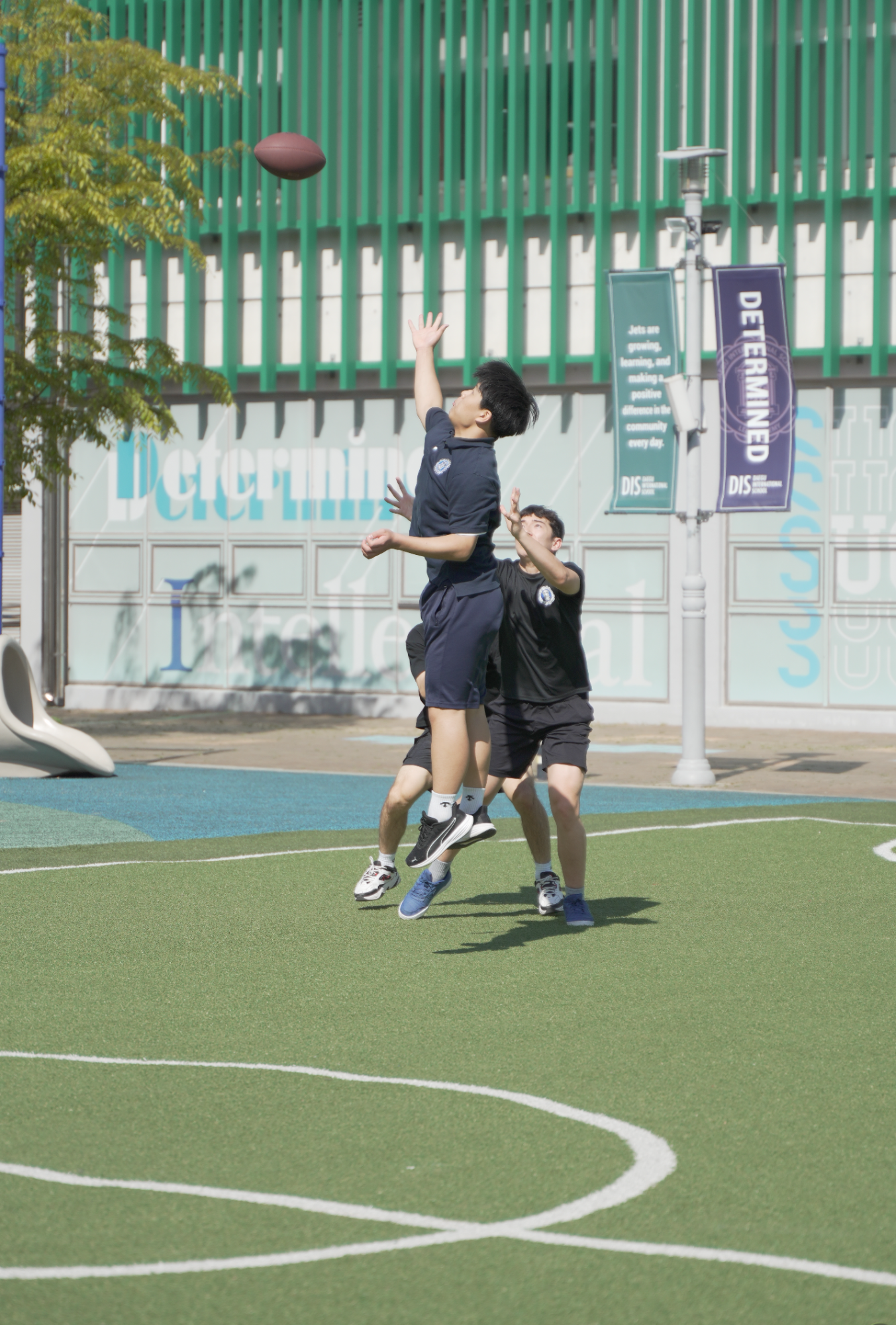
Junior Noah Hwang affirmed how the stigma around flag football as a one-gender sport decreased. “I think at the start, all sports were very strictly genderized towards males. But as time goes on, more and more people get the opportunity to play sports. So I think it’s just like growing as entertainment, instead of just ‘strictly male activity,” Hwang said.
Fuhriman echoed how gender neutralization stands as a key factor for more girls to join the sport. “More people will probably want to play it, and more people will watch it and learn more about the sport in general,” Fuhriman said.
“It doesn’t matter what race you are or what gender you are. Everyone deserves a chance to play any sport they want,” Hwang added.
Fuhriman believes the intramural sport can act as a launch pad for the love of flag football to spread. Even though the ASA only contains a small number of members, the sport brings joy and excitement to the students, just like Coach Willette hoped.