






































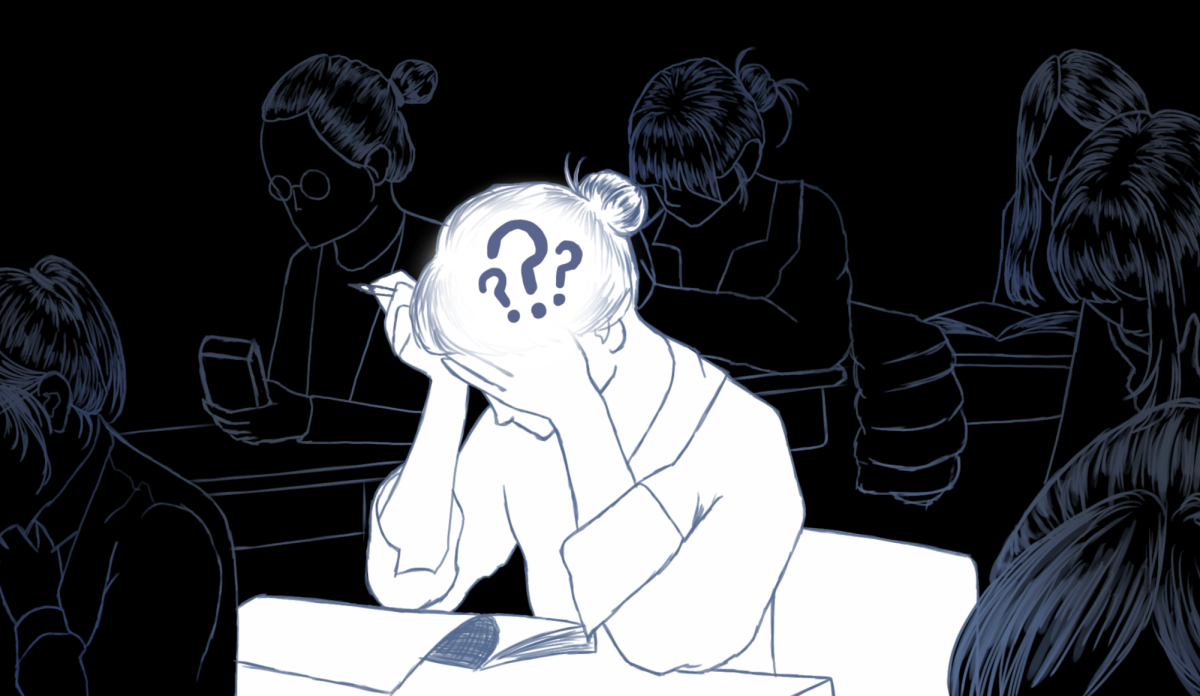
With only three laureates, Korea ranks near the bottom in Nobel Prize winners — a surprising yet ironic outcome for a nation that places immense emphasis and investment on youth education and academic achievement.
Nobel Prizes reflect a country’s capacity for innovative thinking and intellectual risk-taking. While dependent upon multiple external factors such as population and national history, environments that nurture groundbreaking ideas play a decisive role as well. Korea’s few laureates don’t indicate a lack of intelligence, but rather a deeper issue with how students are taught to think.
Divergent thinking (the ability to generate multiple solutions to an unfamiliar problem) lies behind many Nobel Prize successes. Western nations bag a majority of these awards due to implicit training that begins early on — in these classrooms, assessments more frequently prioritize argumentation and process over a singular answer. From mathematical proofs to an essay on free will, students learn to explore their minds and derive their own solutions. Everybody’s solution for a math problem and everybody’s approach to a written prompt response vary.
This strategy strengthens the ability to interpret unfamiliar problems from different perspectives and justifies personal reasoning. To hone these skills, teachers require students to defend their thought processes rather than replicate predetermined methods.
The System That Shapes Thought
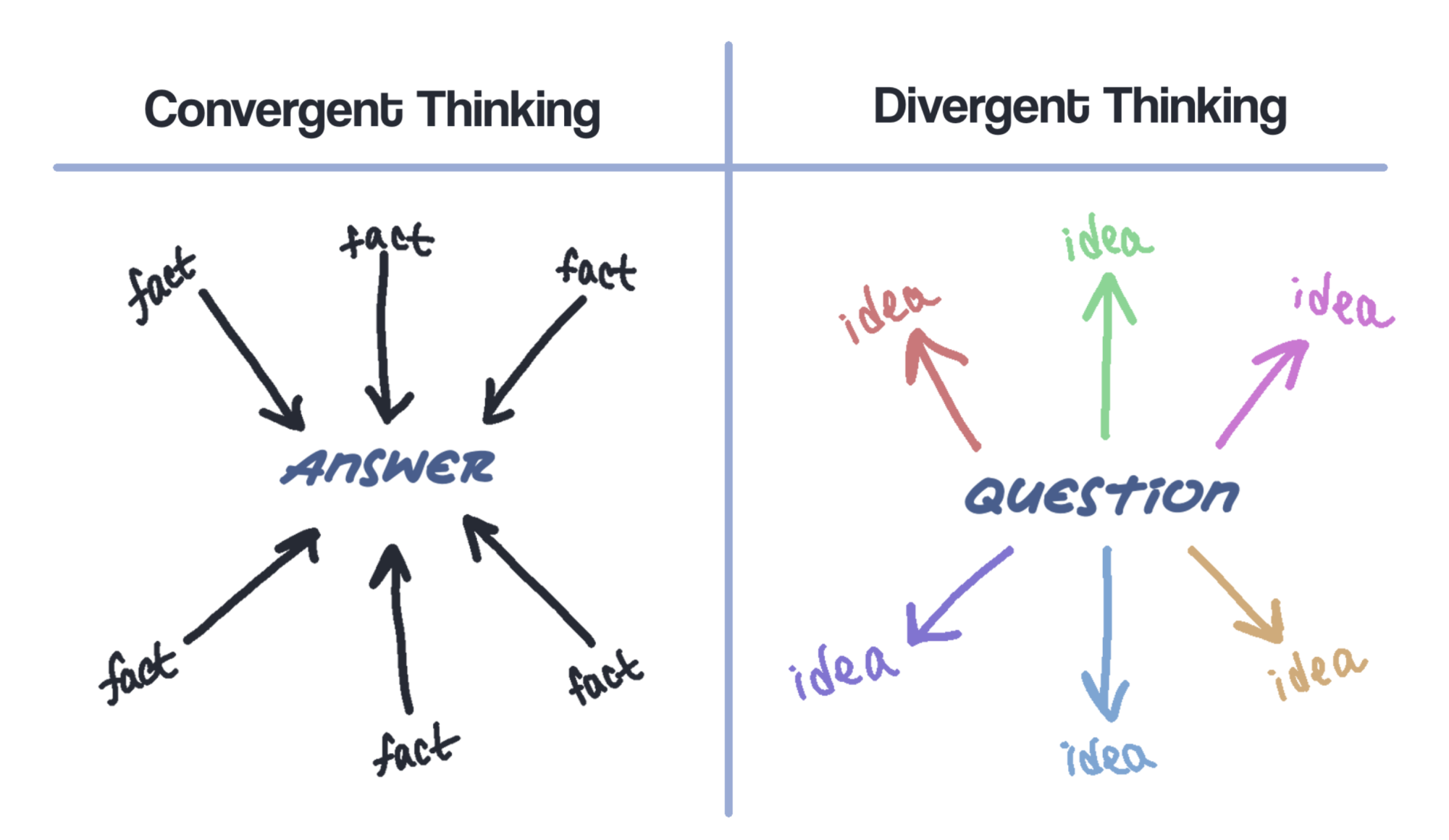
On the contrary, the Korean system awards convergent thinking, which emphasizes a single solution. While midterms and finals include open-ended items, they closely align with classroom examples. “Sometimes, the teachers tell us that a free-response question and answer reviewed during class will be similar to that on the test. Then, we only study the given answer for the open-ended questions,” said Jiyun Kim, a freshman who transitioned from the international school to the Korean education system. While the system aims to encourage divergent thinking, it merely exacerbates “answer replication.”
Yoon Jung Kim, a Korean History (한국사) educator in both regular schools and the Korean Studies curriculum at DIS, explains the structural constraint: “This is because such questions cannot be evaluated objectively, and parents or students may challenge the teacher’s judgment if they do not trust the grading.”
In this race to memorization, a head start goes a long way. As early as elementary school, children endure taxing schedules filled with private tutoring that pushes them far ahead of the standard curriculum.
This grants them an edge over their peers in middle and high school, which use relative evaluation (상대평가) to assess students. As competition hikes up, individuals go out of their way to outdo their peers. From their perspective, memorization and convergent thinking are worth it for the perfect transcript.
Jiyun Kim describes how this rigidity plays out in everyday classrooms. “If we don’t use the process that the teacher explained during class, our test scores are negatively affected, which is the only thing that everyone really cares about at school. If we write things a different way, even if it’s our own opinion, if the teacher thinks it’s wrong, it’s wrong.” Consequently, students choose not to speak up about their own ideas, and their teachers’ instructions replace independent thought altogether.
The constant pressure to ace the CSAT (Suneung) mounts up as well. The importance of memorization peaks during preparation for this exam. For this rigorous test that determines college admissions, students must memorize problem-solving approaches that guarantee accuracy and efficiency. The emphasis that society puts on this single test amplifies the idea that there is only one path to success. That path frames creativity as ‘inefficient’ when in reality, it has equal value.
Even teachers notice the lack of this cognitive skill. “Teachers might pose abstract questions informally during class rather than as part of an assessment, and very few students readily respond. They might talk casually or jokingly about various topics, but those who can present specific reasoning and speak seriously with clear logic are extremely rare,” said Yoon Jung Kim.
Consequences of Compliance
In the 1997 Asian Financial Crisis, major Korean conglomerates expanded aggressively and accumulated massive short-term debt under the assumption that rapid growth would continue. Financial institutions and policymakers continued to maintain the previously successful development models, despite warning signs of impending disaster.
When investor confidence faltered, the fragile structure unraveled and plunged the nation into severe recession. The failure to reassess risk and deviate from familiar economic strategies exposed how institutional conformity can create vulnerability on a national scale.
The 2014 Sewol Ferry disaster, which took the lives of 304 people, also demonstrates the devastating long-term effects of the nation’s reliance on convergent education. Investigations revealed that passengers followed instructions to “stay still,” even as the ship became increasingly unstable. The crew prioritized obeying orders over saving lives and ultimately delayed all rescue actions.
Current course of action
The salient limitations of the Korean education system have prompted education officials to shift course. In February 2026, the Seoul Metropolitan Office of Education announced plans to expand essay-based and written-response evaluations in middle and high schools to prioritize reasoning over rote memorization.
Whether these reforms will reshape classroom culture remains uncertain. The policy may break the consummate formula for a top student, stirring uneasiness in eager parents who want nothing but their children to excel.
But while university admissions and campus life may dominate the mindspace of students and parents, the mindset cultivated in school shapes how entire generations confront uncertainty and risk. Thus, education must nurture divergent thinking skills so the nation can respond to real-world problems, not standardized tests.





Azul Rivera Meza • Mar 19, 2026 at 7:25 pm
Amy!!! Really good article. Can’t wait for your next article!