









































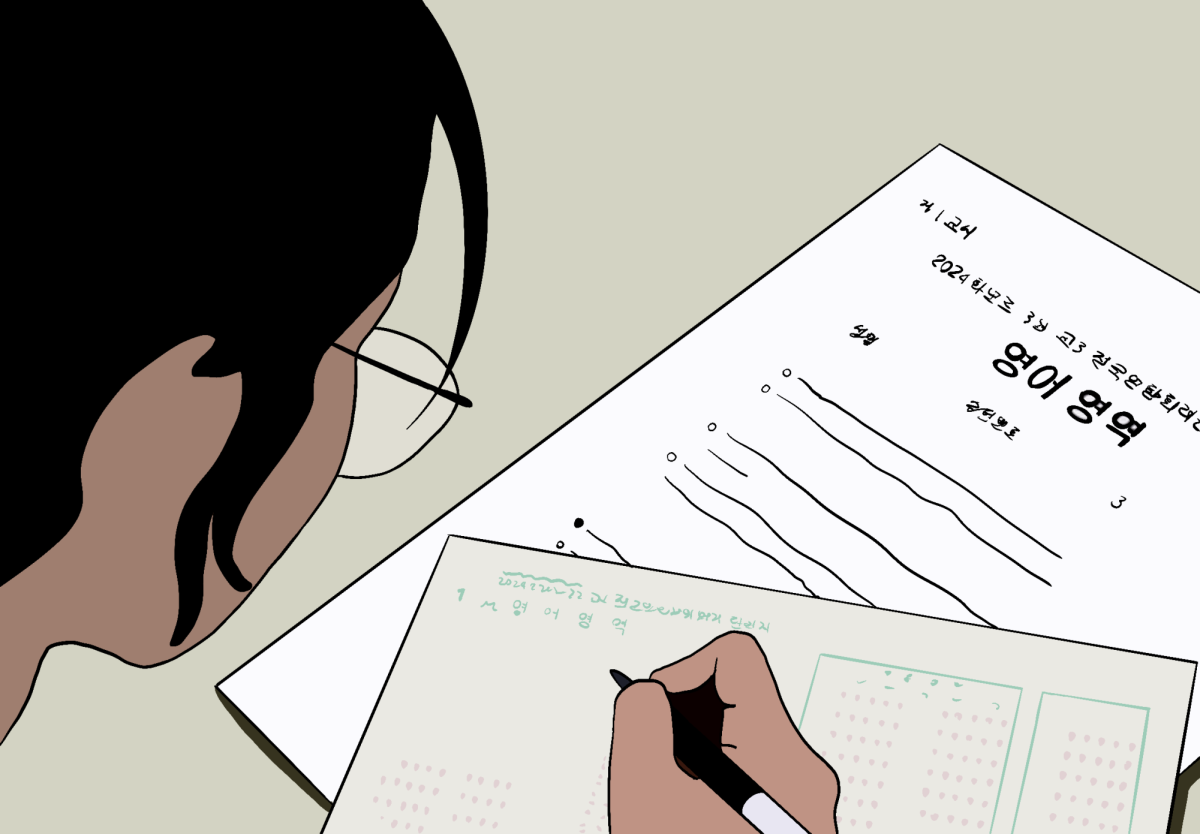
Similar to previous years, the 2026 Korean CSAT (College Scholastic Ability Test) could not avoid controversy. Among its sections, the English test stirred up the fiercest debates, with many describing its difficulty as unprecedented. The nickname “Inferno English,” coined to capture its extreme rigor, spread like wildfire across the nation, ultimately leading to the resignation of the head of Korea’s Institute for Curriculum and Evaluation.
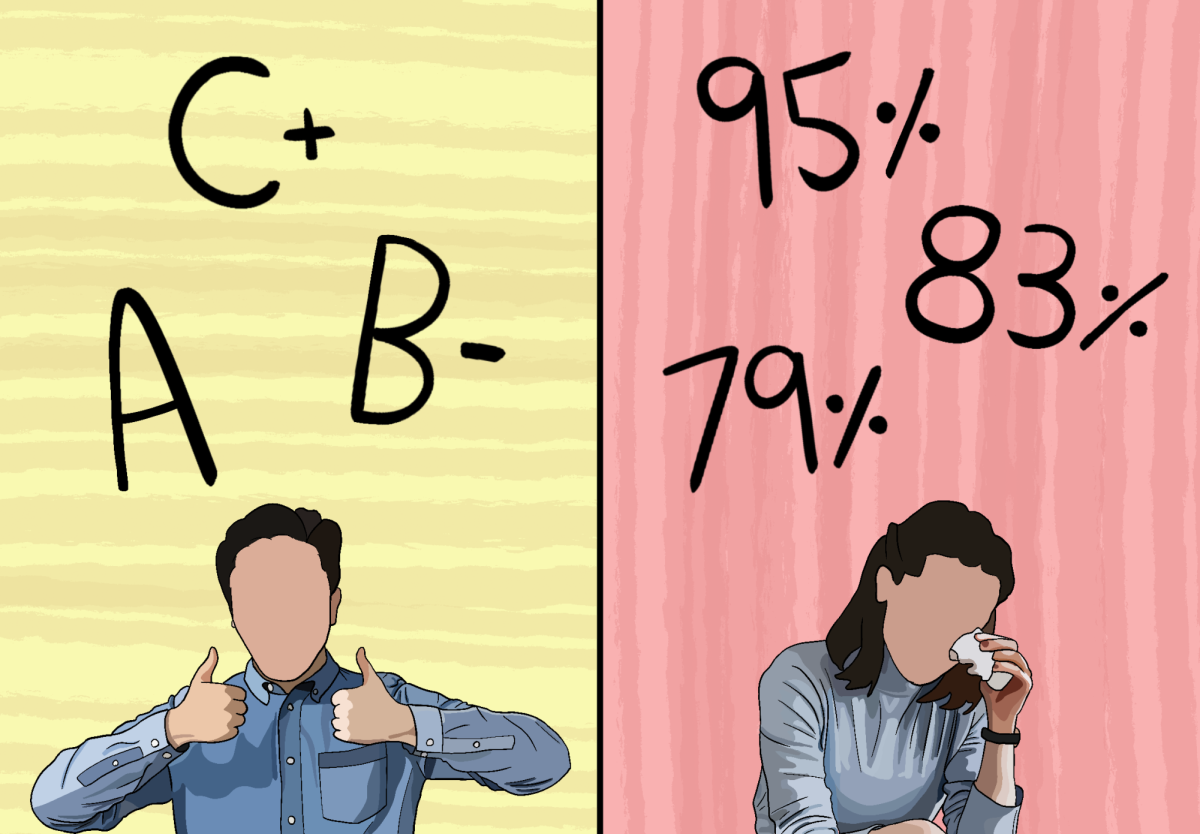
The English section operates with the absolute grading system, implemented in 2018 to alleviate overheated competition through an objective evaluation of students’ level of learning. Since then, the share of first-tier scores (over 90% accuracy) typically exceeded 4%, but this year it plummeted to 3.11%.
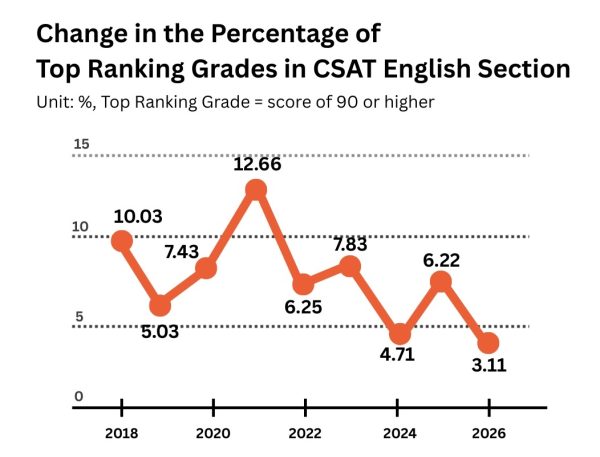
In fact, several questions even showed error rates over 80%, which contributed to many failing to meet the minimum grade requirements for early admissions. “The difficulty was so extreme… it seems like there was excessive competition even within the top ranks,” said Ayoung Jeong, a CSAT taker at Shinsun Girls High School. Such results directly counter the intent of the absolute grading system.
But the concern didn’t remain only around the exam’s complexity; doubts arose on the content and credibility of the test. “Some of the passages covered fields that students were not familiar with, and several questions required an understanding of abstract concepts in the answer choices,” said Jeongmi Yoon, an English instructor at Boston Prep English Academy. Some professors even argued that certain questions have no or multiple correct answers.
The scale of controversy soon spread beyond the nation, prompting international scrutiny. Outlets like The New York Times and BBC reported on the extreme rigor of South Korea’s English exam, labeling it as a “notoriously difficult” test that “prompted public outcry.” Even native speakers, they noted, struggled with some of the most abstruse questions.
Altogether, these commentaries disclose the unreliable nature of the English section’s evaluation process. Full of ambiguity and excessive rigor, the test functions less as a tool for appropriate judgment and more as one that pushes students into unnecessary stress and competition. This incident is not simply a failure to adjust the difficulty, but a serious issue that calls into question the nature and legitimacy of the CSAT.
Despite this absurdity, the test still stands as the primary determinant of college admissions. Its instability, in turn, reinforces a vicious cycle in which the erosion of public education feeds the dominance of private tutoring. In fact, studies do show that students who attend academies tend to perform better on standardized tests, which pushes disconcerted families toward costly private education as the CSAT grows unpredictable.
In retrospect, the 2026 English section exposed how unsustainable the current system has become as the foundation of Korea’s learning environment. When outcomes depend on specialized preparation rather than genuine English skills, students with access to exclusive training inevitably gain advantage over those who may, in real life, be more capable of using English effectively.
The Ministry of Education must take responsibility for abrupt difficulty spikes that undermine reliability and put unnecessary strain on high schoolers. It’s time to restore stable assessment standards and a consistent exam structure so the test can serve as a clear evaluation tool to foster a healthy public education system.
More broadly, a transition away from a purely competition-based system toward a more flexible and personalized learning pathway remains crucial, though such changes face institutional pressures. “The idea of transitioning to such a pathway is highly unlikely due to how entrenched the current educational system is. While such change is conceptually feasible, it introduces new challenges,” said Jacob McAteer, an international student in Korea.
Another possibility is the reduction in the CSAT’s weight in favor of transcript-based admissions. A more holistic evaluation model, similar to that of the United States, could mitigate the pressure of a single high-stakes test while allowing universities to consider the applicants’ broader achievements and merits.
The CSAT must not function as a trivial experiment in endurance and wealth, but as a credible measure of readiness for college. From stabilizing test standards to integrating new admission structures, careful reform remains crucial if the test is to restore its legitimacy and purpose.