



































On subways and sidewalks, heads tilt down with eyes fixated on 15-second bursts of entertainment. Since TikTok’s launch, short-form platforms have expanded rapidly to shape daily life, from entertainment and news to even education.
This engendered a noticeable decline in literacy skills among Korean teens, even though their average study time increased to over 6 hours. Students’ performance on the PISA (Programme for International Student Assessment) has decreased continuously since 2006.
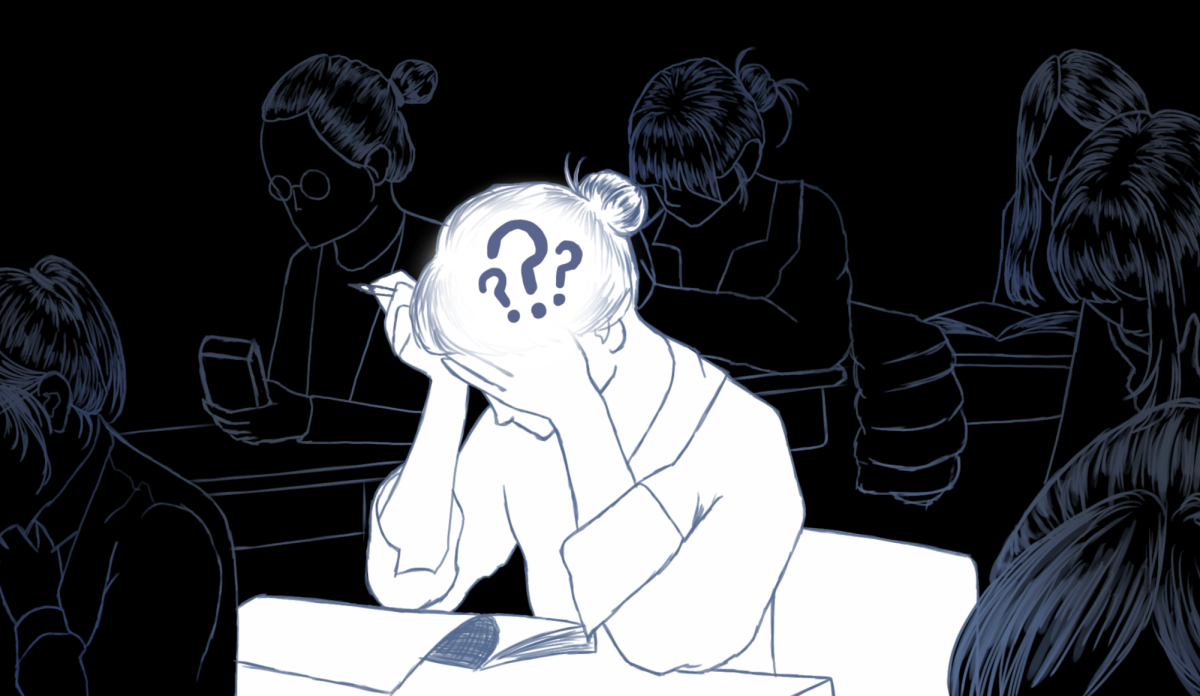
This quizzical phenomenon originates from “popcorn brain,” an aftermath of constant screentime and social media that deprives people of their ability to sustain focus. The state causes distracted, scattered thinking and mental restlessness. Slower activities can feel uninteresting, affecting attention span and productivity in real-world tasks.
Sophomore Chirayu Joshi said, “When I’m given a long reading assignment, I feel too lazy to read it through these days. It depends on the book, but for me, reading is annoying. I often find myself reading at most a sentence a day.”
Educators observe similar patterns. Secondary English teacher Ms. Loutsch said, “When I was a kid, you’d read at night. Now, they just scroll or swipe.”
These patterns strip youth of activities crucial to cognitive development. A teacher in Like English hagwon Heeduk Kim said, “The issue does not stem from intelligence but from a lack of focus and practice. Exposed to fast-paced content, students in our class sometimes struggle to engage in deep thought or complete extended reading tasks. Over time, this habit weakens not only their academic performance but also their ability to think deeply and express ideas clearly.”
In contrast, experts like language and humanities professor Koo Yeonjeong of Soongshil University also highlight the more positive aspects of media: “Clip content represents a new form of literacy rather than a cause of decline and deserves recognition alongside traditional reading.”
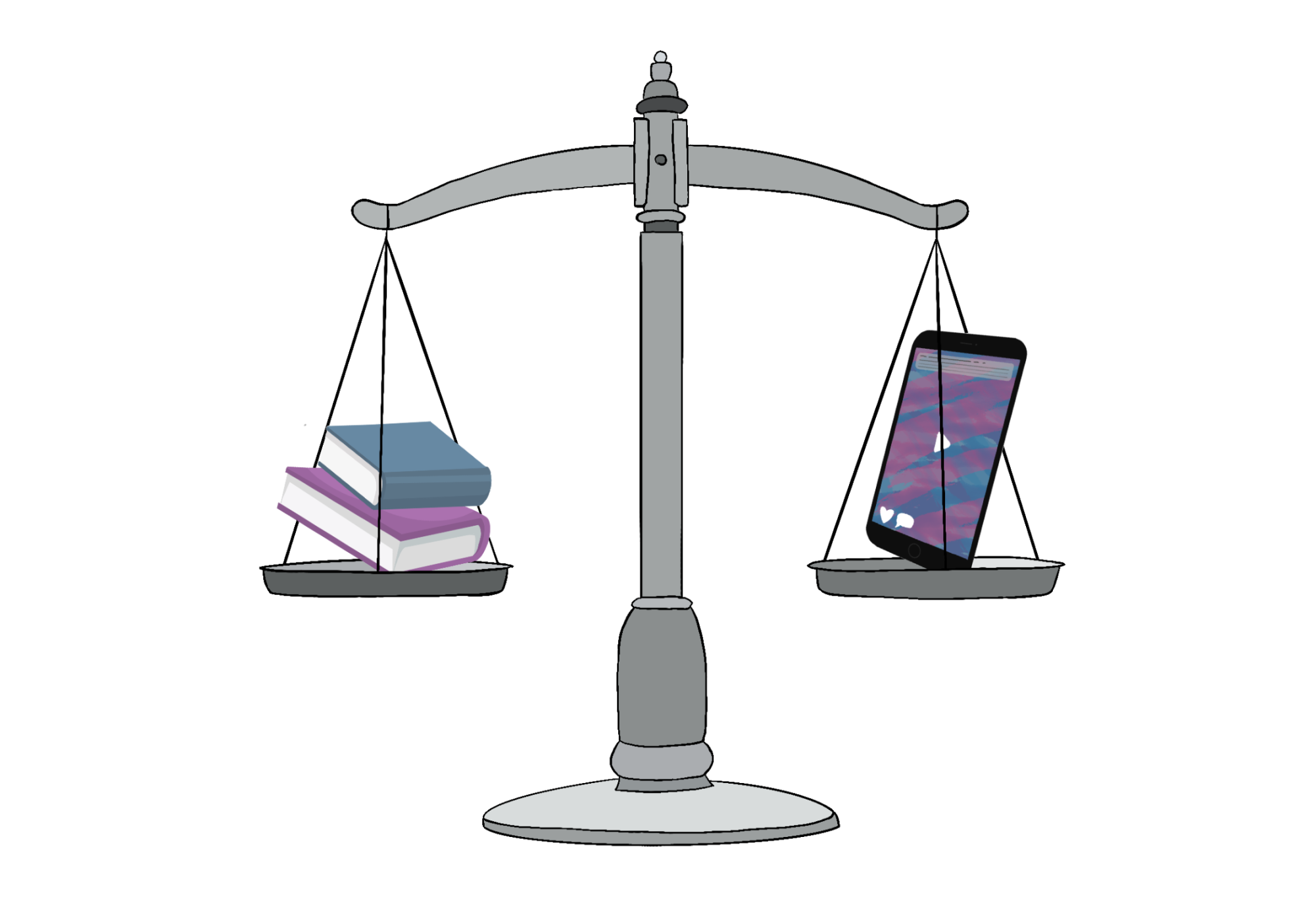
This suggests that the issue doesn’t lie in the media itself, but in how fragmented attention affects students’ thinking, focus, and ultimately, communication. While the media serves as today’s major communication tool, it tends to turn interactions into public performances—some users focus on enhancing their online presence rather than forming genuine emotional connections.
Such interactions often leave them feeling self-conscious and hesitant to express themselves, leading to greater isolation and emotional detachment at the end of the day.
To alleviate this, DIS adopted a no-phone policy aimed at reducing distractions during class and promoting more engaging interactions between students. As secondary principal Dr. Willette noted, “Learning can take many forms, but it ultimately depends on human connection and communication.”
While the policy effectively promoted more interactions, blocking devices alone has limits in breaking the deeply rooted habits of students. “You can ban technology, but really what we have to do with technology is find a balance,” said Dr. Willette. “The most important part is teaching students how to use it usefully and balanced so that it’s not overused and taking away from other parts of their life.”
For teachers, the challenge lies in deciding “how we’re going to use our devices, and how we’re going to use short-form videos in our lesson planning so that it utilizes natural human focus and attention,” as Dr. Wilette said. “You have to have time to interact and talk about very complex topics, which short videos can’t do, to rebuild deep thinking.”
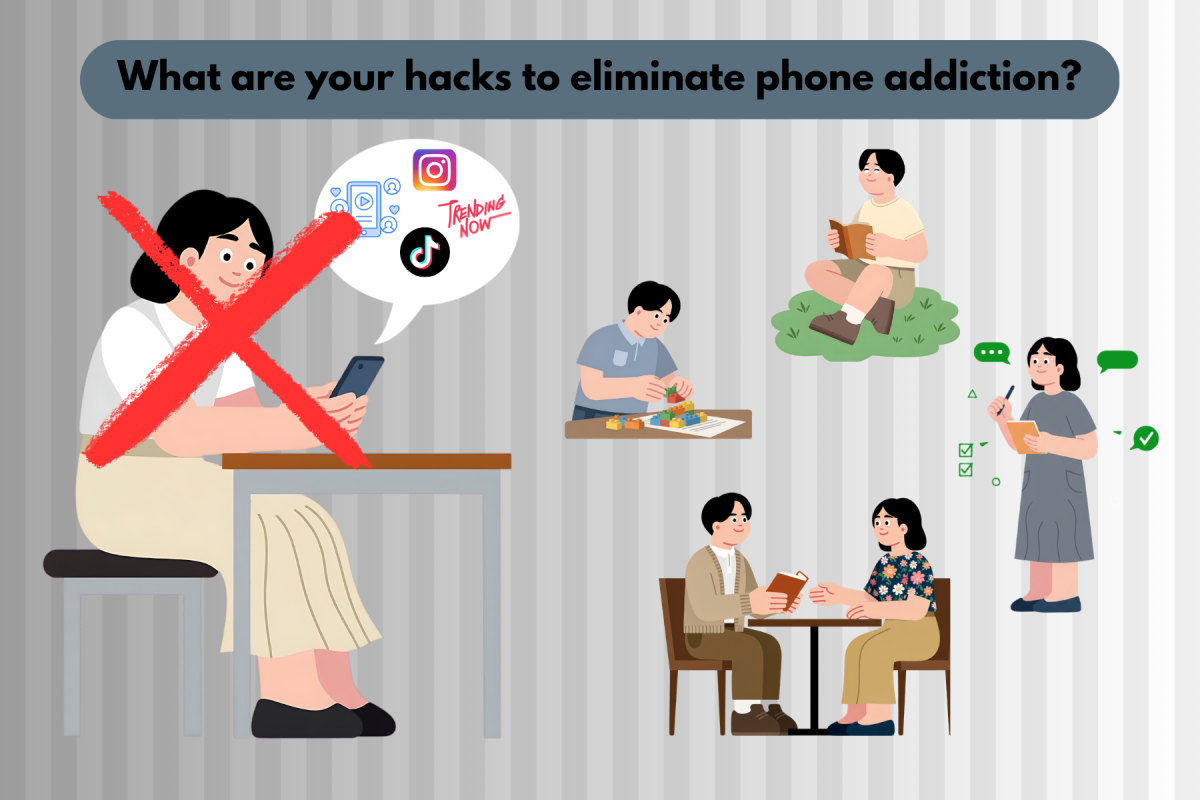
Instead of seeking quick answers, students should engage in deeper discussions and reflective writing. Programs that encourage real-life understanding and face-to-face interaction can strengthen communication and critical thinking abilities.
Schools can play a crucial role in helping teens manage their media consumption. DIS should integrate content on the effective use of online platforms into English or advisory curricula.
Students’ capacity for critical thought has faded under the influence of their environment and the habits it reinforces. Schools must create spaces that help students rebuild focus and strengthen literacy skills in today’s media-driven world.






i • Feb 10, 2026 at 8:23 am
this is a great article
Volt • Feb 5, 2026 at 6:31 pm
Thank you for the great article. I strongly agree that the use of media can be a benefit or drawback based on people who use this. Now I understand the reason of applying “no Phone policy’. I think I can concentrate more and be more social in school.
Allison • Feb 5, 2026 at 6:29 pm
As I read this article, I realized I should read more books and reduce my screentime.
Azul • Feb 5, 2026 at 6:26 pm
Wow!Such an amazing article Mary, Please keep writing!