




































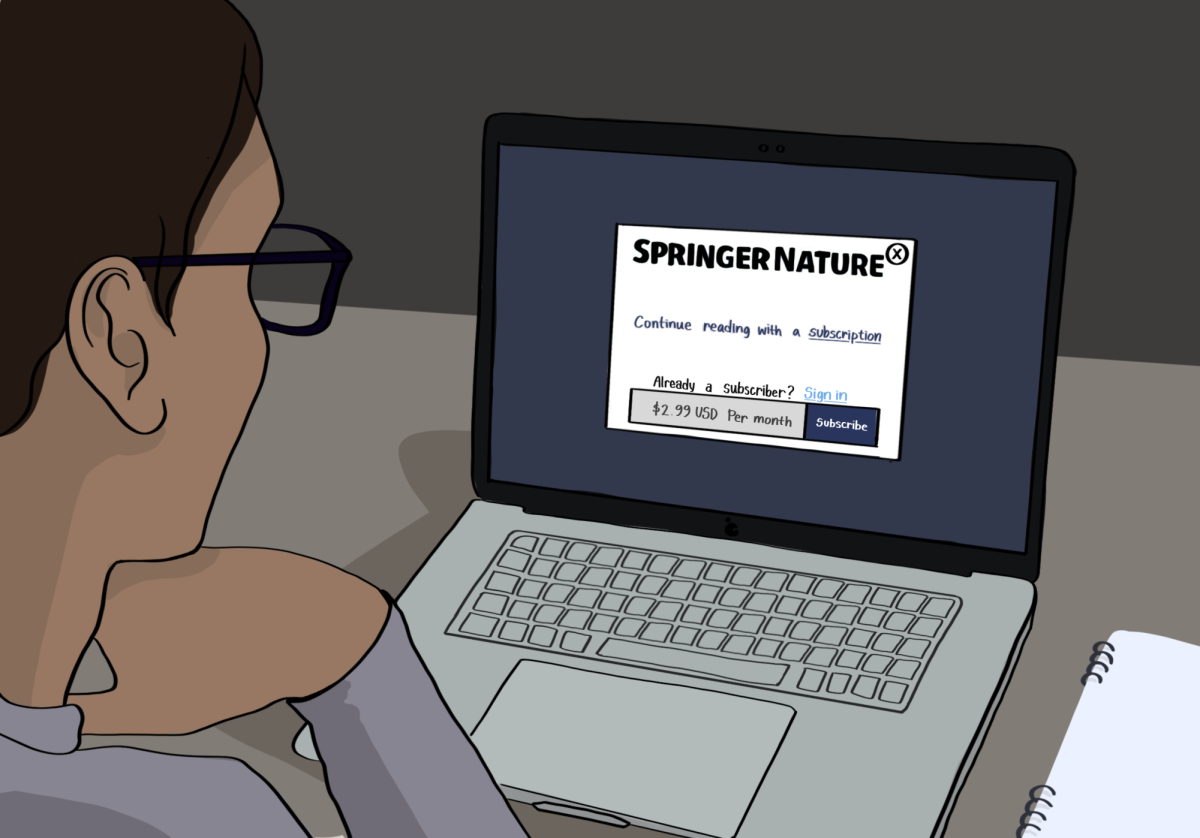
68,000 won. That’s the fee required to access a single paper from Nature – one of the most prestigious science journals in the world – as of December 2025. Under the name of these distinguished research publications lies an uncomfortable truth: the profit-driven model that dominates academic publishing.
Academic journals trace their origins to the 17th century, when they emerged to share research and broaden scientific knowledge. Today, they remain essential to global scholarship. However, the system supporting them shifted from public service to a lucrative commercial industry.
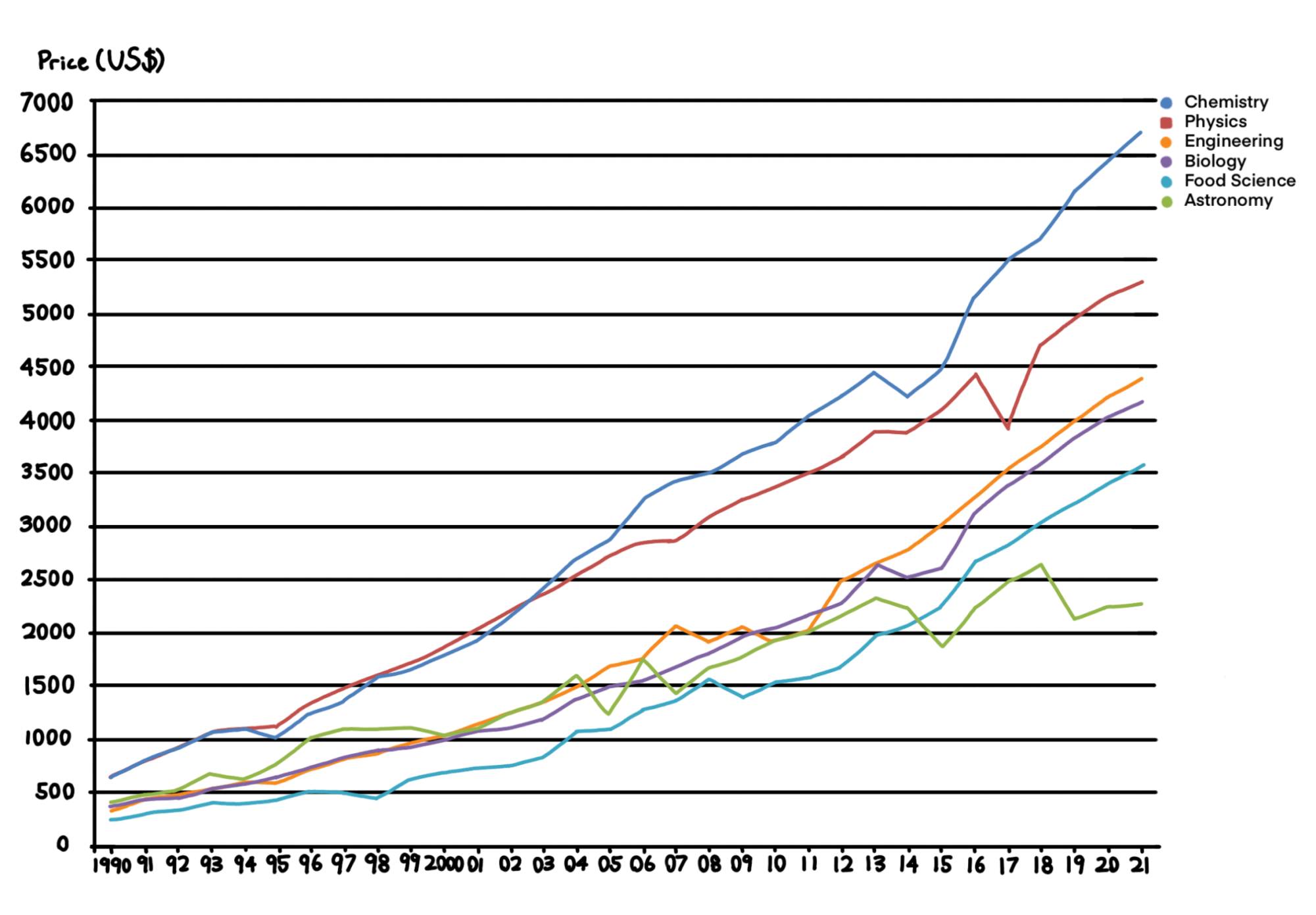
In modern publications, researchers don’t actually publish their work – commercial publishers do. Scholars often pay article processing charges (APCs) for formatting, peer review, and online distribution, while publishing firms simultaneously collect hefty subscription fees from institutions. Because universities must grant access to cutting-edge research, publishers exploit this dependence, raising prices far beyond reasonable levels.
Even with the decrease in distribution costs in the digital era, publication costs continue to climb. Major publishing corporations now report profit margins up to 40%, rivaling global corporations such as Microsoft and Google. Such figures expose the absurdity of a system that profits from knowledge meant to advance society.
Copyright transfers deepen the issue. When researchers submit to subscription-based journals, they typically relinquish ownership of their work. “In most subscription-based journals, authors are required to transfer copyright to the publisher. Authors cannot freely use their paper without the publisher’s permission,” said Unhwan Ha, a professor at Korea University. In effect, publishers claim ownership of scientists’ intellectual property and continue capitalizing on it indefinitely.
Yet scholars face immense pressure to publish in prestigious journals, which serve as a metric for academic reputation. For many, sacrificing copyright and money becomes an unavoidable trade-off for career advancement.
The ripple goes beyond labs and faculty offices. Universities must shoulder excessive subscription fees simply to allow students to complete their coursework. “We spend around five billion won a year on foreign journals,” said Jaegu Lee, the International Electronic Resources Librarian at Kyungpook National University. Such costs strain institutional budgets and directly limit students’ access to vital research.
University rankings add another layer of pressure. “University rankings are tied to how much high-impact research we produce. Without stable access to top-tier journals, that’s impossible,” said Lee.
This imbalance widens the gap between large and small universities. Only well-funded universities can afford access to most major journals, while small institutions struggle to maintain subscriptions to essential titles. “This deepens inequalities in researchers’ access to information within the same country, creating gaps in research quality,” Ha said.
The prohibitive prices burden high school researchers as well. Students face even steeper barriers because they lack university affiliations to bypass paywalls. “The only way for students to access research is just to find whatever free journals they can get, usually from MDPI, but they’re not at the quality that IEEE offers”, said Yujun Piao, a junior student researcher at DIS.
Such limitations contradict the very purpose of academic publishing. What began as a system to distribute knowledge has turned into a marketplace where information has deteriorated into an exclusive commodity.
The solution is simple: prestigious journals must lower the fees for both publishing and accessing papers. “Lowering journal costs has become essential because our budget cannot increase indefinitely. If the exchange rate keeps rising and subscription prices continue to increase, it becomes impossible to maintain our current level of access with that same amount,” Lee said.
Alternative models, such as open-access journals, offer another solution to the issue. Instead of the journal publishers covering the costs, the researcher’s affiliated university pays the publication fees. In return, these platforms provide free access to the papers, and copyright often belongs to the author.
Most importantly, public attention remains pivotal for raising awareness on the R&D field and taking proactive actions to address urgent issues, including journal access. “I think that awareness is important. We just need more and more support for other things related to R&D, not just journals,” Piao said.
Contemporary academic journals have lost their integrity, failing their original purpose of information dissemination. Comprehensive reforms to the current model are crucial to restore the morality and credibility of academic publishing.






Yujun Piao • Jan 15, 2026 at 4:27 am
very creative article– keep up the good work!