











































Seoul is no longer merely a capital. It became a brand, a symbol, and a perceived gateway to success.
Serving as the political heart of Korea for over six centuries, Seoul’s dominance has only intensified over the past decade. Despite comprising only 0.6% of South Korea’s total land area, it holds nearly half of its population. With clusters of major corporations, prestigious universities, and convenient transportation, the so-called “Republic of Seoul” concentrates opportunity in one region.
The effect is most apparent among the education sector. Korea’s most prestigious universities like Seoul National University, Yonsei University, and Korea University – collectively known as SKY – stand clustered in Seoul.
This concentration is complemented with the region’s packed networks of private academies that specialize in college admissions. In Seoul, there are about 1.7 hagwons per 1000 students, compared to 1.5 per 1000 in Gyeongsangbuk-do. This gap, while seemingly small, reflects the disparity of resources and opportunities between rural and metropolitan students.
This imbalance did not form overnight, but is a result of entrenched policy priorities. “In the past, the gap between Seoul and regional universities wasn’t as significant as it is now,” said Haenam Park, a sociology professor at Keimyung University. “…But the government has been focusing on developing universities in Seoul.”
As a result, students internalize the belief that their success and potential depends on the geographic location. “If we don’t go to a university in Seoul, we are not considered successful in Korea,” said Sangmin Kim, a student at Gyeongshin High School. The instilled belief leaves no room for alternative pathways and exploration of one’s identity.
This mindset goes beyond classrooms; it develops into many’s psychological aversion towards their own hometowns, which exacerbate the demographic divide. Students leave Seoul, often permanently, and regional areas are left with extreme depopulation and dwindling economic vitality. Even professional sectors mirror this pattern, shown by how medical workers commonly forgo rural positions to sustain their jobs in Seoul.
Likewise, the cultural perception that “귀향,” or “homecoming,” is a retreat from achievement, indicates how deeply Seoul-centered success has been embedded into the national norm.
In response, the Lee administration proposed multiple policies to counter regional imbalances. The Local Government Integration Incentive Policy, for instance, promotes administrative integration among local governments with financial aids. In addition, the Glocal University Project granted 100 billion won to nine regional universities to develop more attractive academic curriculums.
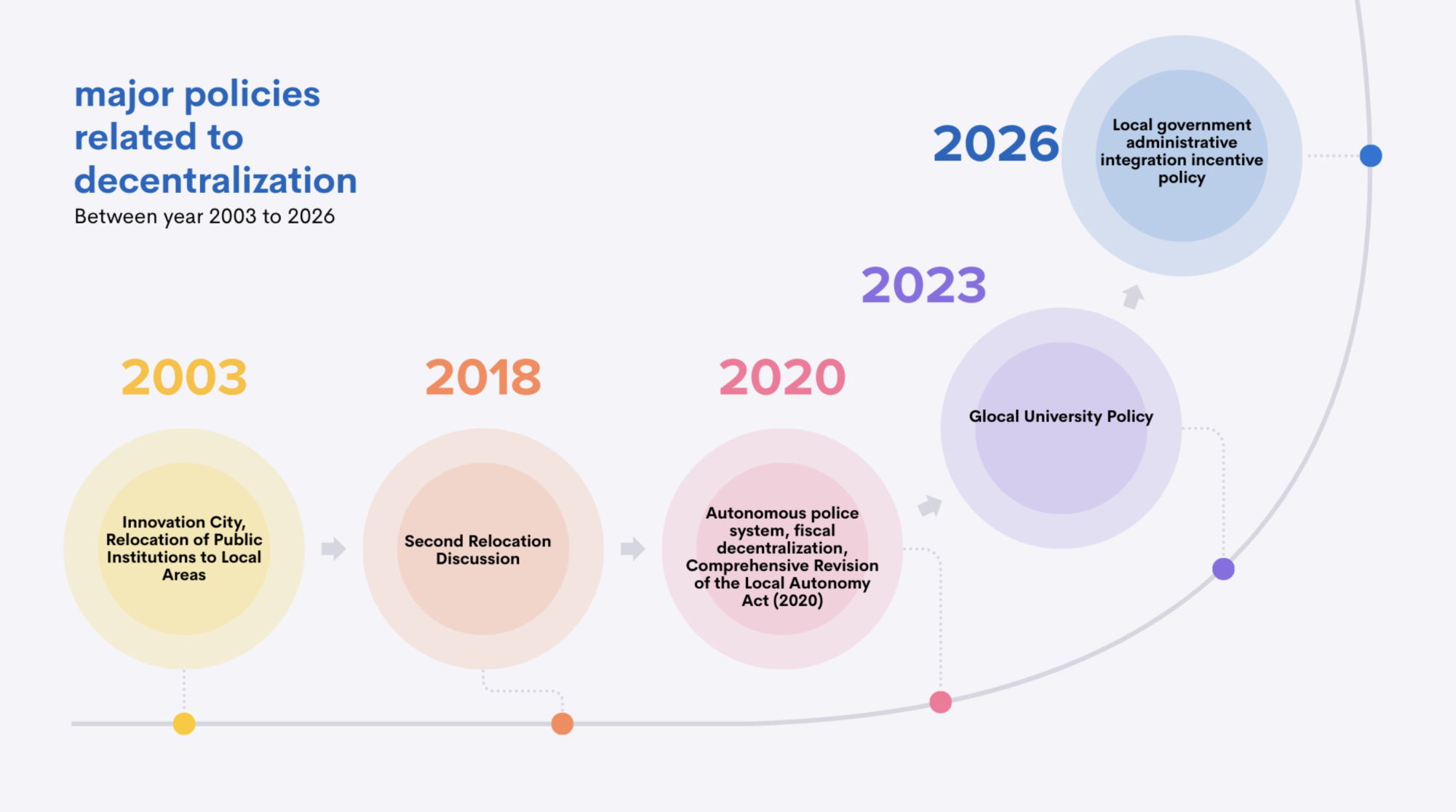
However, government effort remains limited: the measures merely add temporary funding without redistribution of structural advantages that drive people to Seoul in the first place. Core institutions, job markets, and political authority continue to cluster in the capital and reinforce its standing as the center of opportunity.
As long as this inequality persists, people will continue to dislocate and inherit the perception of Seoul’s superiority to the next generation. In turn, this mentality will limit the youngsters’ desire and opportunity to build their futures outside, eroding regional identity and long-term sustainability.
To address these concerns, then, the government should begin with incremental reforms. A portion of the excess profits in the metropolitan area, collected as corporate taxes on large companies and the appreciation of assets from expensive real estate, should be automatically repatriated to the “National Fund for Balanced Regional Development Fund” and invested in non-metropolitan industries and research infrastructure.
Ultimately, until policies adjust not only for administrative structures but positive social perceptions, Seoul will continue to dominate – not because it must, but because the system leaves no real alternative.




Beatrice Cheha Lee • Apr 23, 2026 at 7:29 pm
It’s rlly interesting how ppl downplay their own hometowns and internalize the belief of seoul’s superiority