











































By Andy Kang
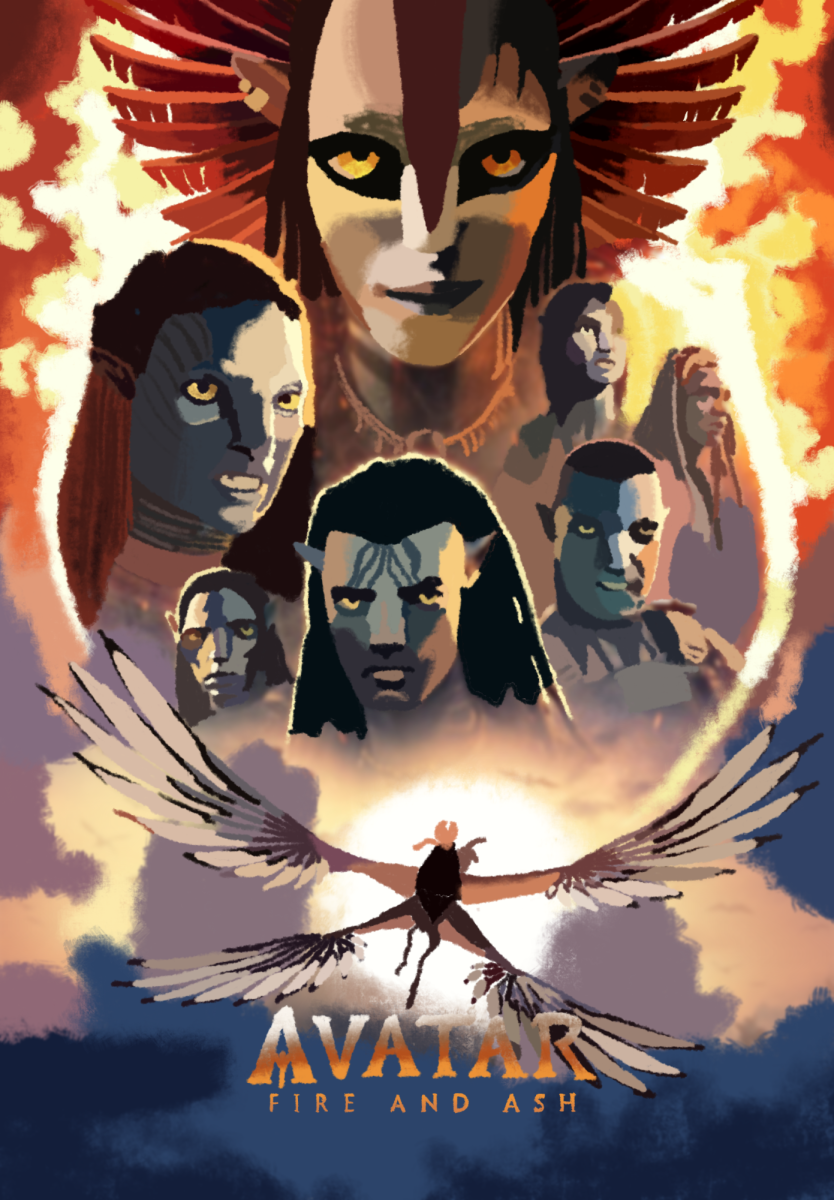
The third sequel of the Avatar franchise, “Avatar: Fire and Ash” premiered on Dec. 17, 2025 in South Korea, even before major markets like the U.S. and China brought it on screen. The prequels’ strong box office performances in the Korean market led director James Cameron to choose the country for its first release, and just as expected, the film saw huge success and generated a revenue of over 9 trillion won (6.35 billion dollars) in just 3 weeks.
The story picks up from the previous two movies, where Jake Sully, a former Marine, arrives on the planet Pandora in pursuit of its valuable resources. But he soon realizes that the mission poses serious threats to the planet’s blue-skinned inhabitants—the Na’vi—and its wildlife. Confronted with the truth, Jake chooses to turn back on the military and joins the Na’vi to protect their world.
“Avatar: Fire and Ash” expands the narrative with new regions of Pandora and more complex Na’vi factions, particularly the ash people. These challenge the idea that all Na’vi are unified and introduce conflicts that go beyond the “human-versus-Na’vi” structure of the earlier episodes.
The exploration of moral dilemmas and the overall theme surrounding the weight of choice added depth to the storyline. At one point, Jake fears that if humans capture him and replicate his ability, they would invade Pandora with even more ease. In that moment, the film reflects on the heavy responsibility Jake holds: whether to kill Spider, a member of his family and the only human able to breathe on Pandora, or to spare him.
The series as a whole depicts Jake as a devoted protector of Pandora, willing to make difficult sacrifices for the planet, so I expected him to kill Spider for the sake of the Na’vi. Instead, he did the opposite, which highlighted Jake’s character development and his complexity as the protagonist.
This moment also signifies that the Na’vi’s struggle is not solely about survival, but also about moral principles. It demonstrates that Jake values his family above all, despite his determination to aid the residents of the planet, just like a regular human being.

As a longtime fan of the franchise, I appreciated how the film seamlessly merged into and expanded the established storyline. But given the considerable gap since the last release, new viewers could struggle to appreciate the significance of certain key scenes.
For instance, the bond between Jake and Spider may not fully register with newcomers, as it developed over the course of the previous episodes. As a result, Jake’s act of mercy would carry much less emotional weight for first-time viewers
But as a core fan, I couldn’t help but notice that the film closely mirrors the plot of its direct prequel, “Avatar: The Way of Water.” Aside from the introduction of one new villain, Varang, both the protagonist and antagonist groups feature the same members. The overall storyline also follows a nearly identical structure, which made the movie partially lose its appeal to me, even with the intense emotions.
On the positive side, the graphics looked marvelous. During the fight scene between humans and Na’vis, the appearance of various creatures, the explosion of ships, and the final combat between Jake and Quaritch, the vivid elements almost brought the scenes to life.
These features partly made up for the repetitiveness of some scenes. But even with the stunning visuals, the film’s overreliance on familiar story elements rendered it a compilation of recycled clichés rather than a bold, original chapter of its own.
Overall, I would give “Avatar: Fire and Ash” a 6 out of 10. It boasts spectacular graphics and evokes a wide range of emotions, but the overuse of previously used tropes undermines their significance. The core fans may not experience the same level of impact that the earlier prequel delivered, and newbies would not fully comprehend the emotional weight of certain scenes.
[su_divider divider_color=”#2b4231″]
Avatar 3: A fiery return to Pandora brings good character development but the wrong message
Third installment of series offers respectful characters laced with misrepresentations
By Justin Huh
The film sees a stark contrast in setting from its direct prequel—whereas “Avatar: The Way of Water” dealt with the ocean and its healing powers, “Avatar: Fire and Ash” brought in a new, dangerous element of death and destruction into the mix. This juxtaposition brings upon a new layer of complexity in Pandora’s tribal landscape and expands the universe of Avatar. And unlike its predecessors, the piece also doesn’t solely rely on CGI. It brings together emotional and logical character development, as all members of Sully’s crew find themselves intertwined with the fight for Pandora.
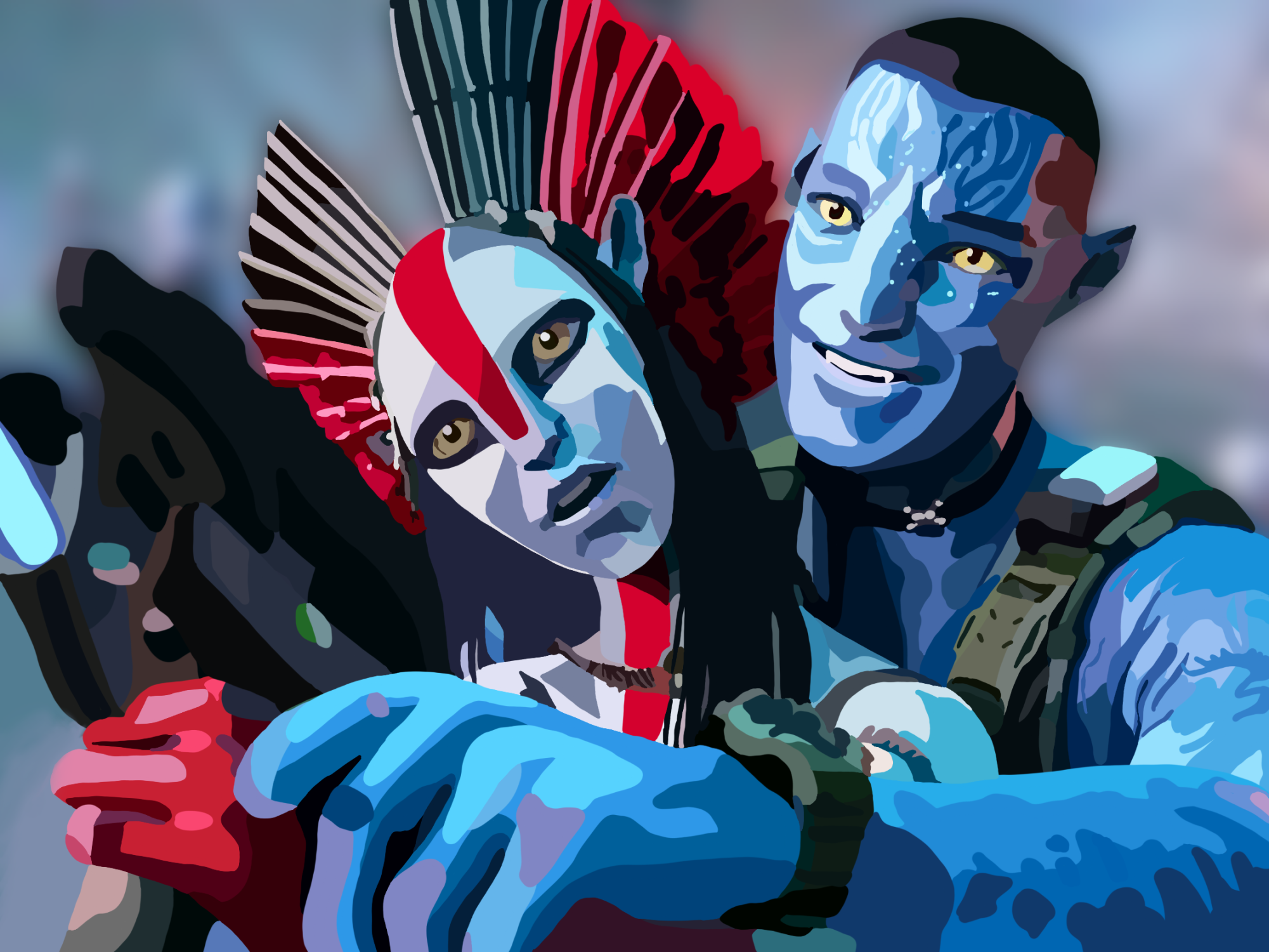
Sully (Sam Worthington) remains the main protagonist and driver of the plot. Neytiri (Zoe Saldaña) offers an emotional side to the story as a grieving mother after the events of “Avatar: The Way of Water”. Kiri (Sigourney Weaver) presents a more spiritual lens, while Lo’ak (Britain Dalton) and his companion Payakan serve as metaphors for adolescents who struggle to fit in. The antagonists also don’t fall short, as Miles Quaritch (Stephen Lang) and Varang (Oona Chaplin) stand as an antithesis to Sully and Neytiri.
(Evelyn Cho)
On a broader note, though, “Avatar: Fire and Ash” fails to fulfill its role as a metaphor for colonialism as intended. Cameron explicitly stated that the franchise stems from the colonization of Native Americans, yet the films fall into a generic “white savior” trope, with the once-human Sully acting as the leader of the native Pandorans, rapidly “reforming” and “improving” their military and command structure.
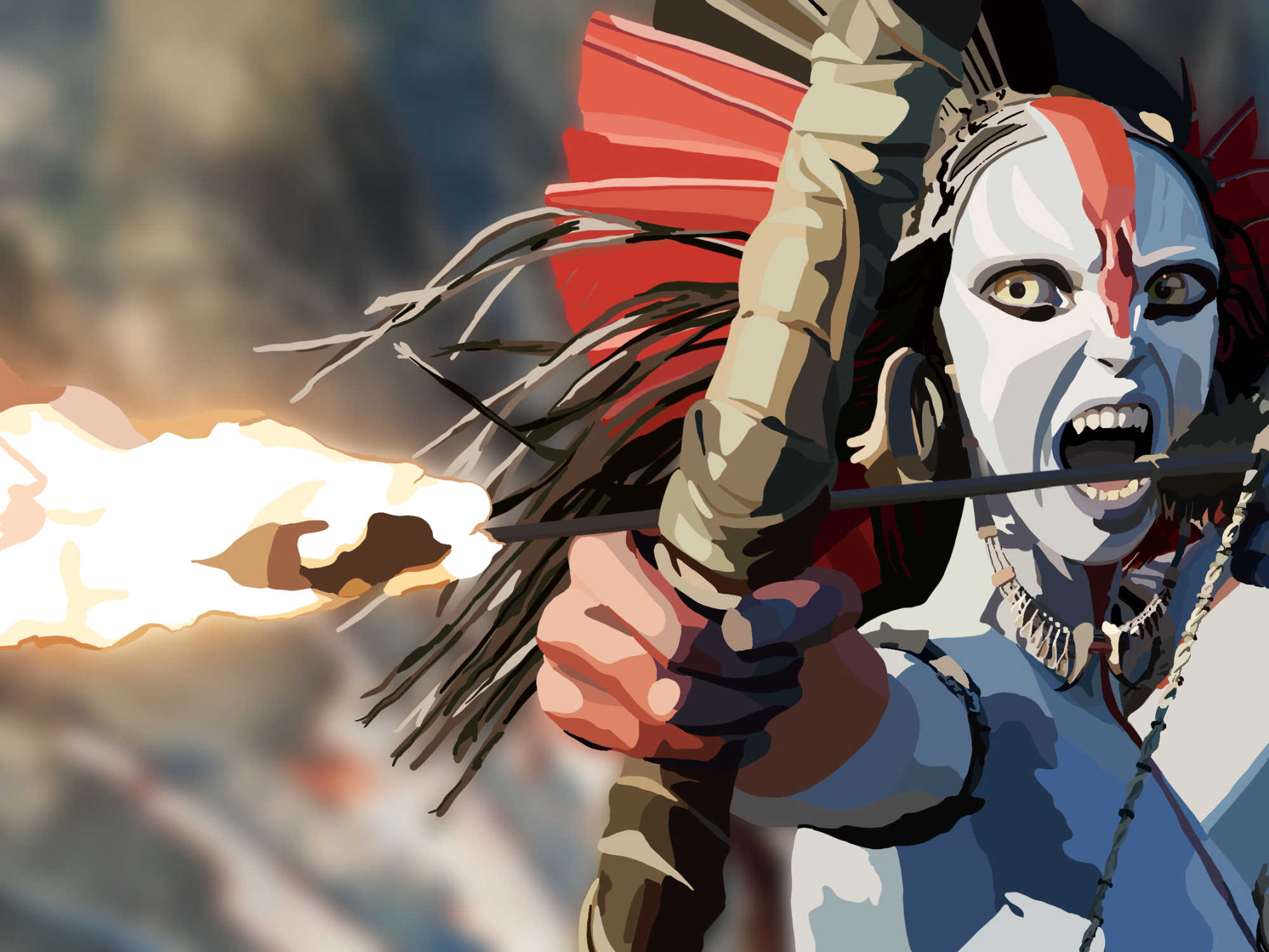
Not only that, the Mangkwan Clan seems to serve as nothing more than a portrayal of the stereotypical savage and cannibalistic Native peoples. The movie shows the clan conducting a ritual around a fire in a stereotypical fashion of indigenous peoples. While an interesting way to expand the world, I found this scene overly exaggerated without contributing much to the plot. This ultimately goes against the film’s purpose to serve as a commentary on the exploitation of Native Americans, a highly sensitive issue in history.
Moreover, Cameron’s attempts to “connect with the youth” only brought dissatisfaction and cringe. His overreliance on slang terms “hip with the kids” fails to connect with younger audiences, who may find characters like Lo’ak, who rapid-fires various colloquialisms, unrelatable. Personally, I found the overuse of the word “bro”, especially near the exposition, extremely distracting and pointless.
“Avatar: Fire and Ash,” while a cinematic masterpiece dotted with colorful and vibrant characters, falls short in terms of the message. While the overall quality of the franchise seems to improve every release, only time will tell whether this trend continues in the fourth and fifth installments of the series.
I rate this film 8 out of 10.










Lumin Crewe • Jan 29, 2026 at 6:24 pm
The movie was amazing, but it was really long! I understand why it took so long to make. Amazing article!