







































Unlike most Western albums, K-pop releases often include extras packaged as “inclusions,” such as photobooks, posters, and collectible photocards. In the K-pop industry, albums represent more than a mere compilation of recorded songs; they combine music, individuality, and collection value into a single product.
With the rise of music streaming platforms, CDs lost appeal among fans. To increase sales, K-pop agencies turned to target the consumers’ desire for collection. Over time, the so-called “albums” began to serve more as a merchandise package than a means for the purchasers to listen to the songs.
Various goods that offer personal experiences now drive as the main appeal of these items. “They add a lot of creative stuff into their albums,” freshman Jayden Lee said. “This time, the photobook is small, but inside, there’s a knitted heart. It’s really interesting to have new things that are added to albums every time.”
Each item inside contributes to the tracks’ narrative. “The parts inside the album change depending on what kind of concept they’re going with every comeback,” said Lee.
In the red ocean competition of the K-pop industry, unique album designs can serve as a powerful marketing tool. “Although I’m not that interested in K-pop, I heard that some K-pop albums have dolls or earphones in them, and I think it can be a good way to advertise those things,” eighth grader Yahyo Khorilov said.
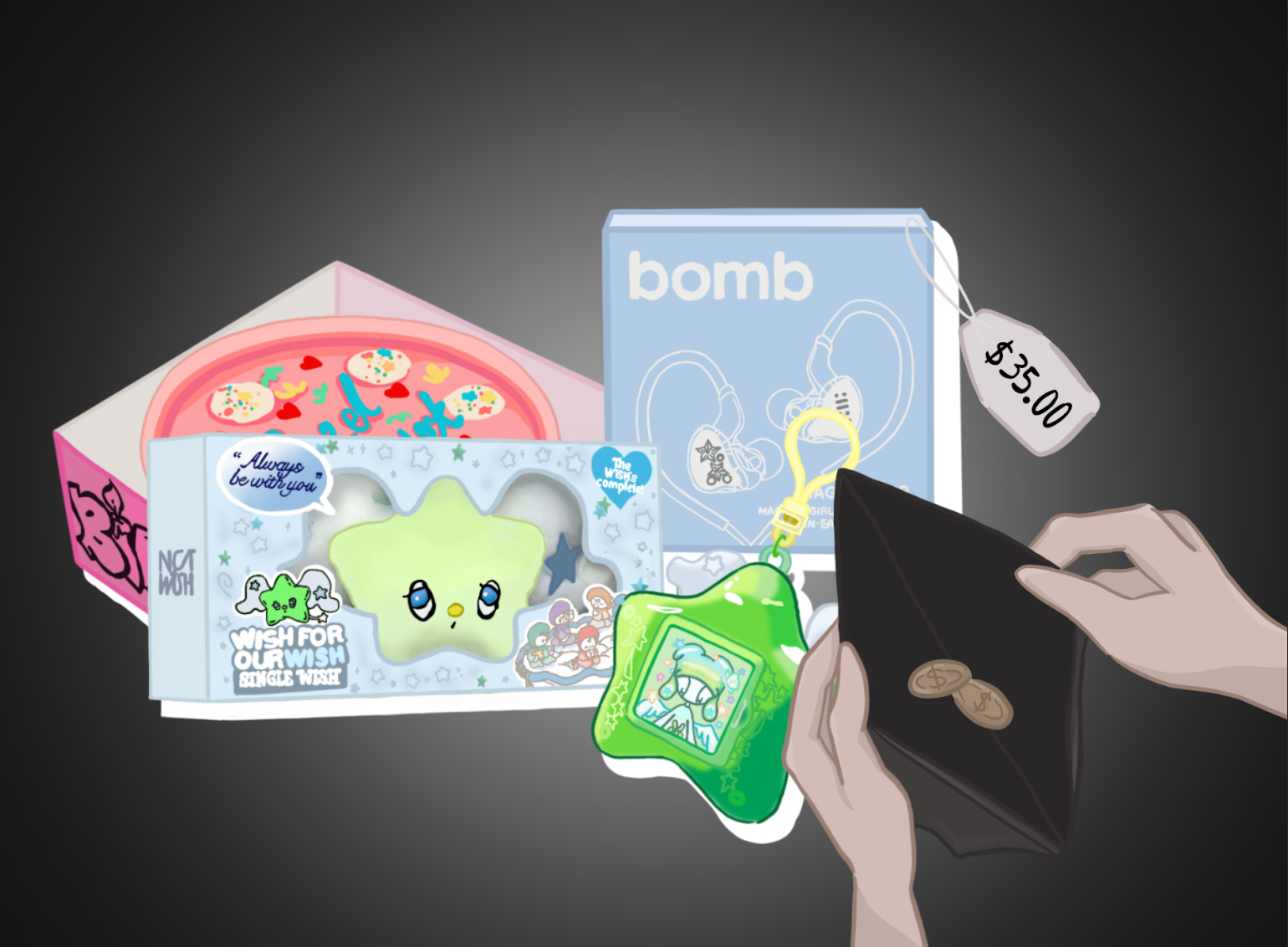
Despite increasing artists’ visibility, these albums tend to cost about three times higher than the regular versions. While unconventional items such as dolls and headphones may justify a higher price to some parts, agencies often utilize low-quality materials to maximize profit.
“The companies are trying to have special goods in the album, but they’re making it so expensive, so I don’t like it,” eighth grader Minju Koo said. “I don’t really mind if they are expensive [and] the quality is good, but then the quality is super bad.”
The issue intensifies when the agencies produce albums in multiple editions, featuring different designs or member-specific inclusions. These variants often appear in blind-box formats, where buyers have no control over which version they receive. “I’ve bought an album that’s over 40,000 won, and it was random,” Koo said.
Fans increasingly recognize the strategy behind these sales. “I think Korean K-pop industries randomize their albums to maximize profit and album sales,” freshman Daniel Beck said.
Inclusions now define the physical album market, offering personal experiences and serving as powerful marketing tools. However, high prices, blind-box formats and multiple versions ultimately reveal a profit-driven system. What appears creative on the surface masks a strategy to simply rip off the fans of their money on a larger scale.








Arin Kwon • Jan 22, 2026 at 6:25 pm
I think that K-pop albums having diverse goods is a good thing, since we can get more than just CDs.