









































“NEVER ENOUGH” marked the pinnacle of Daniel Caesar’s career. “Son Of Spergy” – not quite. Released Oct. 24, 2025, with Republic Records, his newest drop, anointed after his father’s nickname, ‘Spergy,’ offers a different take from his 2023 work. Yet this album loses the lyrical depth and vulnerability of the prior.
“Lord, let Your blessings rain down” opens Caesar, born Ashton Simmonds, on the title track, “Rain Down.” The preface starts with a seraphic gospel-infused arrangement and repetitive keys. The recurrence of “Let Your blessings rain down” sounds more like a plea – perhaps for forgiveness of his drunken endorsement of influencer YesJulz, wondering why Black people were “so mean to white people.” The song shares similarities with his first release, “Freudian,” as both heavily explore faith.
On the subsequent “Have A Baby (With Me),” Simmonds makes another request, but this time romantic. Similar to the opener, this tune loops guitar chords, carrying the singer-songwriter influence, but lacks the lyrical depth songs typically possess in that genre. He writes, “You hold my head, but in your head, you’ve already left/Have a baby with me/But you need to leave, you want to see.” It’s an expression of how he desires to hold on to the present, but delivers as an attempt to shackle a woman’s dreams with a child. Simmonds fails to embody the profound poetry and layered production – a misfire at catching two birds with one stone.
Then comes “Call On Me,” and an abrupt mood change. If the first two songs carried repetitive chords and lyrics, the subtly distorted electric guitar opening of the third finally invites listeners to fresh air after six minutes of suffocating replay. Yet, “Call On Me” presents two brief minutes of respite, as none of the later content bears such variation. None of his prior work parallels the mood on this cut, a careful sway between R&B and soft rock.
The fourth, “Baby Blue,” perhaps stands the closest to the theme – religion and family. As the only track featuring his father, Norwill Simmonds, gospel singer and the muse for this production, Simmonds conveys his devotion to a lover or to God – the distinction is obscure. Raised in a devout Seventh Day Adventist household, Simmonds encountered a tumultuous relationship with the divinity and his parents through his teenage years. Still, he reflects on the cancellation with YesJulz as a reconciliation with his religious upbringing. The record ends with a heavily pious hymn, “Jesus paid for all our sins/Is there greater love than this?/What good have I done to/Deserve His love/Can you feel His Love?”
With faith arrives the repentance of sin. Especially if sin boasts a lineup of Clairo, the catalyst of the performative epidemic, and Mustafa the Poet, a fellow Torontonian and artist. The fifth, “Root of All Evil,” explores the story after his lover has left – briefly touched upon in “Have A Baby (With Me).” However, Simmonds pleads for discipline after veering from his lover. “Am I a man or a beast?/I know I should stay away, but I can’t/I’m too drawn to evil/So many pretty people.”
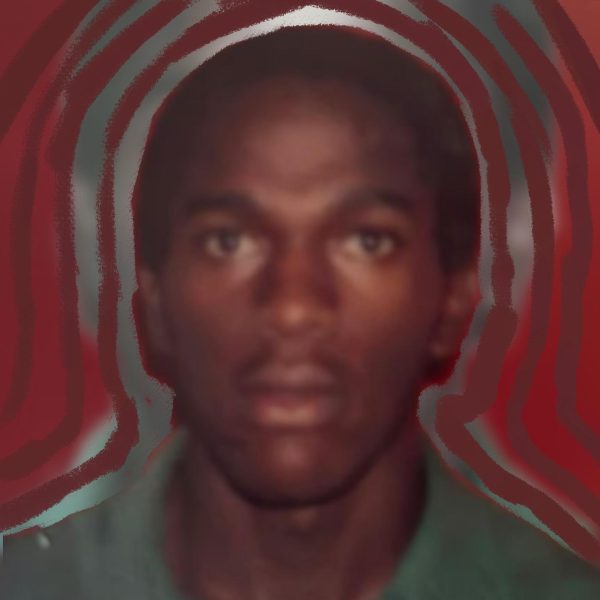
From the midpoint “Who Knows,” Ashton Simmonds returns to his exoteric style, filled with acoustic and vulnerable lyrics. The songwriting offers a softer but firmer wish on his relationships, contrary to the extremities explored in “Have A Baby (With Me).” Simmonds’s songwriting skills in “NEVER ENOUGH” are hidden in the plains for this production – explains the tie between great lyrical improvement and Bon Iver’s feature on this track.
Bon Iver then returns as the guitarist in the bridge of the subsequent song, “Moon.” Despite attribution to the artist, his voice barely presents itself except in the background hymn. However, from “Moon,” Simmonds returns to his prior style – less abstract, more of a provocative emotional tinge. He searches for his religious faith, harmonizing, “Who’s gonna be my Jesus?/Who will advocate?” After an instrumental break, Simmonds replicates the tone of “A Cappella” from “Pilgrim’s Paradise,” his debut EP.
If “Root of All Evil” reached sin with a crazy lineup, “Touching God” transcends to the gates of heaven with Rex Orange County, Yebba, Bon Iver, Mustafa, and Dev Hynes from Blood Orange. As the emotional summit, “Touching God” attempts to connect with his Maker. Yebba and Dev Hynes lay the groundwork for Ashton Simmonds to truly surrender to repentance for the multifaceted emotions for oscillation between his faith. He laments, “Oh Lord/Thy kingdom come/Thy will be done/Oh, Lord/The battle is won/On Earth and Heaven/Praised be the Son.”
In “Sign of The Times,” Ashton Simmonds embarks on a hopeful journey with a lover, until his friend’s Tesla goes up in flames. These ‘signs’ by God indicate a forward stir in Simmonds’s spiritual guidance. This juxtaposition between love and tragedy places him as the modern-day Shakespeare – but only 80%. Yet overall, this track is emotionally the apogee of “Son of Spergy.” Reminiscent of a slow burn with strums of guitar as an opener, with lyrics about love, to a gospel influenced bridge, and ultimately a beat switch accompanied by a catastrophe. The song closes with an uneventful instrumental that transitions to an acoustic guitar.
“Emily’s Song,” a rather plain record compared to its antecedent, features obvious lyrical parallels to “Always” in “NEVER ENOUGH.” Simmonds writes the same, “Fussing and fighting/f–ing and lying.” However, if “Always” promised a never-ending vow of love, “Emily’s Song” returns to nostalgia after a breakup.
Then Simmonds renounces meaningless relationships, with allusions to Psalm 23: “Although I walk through the valley of shadow and death, I will fear no evil.” He confronts the anger with this devout chorale of synths. The record hits home as his brother, 646yf4t, read ‘baby fat’, features the track, bolstering the theme of religion and family.
The ultimate “Sins Of The Father” comes full circle. As the title references his father, he presents the values that guided him to produce “Son of Spergy.” He says in an interview with Billboard, “In your childhood, your father is a lot like God. He’s the person you fear the most on earth and also the person whose love and respect you desire more than anyone else on earth.” He sings about his father and God, whose heavenly love exceeds his earthly one’s.
“Son of Spergy” is not for the mainstream – rather an internal reflection of faith. As Simmonds leans into the Christian influence, grandiose and repetition outweighs the lyrical depth. It would rate a solid 3.5 out of 5, but wouldn’t exceed it.




Rishik • Dec 4, 2025 at 6:26 pm
I really liked the analysis of the songs and how it was detailed