







































The current Large Language Model landscape looks completely different from two years ago. Users shifted from OpenAI’s dominance with ChatGPT to a competitive race where the company now ranks second to Anthropic. Amid ChatGPT’s setbacks in the AI Race, the San Francisco-based company made two controversial moves: the addition of ads into the conversation and the agreement to a deal with the Department of Defense.
Since these additions, OpenAI experienced 295% mobile app uninstalls day-over-day, and its competitor, Anthropic, gained 51% downloads. ChatGPT users constantly change their subscriptions to Google’s Gemini and Anthropic’s Claude for their alternatives. From those social conflicts, just features don’t justify the “right” AI subscription anymore. It’s about trust for the company, use cases, and performance of the models.
OpenAI’s ChatGPT
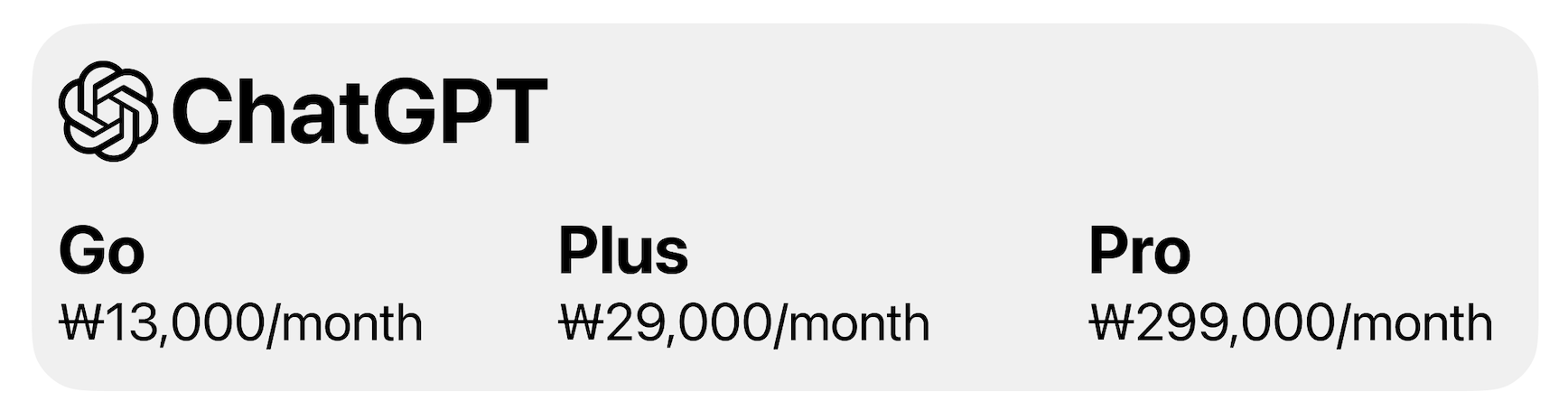
Despite the controversies about its promise, OpenAI’s ChatGPT remains the highest user rate among the three companies, with one billion active users, and about 50 million consumers paying for subscription plans. OpenAI currently offers three different plans: Go, Plus, and Pro.
At ₩13,000, the Go plan allows users to have longer memory (your chat storage), more messages, and more access to GPT-5.4 and future flagship models. It extends image generation, file uploads, and advanced data analysis. Highly recommended plan from OpenAI is the Plus plan, priced at ₩29,000. Without advertisement, the Plus plan includes features from the cheaper plan offers, and gives access to advanced GPT models, Codex agent (ChatGPT accessing the user’s computer for programming), and Sora video generation. If you use OpenAI’s models daily in heavy-load projects, the company offers ₩299,000 Pro option.
Anthropic’s Claude
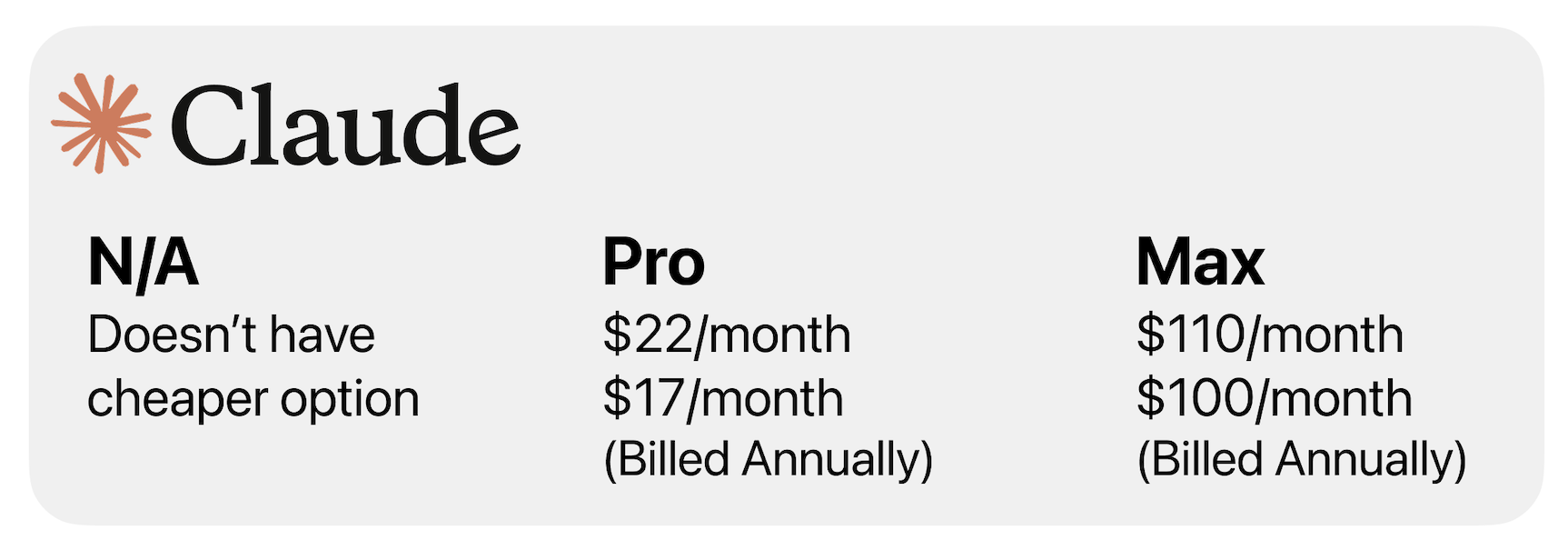
Claude’s three models are tiered with speed and depth. Haiku handles fast general-purpose tasks, Sonnet is versatile for every use, and Opus performs the highest in programming and heavy workloads, and scores highest in AI benchmarking tests. The Pro plan ($22/month) includes access to Opus and Sonnet, Claude Code for autonomous coding, and Cowork, a desktop automation tool. Two Max tiers at $110 and $200/month add 5x and 20x limits, respectively, along with early access to research preview models or advanced features, higher output, and priority access at high traffic times.
Google’s Gemini
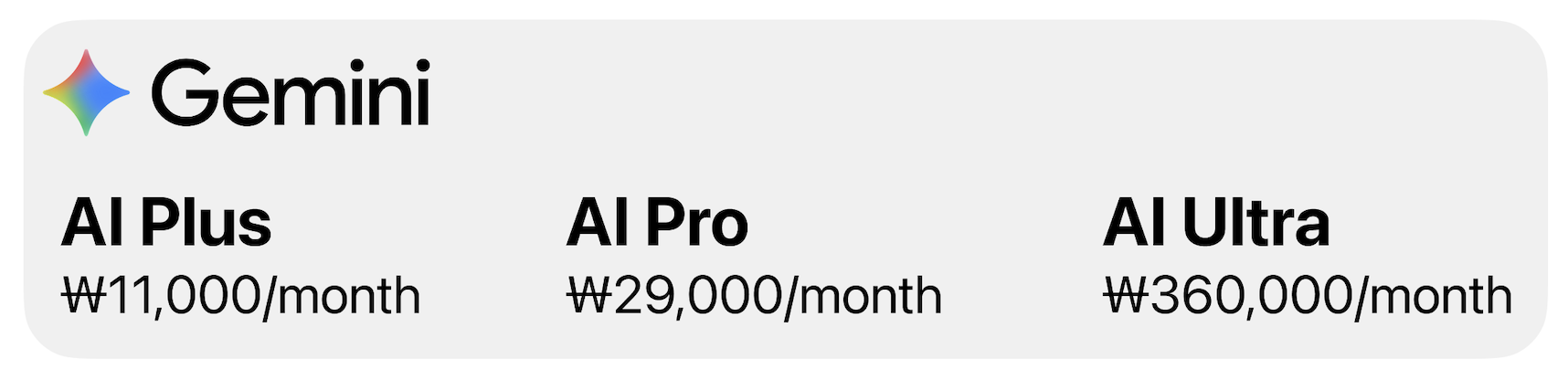
Google bundles AI access with its larger subscription ecosystem, which means Gemini offers even more Google Drive storage and Workspace integration. They offer three plans: Plus (₩11,000), Pro (₩29,000), and Ultra (₩360,000).
The Plus plan covers the flagship Gemini Pro model with Flow (video AI generation), Whisk (Image-to-Video creation), NotebookLM (research assistant), and 200 GB of Drive storage. In the Pro, it includes every feature in the former, including Gemini Code Assist, Google Antigravity (AI code editor), Google Home Premium, and 5TB of storage. The highest plan, Ultra, offers research preview models, YouTube Premium, and 30TB of cloud storage.
A note on switching
Beyond pricing, benchmark scores offer what each model can perform. Claude Opus 4.6 with Extended Thinking leads in programming and heavy-reasoned tasks, which scored high on GPQA Diamond (expert-level science reasoning), SWE-Bench Verified (autonomous coding), and GDPVal (complex agentic knowledge work). Gemini 3.1 Pro with longer thinking holds an edge in multimodal tasks, where it needs visual analysis with high reasoning across multiple subjects together. OpenAI’s GPT 5.4 with Pro and Thinking remains competitive, but it still trails behind Claude’s Opus models in multiple accounts.
Suggested Subscriptions
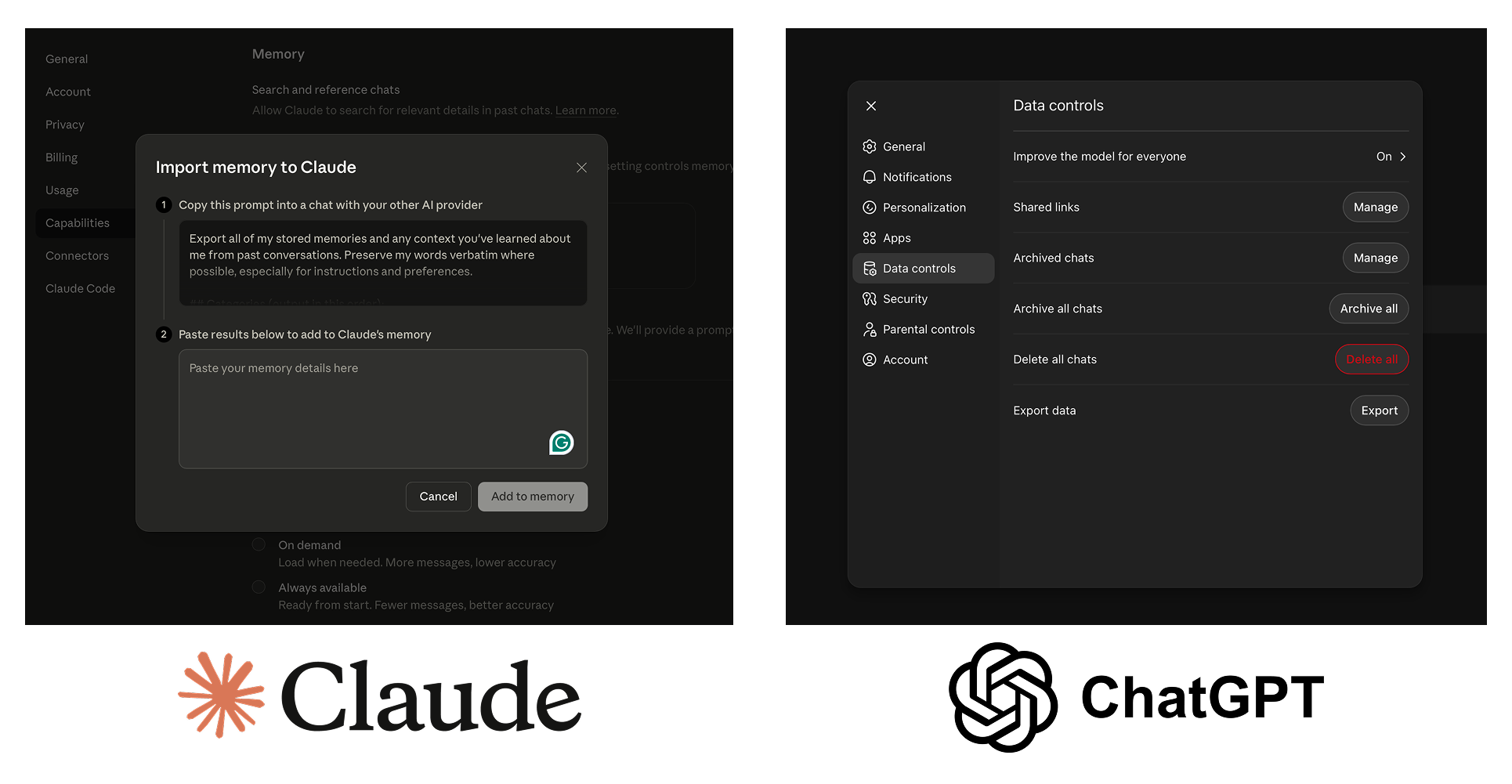
Note: if you plan to switch your current AI subscription, all three platforms require a different data export method. Claude offers a transfer option with an import and export tool that allows users to extract their data (memory and project information) directly from other services. ChatGPT allows full data export through its Settings. Users can download chat history and memory entries as files to manually import to other services. Unfortunately, Gemini doesn’t offer a dedicated AI-data import or export tool. Either users request the summary of projects and memories to be copied, or request other services as well to be pasted.
For the best value, Google AI Plus, at ₩11,000 per month, tops the clearest recommendation. At less than the price of a coffee per week, it includes access to the top-performing flagship model, 200GB of Google Drive Storage, and AI features in Google Workspace (Docs, Slides, Sheets). For students and teachers, this plan upgrades workflow at the lowest price among Google, OpenAI, and Claude’s subscriptions.
For the best performance, Claude Pro, at $22 per month, wins with the strongest subscription. With benchmark-leading models, longer memory, Claude Code for autonomous coding, and no advertising, this subscription would be well worth the money.






Volt • May 7, 2026 at 7:40 pm
Thank you for the article. As a person who only uses the free version of different generative AI, I was curious about the other version that we have to pay. Thank you for giving me suggestion of which AI to use when I choose to change the version.