













































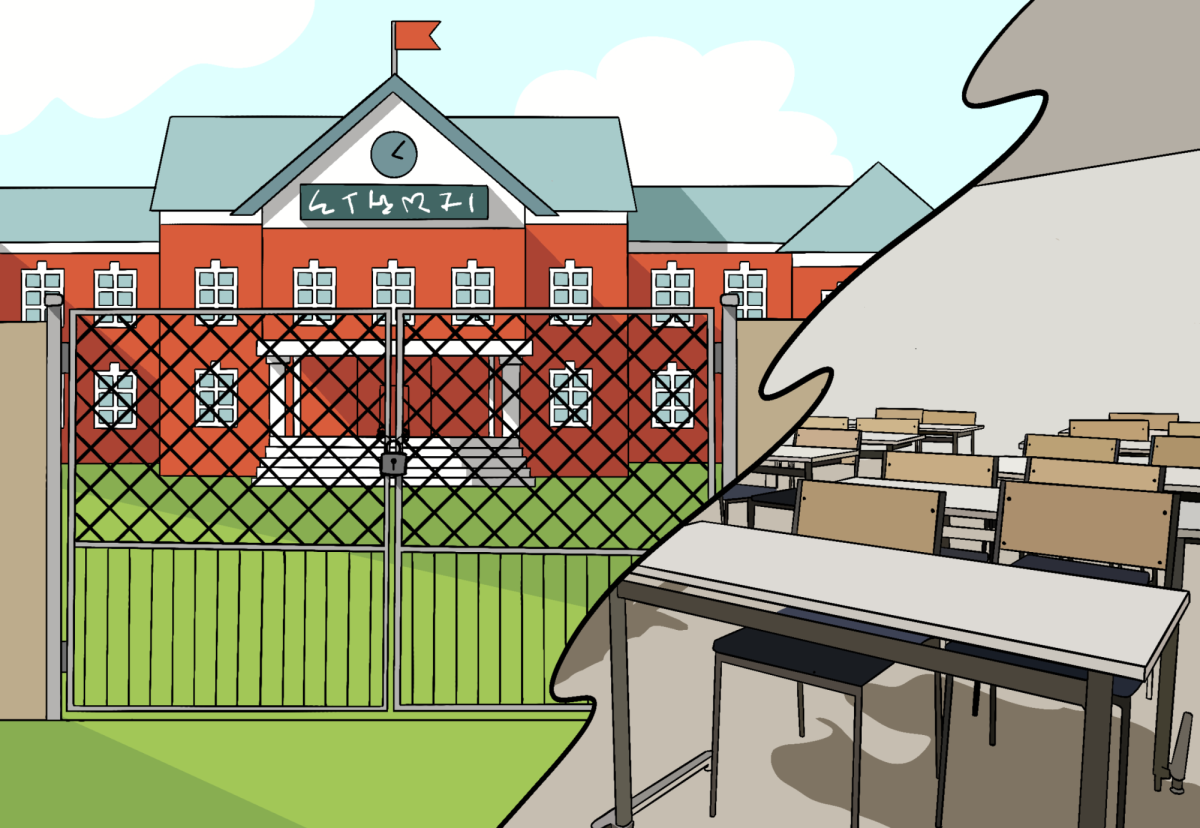
A small elementary school in the southwest region of Daegu rang its last bell a few months ago, marking the end of three decades of history. Wolgok Elementary School, once home to more than 2,400 students, closed its gates as enrollment fell to just 78 students in 2025.
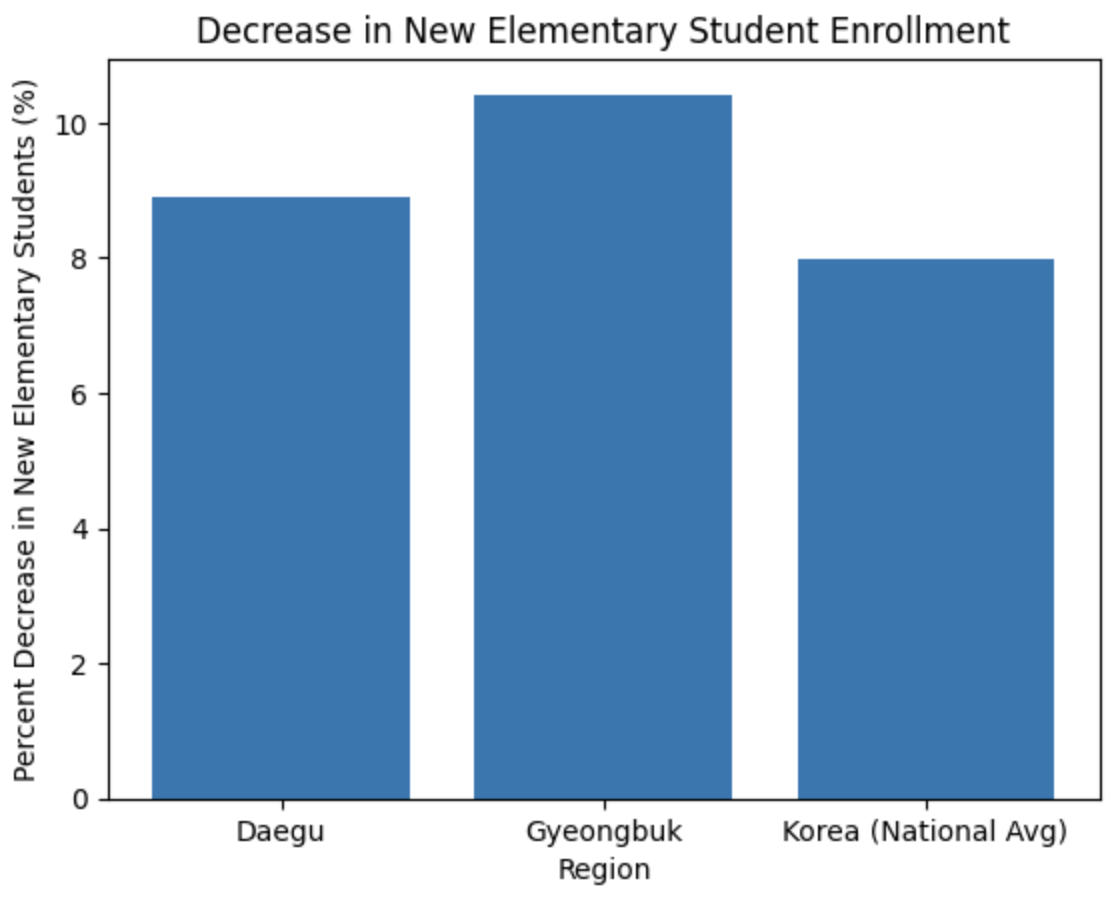
Alongside Wolgok, more than 60 schools nationwide received notices to close for 2026. Recent numbers illustrate the scale of this change: Korea’s elementary student-to-teacher ratio dropped from 23 students per teacher in 2021 to 12.7 students per teacher in 2024. During the same period, nationwide elementary school enrollment declined by 7.9%. In Daegu, the figure reached 10.42%, a clear indicator of the demographic crisis.
This trend reveals signs of exacerbation over time. Following the shutdown of four schools—Seochon, Bibong, Wolgok, and Paho Elementary—in relatively underdeveloped regions of Daegu, experts project that the number of schools with 10 or fewer first-year students will more than double, from 16 to 37, by 2030.
However, this phenomenon does not simply reflect the decline in birth rates. While small schools empty out their classrooms, others teem with students. “Daegu Dongdo Elementary School has been one of the schools with an overpopulated student body for recent years,” said Jung Mi-hee, principal of Daegu Dongdo Elementary School. The students haven’t disappeared; they have relocated to specific districts.
This pattern stands visible across the city. “In general, Dong-gu or Suseong-gu have faced an ironic case of an increase in elementary student population. Other districts, such as Nam-gu, have faced much more severe consequences,” said Shin Hwang-gyu, the director of the Elementary Education Support Division in the Daegu Dongbu Office of Education.
At the core of the crisis lies the uneven distribution of educational resources among Daegu’s districts. Suseong-gu ranked first in an educational environment evaluation, reflective of its high number of private academies and education expenditures. By contrast, Seo-gu and Nam-gu ranked near the bottom. This inequality pushed many families, in search of strong academic foundations, toward already- populated areas.
As a result, the decline in enrollment rates in specific areas fuels a cycle that increasingly strains smaller schools. “As students decrease, pre-existing social stigma for regions without educational venues worsens, ultimately leading to a shutdown,” said a teacher from Kyungshin High School, Seung-yeon Bae.
Even if some manage to remain open with only a handful of students, experts warn that shrinking school sizes still erodes education quality. As enrollment falls, interactive programs such as discussions and cooperative learning become harder to sustain. In addition, with less administrative attention paid to the underpopulated regions, many default to multi-grade classrooms and inexperienced teachers that compromise quality education.
To address these challenges, the Daegu education administration devised creative solutions. A pilot program in Gunwi-gun County integrated small elementary and middle schools into a “hub school” that served a total of 104 students. With sufficient enrollment, the institution introduced student-led interdisciplinary projects, an approach previously deemed infeasible due to low enrollment and under-resourced facilities.
However, the model proved difficult to implement on a broader scale. It requires substantial resources, and the long distances between rural schools make comparable mergers impractical to replicate in most regions. Despite all the efforts, many find these measures insufficient to address the core issue.
While authorities have proposed alternatives to maintain the student body, most policies focus on integrating small schools rather than improving the educational infrastructure. Critics warn that without deeper solutions, the current system may simply provide a band-aid for 1 the structural inequality that pushes many elementary schools to the verge of closure.
The increasing gap in student enrollments across Daegu underscores the urgency of reform. Without expanded educational infrastructures and consistent monitoring by the local government for low-population schools, the detriments of regional disparity will echo beyond school hallways.
“Fewer students isn’t just about empty classrooms, but rather affects teachers’ livelihoods, families, and the strength of an entire community. When the schools are gone, the neighborhood goes with them,” said Seung-yeon Bae.