







































**Editor’s Note: The Jets Flyover Editorial Board has chosen to keep the protester quoted in this article anonymous due to privacy concerns related to her immigration status. The source is identified as “A*,” and all references are marked with an asterisk.
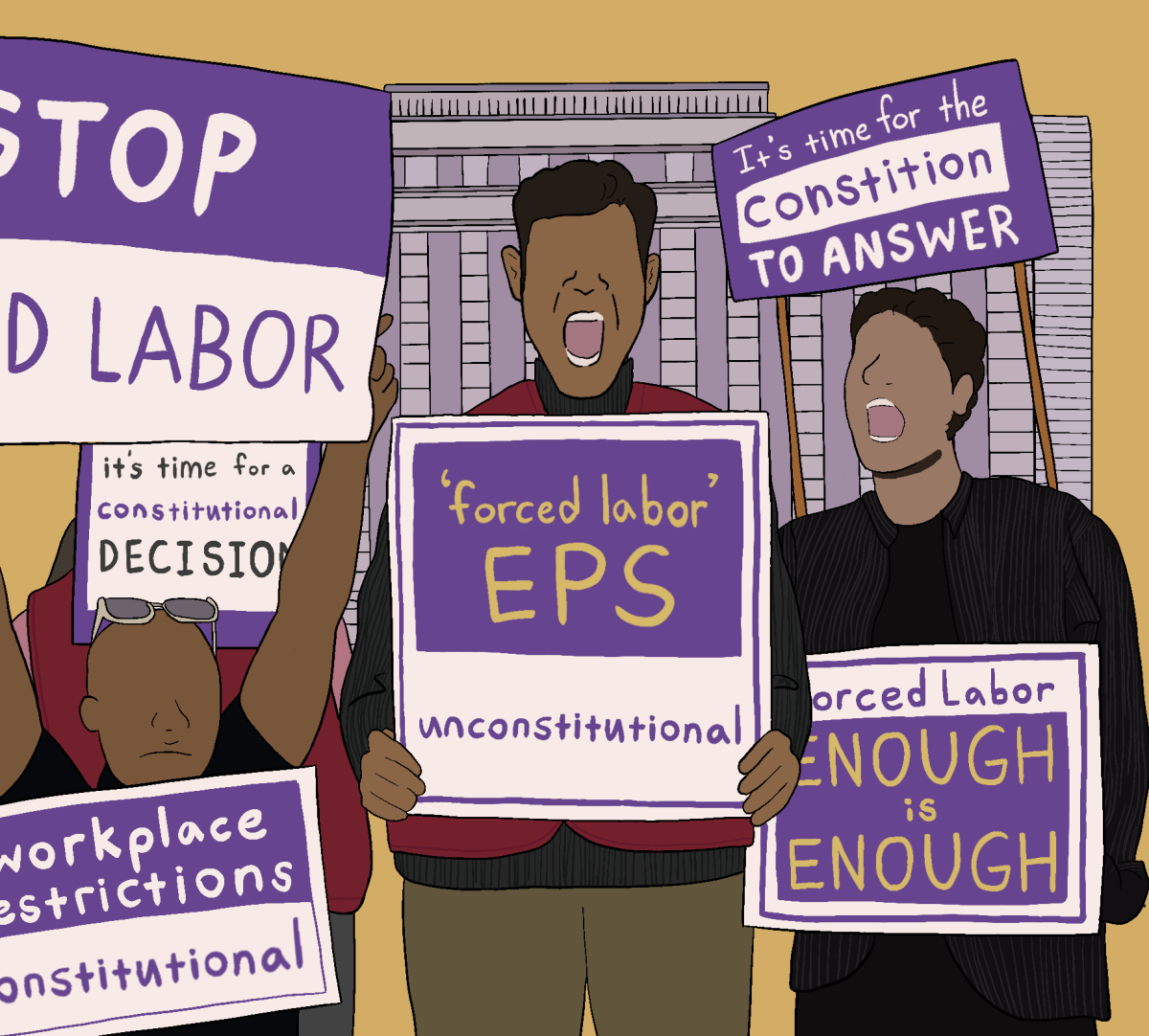
In the midst of London’s brutally cold winter months, hundreds of people stand outside the British National Gallery as they chant and wave signs in support of a pro-Palestinian group. Despite police efforts to contain the protest, more show up in support.

Palestine Action, an organization founded in 2020, aims to stop British exports of arms to Israel, which contribute to the genocide in Gaza. To do so, members protest, occupy premises, destroy properties, and engage in vandalism or even assault. These often lead to the arrest of members and thousands of dollars in property damage.
Under the UK’s 2000 Terrorism Act, the government banned Palestine Action by classifying it as a terrorist organization, under the same category as ISIS and Al-Qaeda. They cited assault and destruction of government property as justifications for such a decision. Currently, anyone who shows support for the group could face criminal proceedings.
Due to this, despite the group’s visible presence, few openly declare their support to evade the consequences of affiliating themselves with the illicit organization. “I wouldn’t say I support Palestine Action, because that’s illegal. That would get me arrested. That would classify me as a terrorist in this country, which is absolutely insane,” said Dick Mathews, a participant at the protest.
The decision to label the organization as terrorists sparked immediate backlash and drew thousands to the streets.“[Palestine Action is] most definitely not a terrorist organization,” said Daniel Ahmud, another protestor. “If it were a terrorist organization, we’d see a bit more of the armed police here, stopping the terrorists … they’ve done nothing wrong.”
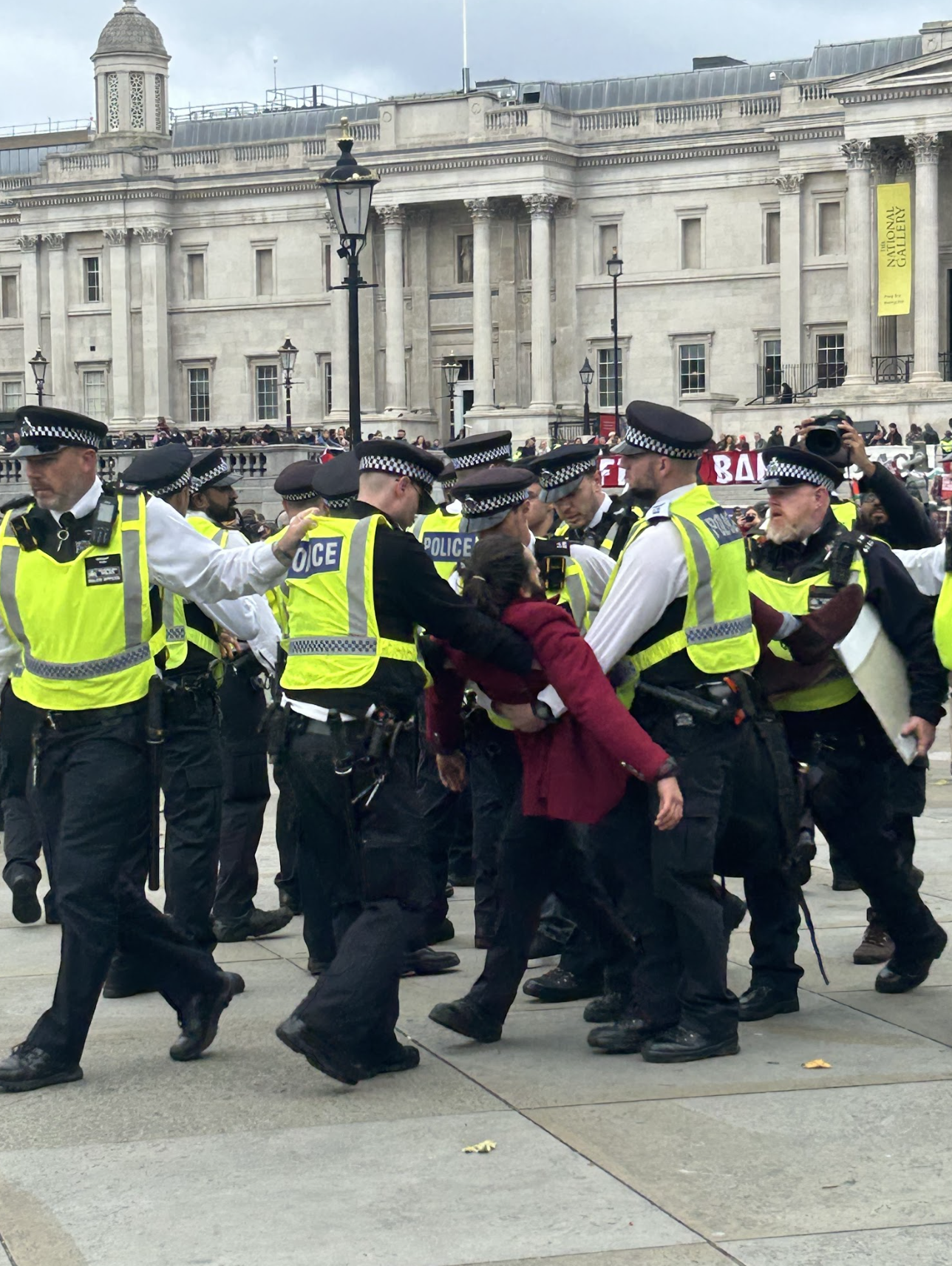
While they have committed assault and damaged property on occasion, the group did not intend to cause physical harm to civilians. Most outwalks primarily entail activists chaining themselves to machinery or defacing the property of defense manufacturers. These tactics aim to disrupt operations and draw attention, not to injure people.
Furthermore, while these demonstrations can result in legal consequences, they fall short of the deliberate violence typically associated with terrorism. Within the UK’s Terrorism Act framework, Palestine Action remains a complete outlier — unlike Hamas and Hezbollah, which maintain armed divisions and openly embrace direct violence, Palestine Action mainly entails nonviolent ways of protest.
But the issue extends beyond mere classifications. Even if Palestine Action acts on legitimate concerns, the method they employ produces reverse effects. Their actions – such as intimidatory attacks toward businesses and institutions – undermine public safety and shift attention away from the humanitarian causes they advocate for.
Such actions only worsen divisions surrounding the Israel-Palestine conflict. By associating advocacy with aggression, the use of radical tactics prompts many to associate the entire Pro-Palestinian movement with aggression, which exacerbates polarization around an already sensitive issue of the Gaza War.
Above all, Palestine Action’s operations produce a limited political impact relative to the damage they generate. While their actions did disrupt parts of the UK’s ability to send arms to Gaza and raised awareness of the conflict, they have not altered the official policy of the UK government or the behavior of key states such as Israel and the U.S.
This exposes a broader limitation of protest-driven strategies that rely on pressure alone to force political change. “To make a real change in Palestine, there needs to be more direct action, more than just a protest,” said an A*. “There needs to be dialogue between all the Arab states and the politicians to make real change. But the protests are putting pressure on those people.”
At the same time, the government’s response raises its own problems. Blanket bans on support only incite more backlash without addressing the root of the problem: continued involvement in the Gaza conflict. Probation alone can not magically resolve a deeply rooted political hostility.
Similar cases have arisen beyond the UK. In South Korea, groups like the People in Solidarity with Palestine (PPS) have organized regular, peaceful demonstrations against arms exports to the Middle East. “We will not stop marching until the arms export to Israel is stopped,” said Park Shin-ho, a protester in Seoul.
Yet despite relentless mobilization, these efforts have likewise struggled to trigger tangible policy changes. “While the protests help spread the message, I think there needs to be more direct action to stop the arms export along with the war,” Park said.
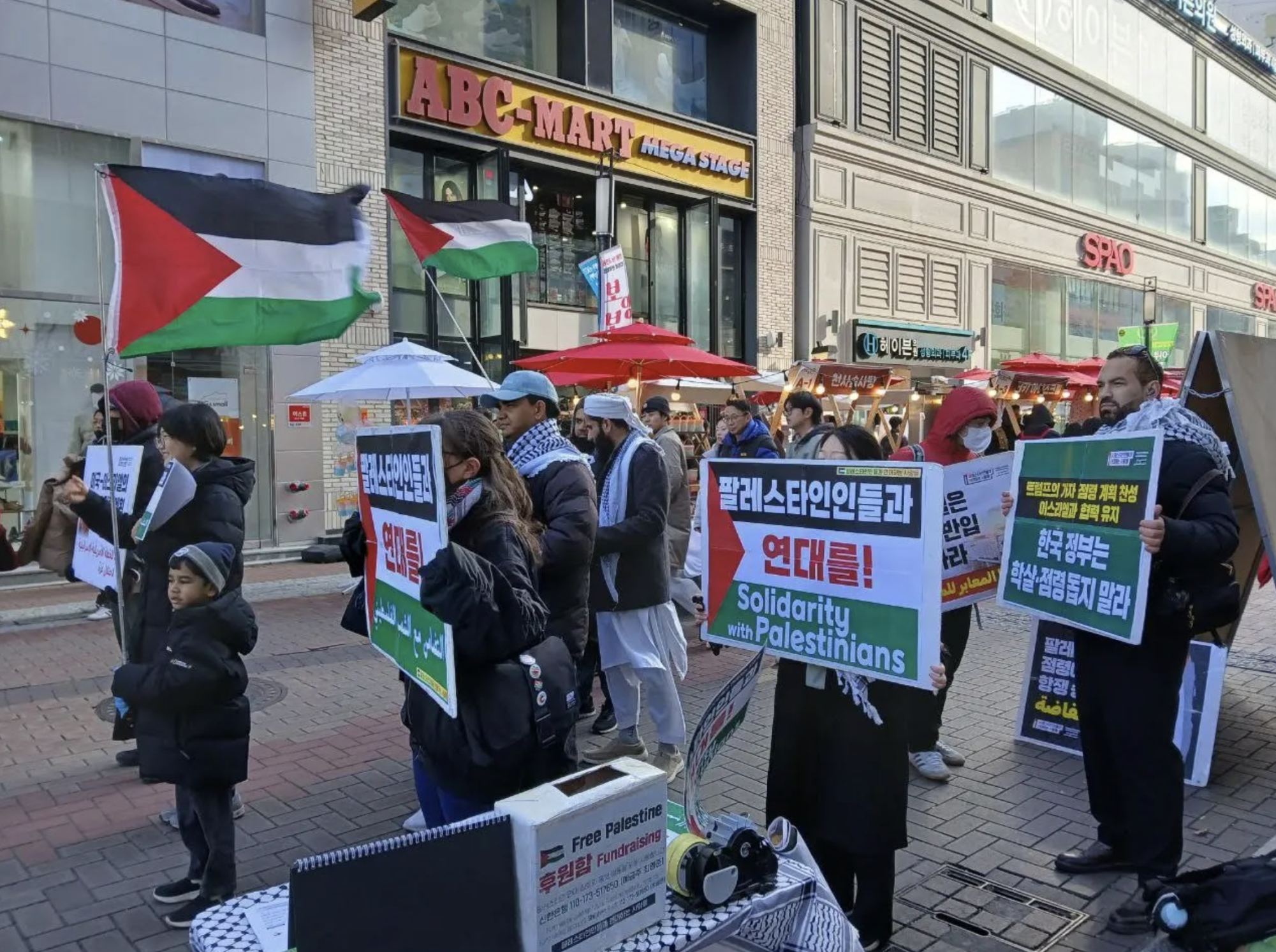
(Justin Huh)
As the conflict continues, the futility of both Palestine Action and the government highlights the importance of coordinated action. Protests without political backing easily lose meaning, while government contaminants without reform only ignite public frustration. Without the balance between civic input and policy changes, the fruitless clashes will likely persist.
Only through sophisticated dialogue can policymakers and advocates reach a consensus, and only then can they move beyond confrontation and toward resolute action.