















































At 4 p.m., a 45 seat bus rolled into the parking lot of Lotte Duty Free store in Myeondong, bringing in a stream of passengers from the 2,000 Chinese tourists who arrived aboard the cruise ship from Tianjin. Their voices and movement breathed life back into the building that had long stood quiet and hollow, transforming an almost deserted space into one of lively transactions.
South Korea’s temporary visa-free entry program for Chinese group tourists is not a reckless gamble, but rather a calculated policy choice to revive a struggling tourism industry and strengthen ties with a key economic partner. So far, early signs indicate promising gains – but its long-term success remains questionable with pervasive animosity.
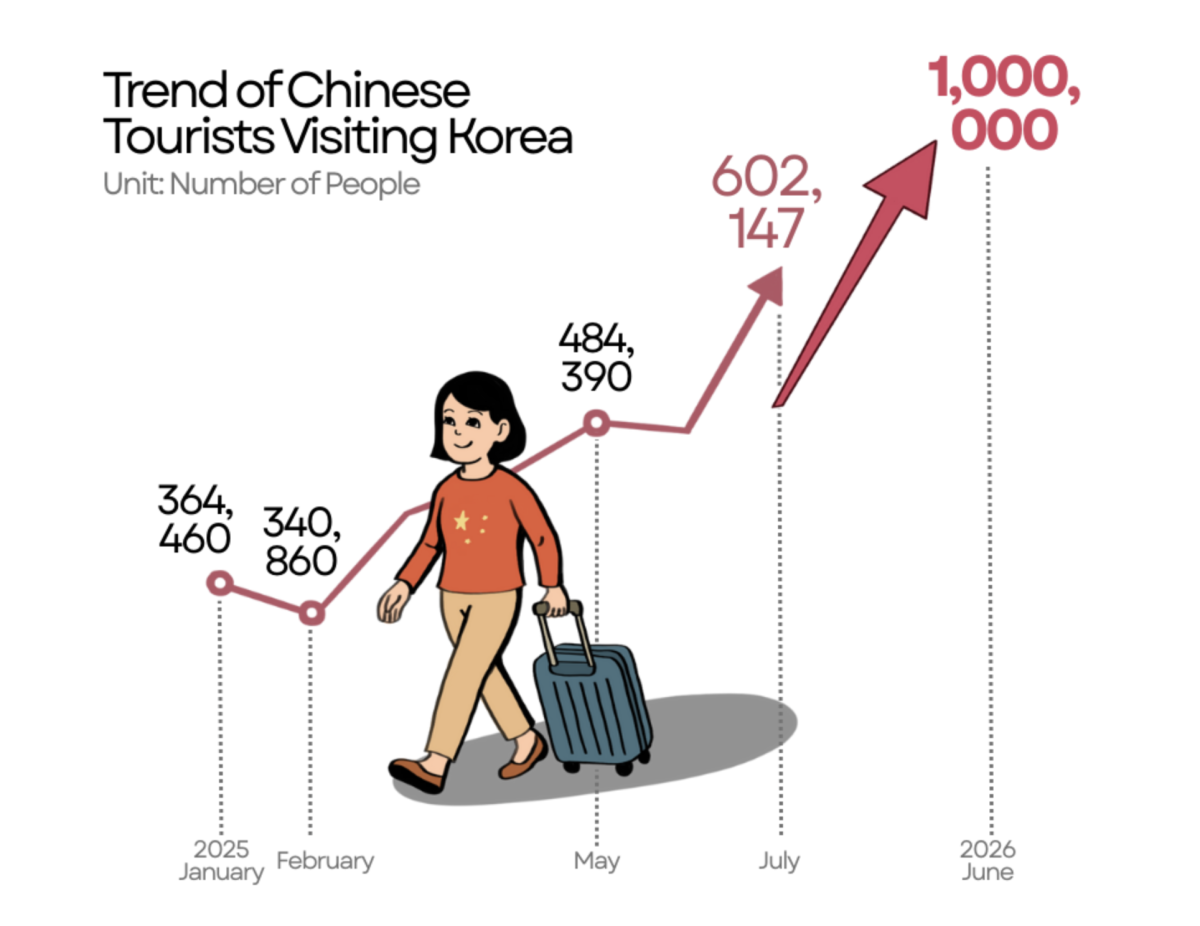
From last September until June 2026, Chinese travelers organized by pre-approved domestic travel agencies may enter South Korea without a visa for stays of up to 15 days. Individual tourists remain subject to standard visa procedures, and Jeju Island continues its separate visa-free system.
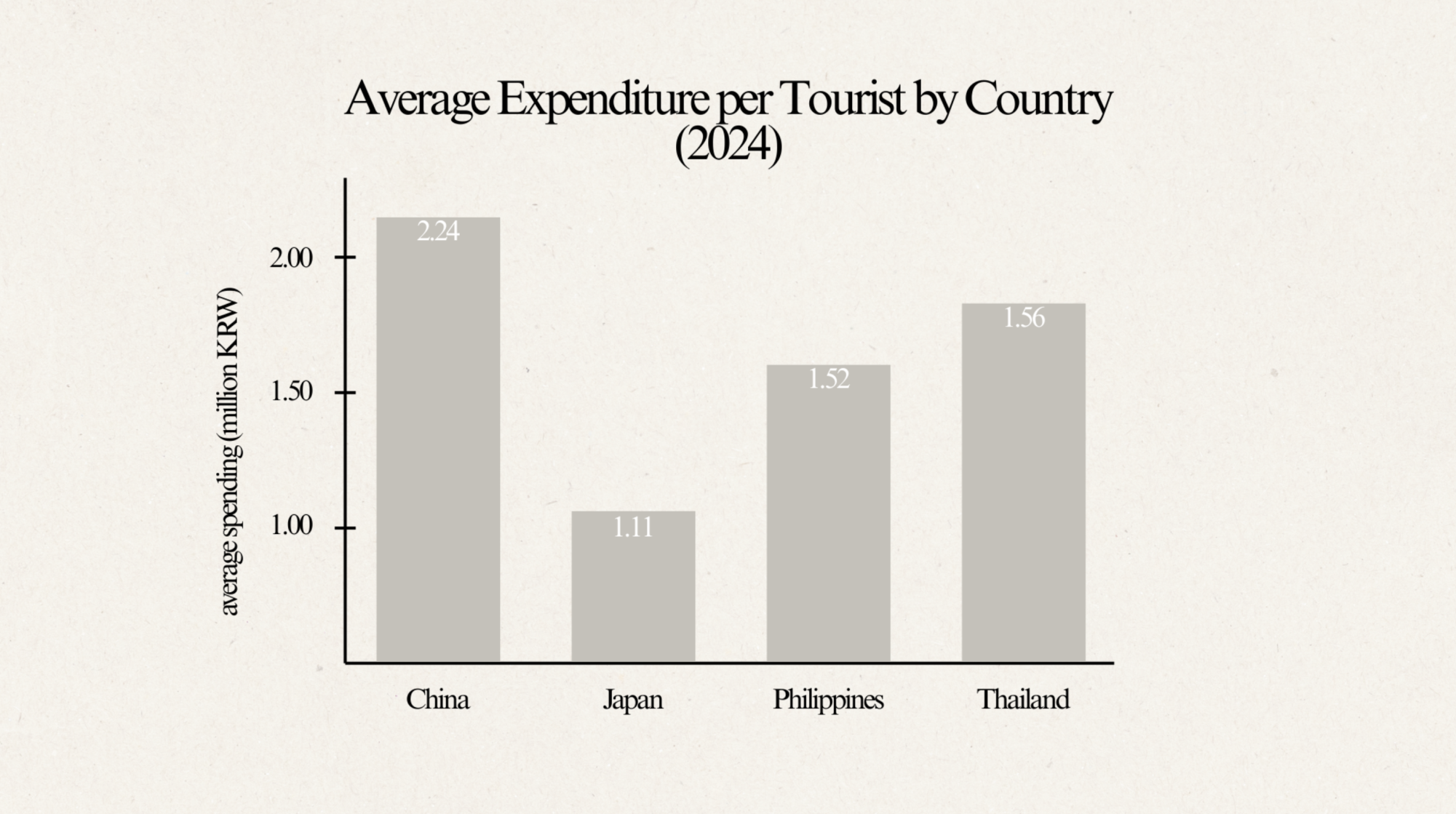
One of the core objectives revolves around economic yields. In fact, Chinese tourists contribute significantly to Korea’s tourism revenue, especially for retail, duty-free shopping, and domestic services, and the government targets these high-spending visitors to stimulate the local economy.
The policy delivered an undeniable economic impact, as intentional tourism strategies quickly turned into quantifiable gains. Shortly after the policy took effect, Chinese arrivals to Korea jumped by 16.4% in September. At Shinsegae Duty Free’s Myeong-dong branch, the number of Chinese customers rose by 90%, while revenue increased by 40%.
The spending surge extended beyond major shopping districts, revitalizing self-employed businesses. “These days, Haeundae Beach is packed with (Chinese) tourists, and it’s been great for business,” said Eunhee Park, a worker at Ireumnan Gijang San gomjangeo (이름난 기장 산 곰장어) at Haeundae market. “By lunchtime, most of the eels prepared in the morning are already sold out,” she said.
Even transportation services felt the impact, as small-scale drivers saw their daily earnings rise incrementally. “Around Gwangalli, there are many Chinese people who catch taxis on the street,” said Byungho Lee, a taxi driver in Busan. “…regular taxis pick up passengers directly from the street (instead of using a reservation app), which makes it profitable,” said Lee.
Beyond its economic impact, the measure also holds diplomatic value. Welcoming Chinese visitors signals a willingness to stabilize cultural exchanges amid regional tensions and economic uncertainty. As much as tourism holds significant value in diplomacy, lowering Korea’s barriers reinforces its status as an open, globally engaged country.
Despite these gains, the policy still bears concern over government maintenance. Previous visa-free programs exposed gaps in immigration monitoring, particularly in Jeju. After the island expanded its visa-free policy in 2022, authorities recorded over 11,000 undocumented foreign residents in June 2024, nearly 90% of whom were Chinese nationals. While these figures represent a small fraction of total visitors, they exposed weaknesses that still shape public skepticism toward the Chinese.
A more serious issue lied with the travel agencies’ monitoring. Among the 137 authorized companies, 34 had previously received penalties for tourists’ illegal drift-aways/stays. When the national safeguard meant to protect citizens reveals inconsistencies, it raises concern about the deeper structural flaws.
In some cases, this skepticism targets the wrong group and grows into racial hostility. In fact, since the policy’s launch, protests and discriminatory acts targeting Chinese surged nationwide. In the past four years, about 40% of police-restricted rallies involved anti-Chinese sentiments. Behind this hatred stood generalized claims about an entire ethnicity based on isolated incidents or sometimes even unverified rumors.
Such reactions cannot be dismissed, as even a well-intended measure may cause backlash – such as ostracism towards tourists – in an environment with racial hostility. “Korea has established its identity as a country with soft power based on cultural inclusiveness,” said Lee. “[Anti-Chinese sentiments] will only exacerbate international political risks in the long run.”
Heavy responsibility lies with the people. To curb insidious discrimination, citizens should exercise critical judgment to distinguish unfounded racism from legitimate critiques. This way, Korea can welcome visitors from around the world with respectful and responsible interactions.
Simultaneously, because regulation gaps feed both public skepticism and the risk of undocumented residency, the Tourism Ministry must enforce rigorous oversight. “If problems arise due to insufficient enforcement of existing regulations, that must be addressed,” said Haneol Lee, an international relations assistant professor at Pusan National University.
On a positive note, the government did tighten the standards for authorization of travel agencies that manage Chinese group tours. This change aimed to address potential absconding among the crew. They also strengthened security checks for individuals, including evaluations on criminal records and prior entry refusals.
While the effectiveness of the strengthened criminal-screening process remains unproven, it stands as a meaningful step towards effective supervision and national safety. Because an orderly and welcoming environment is necessary for beneficial international exchange, combined effort between authorities and citizens appears paramount.
In the end, visa-free entry itself does not pose major harms: insufficient oversight and poor communication are. If Korea wants this policy to succeed, it must prove that openness does not come at the expense of order. Only through credible enforcement, transparent governance, and a respectful environment can the nation grasp both economic vitalization and diplomatic stability.






delulu • Mar 12, 2026 at 7:30 pm
I didn’t realize that Chinese tourists contribute such a large amount of money to South Korea’s tourism industry. Great article Bonbon!