














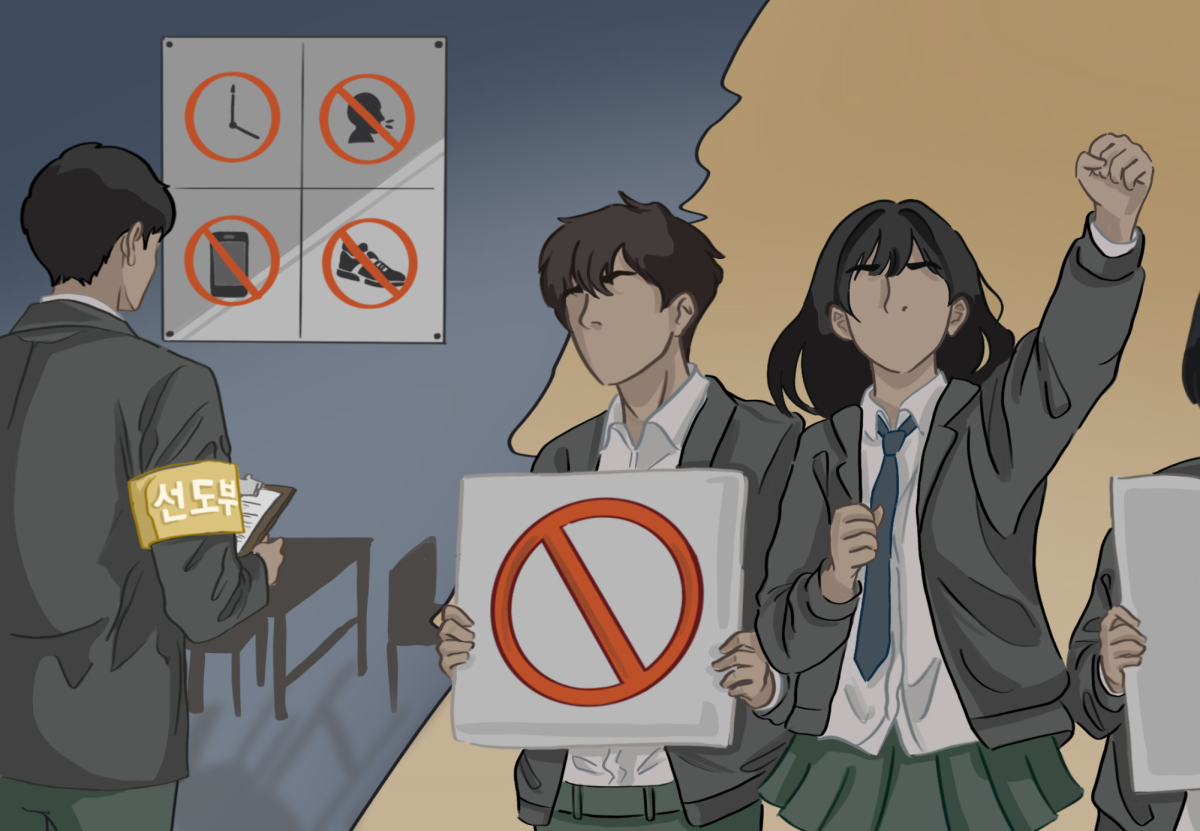
















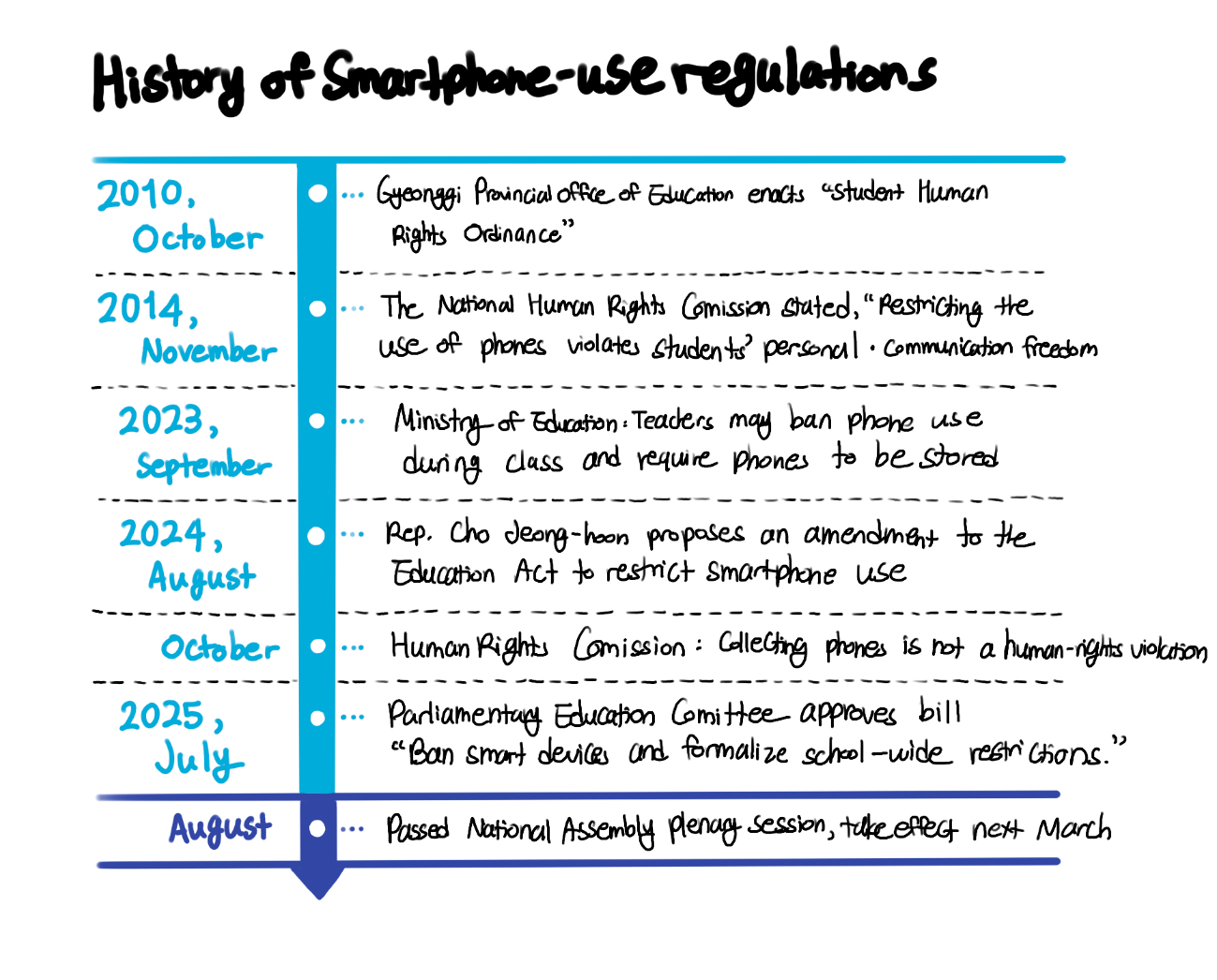
The Korean government passed a new amendment under the Refined Elementary and Secondary Education Act (초·중등교육법 개정안) that addressed smartphone bans, faculty complaints, AI digital textbooks, and more. Passed during the plenary session of the National Assembly in late August and set to go into effect in March 2026, the policy aims to protect students’ rights.
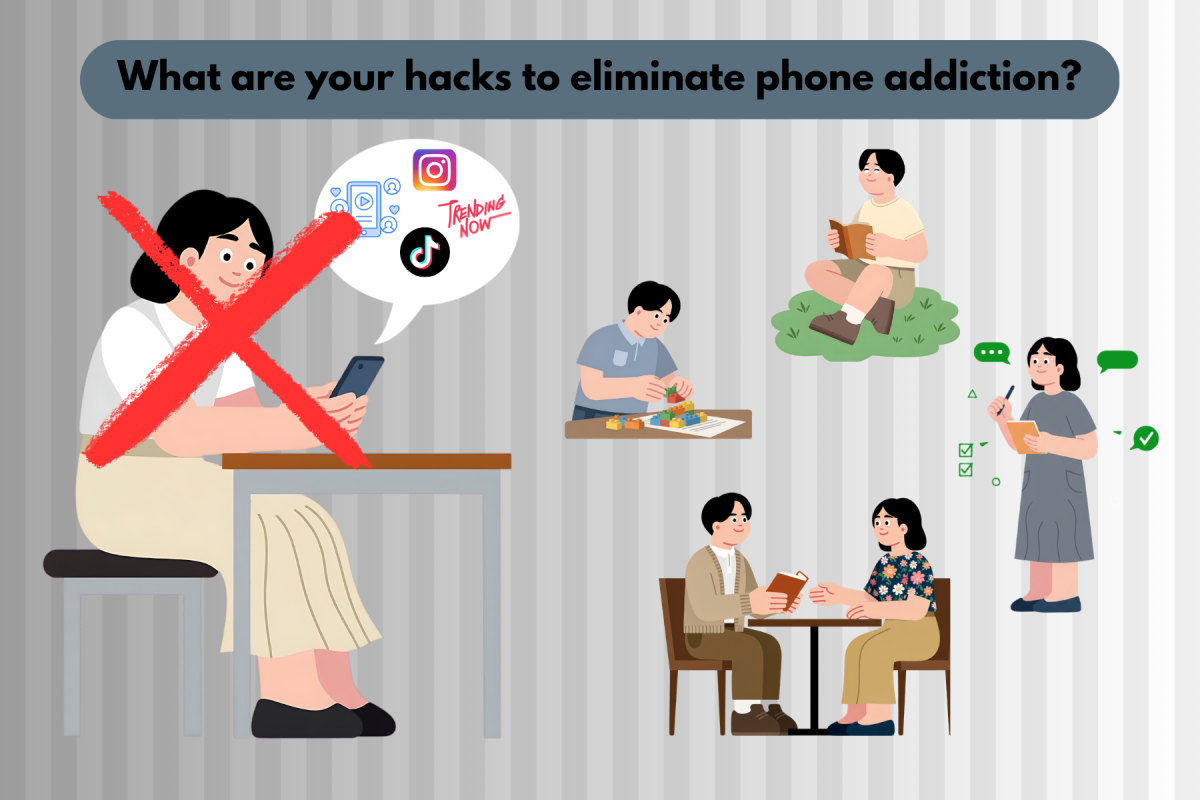
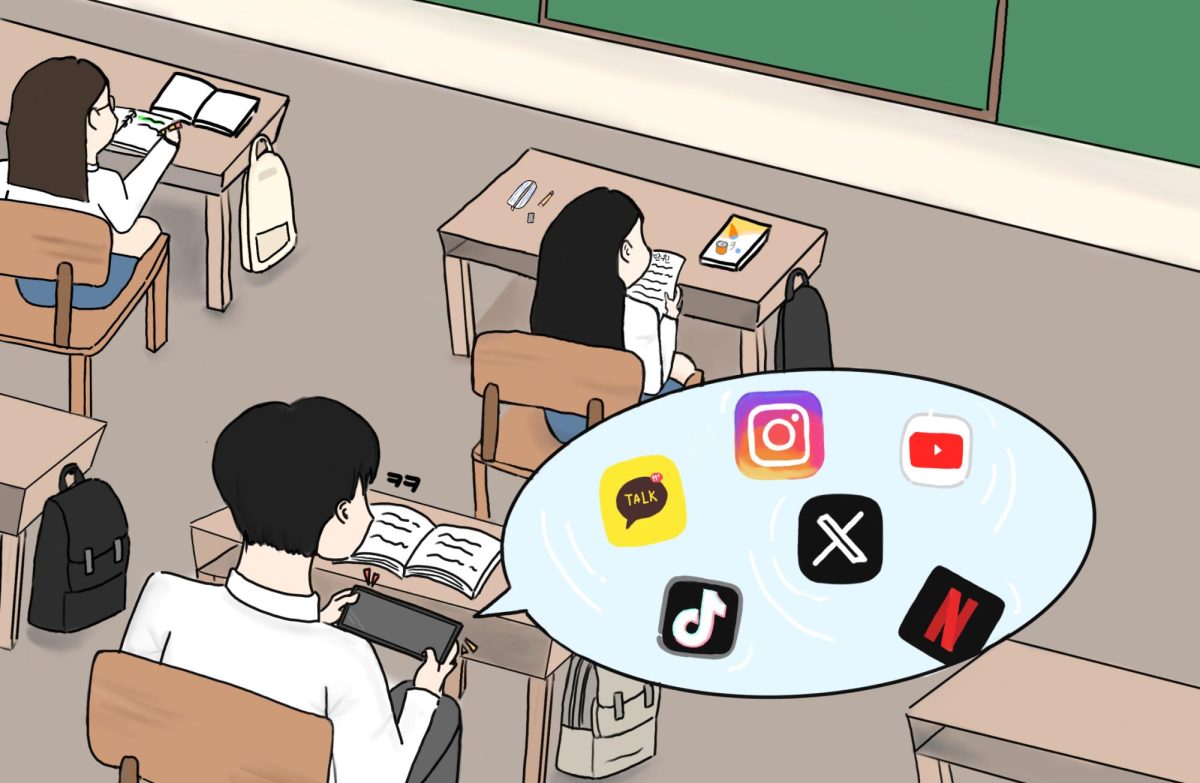
An annual smartphone usage survey conducted by the Ministry of Science and ICT found that around 23 percent of Korean citizens heavily depended on phones in 2024. Specifically, up to 42.6% of youth (between 10 to 19 years old) fell into this category. This trend appeared in classrooms, and teachers expressed concerns that smartphones disturb individuals during class.
Accordingly, despite concerns surrounding student rights, the Office of Education issued the “Smartphone Prohibition Law (스마트폰 금지법)”, where schools restrict device usage. Mr. Nam, the principal of Bonri Elementary School, said, “Even though the bill can disrupt children’s freedom, students who are still immature need protection. As limiting a child while crossing the street is not encroaching freedom, we can say that securing children away from the phone’s danger is a social device to guarantee happiness and development.”
Teachers named another reason for the policy—preserving social skills. “We treat our phones as if they’re a part of ourselves, and this seriously disrupts learning basic manners and communication skills necessary to interact with friends at school,” said Jonghye Park, a teacher at Seongbo High School.
Some students appreciated the change. “The bill will protect the right to learn and the right to happiness. Because children are still young, watching screens can be more attractive than studying. However, if the law limits the usage, it will support the process of overcoming the temptation and encourage them to focus on learning,” said Jiyoon Kim from Daegu Girls’ High School.
Nonetheless, others still view it as an infringement of their rights. “Because schools are putting extreme limits on smartphone usage, it actually makes us think about using our phones even more,” said Gyuri Park, a freshman at Dongbu Middle School.
In early 2025, DIS instated the phone policy. Even though students expressed complaints against the restrictions, parents concerned about excessive screen time supported the change. “Administrators, as well as the teachers, and some parents, through the Parent Teacher Orientation (PTO), were also in favor of the school having a no-cellphone policy during the school day hours,” said Head of School Mr. Jolly.
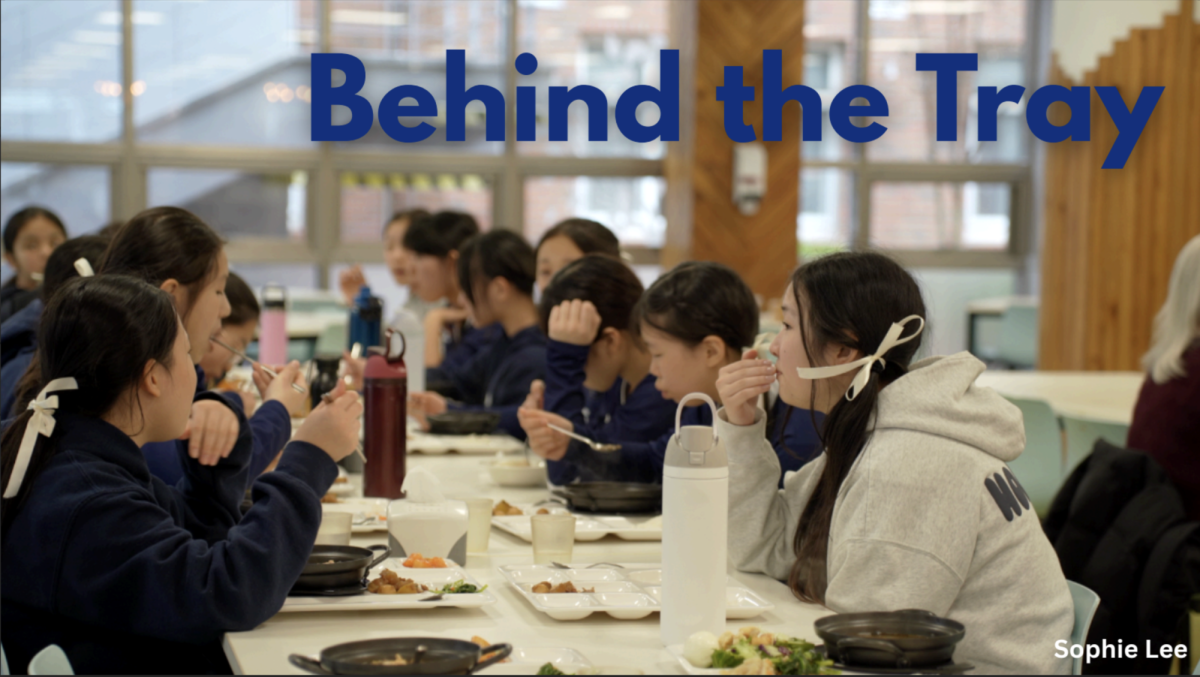
Despite the complaints, Jolly said that campus culture has shifted for the better. “I think even in the first week of school, some of the teachers and administrators noticed, even in their first few days, students within the cafeteria at lunchtime and outside on the playground, students were engaging with one another much more.”
The responsibility to embrace the optimal solution remains in the younger generations’ hands. Jonghye Park said, “Adults can overuse their phones all they want, and ultimately, it’s their responsibility. But for teenagers, it’s society’s responsibility to make sure they land on the right path.”
