


























In the United States, second-generation immigrants increasingly assert their place in the national narrative. They fight for recognition as political discourse continues to marginalize them, alongside racial minorities. In South Korea, however, tensions surrounding multicultural identity remain embedded in the national psyche that values ethnic homogeneity. Amid this social fabric, children of multi-ethnic marriages wade through a capitalist racial hierarchy shaped by economic class and perceptions of white superiority.
Legacy of ethnic homogeneity
South Korea’s national identity dates back to its history of ethnic homogeneity; belonging rested not on citizenship, but on blood.
During the Japanese colonial era, Korea’s “pure race ideology (단일민족),” which emphasized pure ethnic Korean identity, countered the Naisen Ittai propaganda, which aimed to assimilate Korea under Japanese rule.
This continued during and after the colonial era. In 1931, ethnic Koreans massacred over 200 Hwageo—ethnic Chinese— following rumors of Chinese aggression and economic envy. In 1961, former president Park Chung-hee restricted foreign land ownership and seized Hwageo properties justified under the pretext of pure Korean economic sovereignty. This framework shaped early attitudes toward foreign immigrants, positioning them as outsiders regardless of legal recognition.
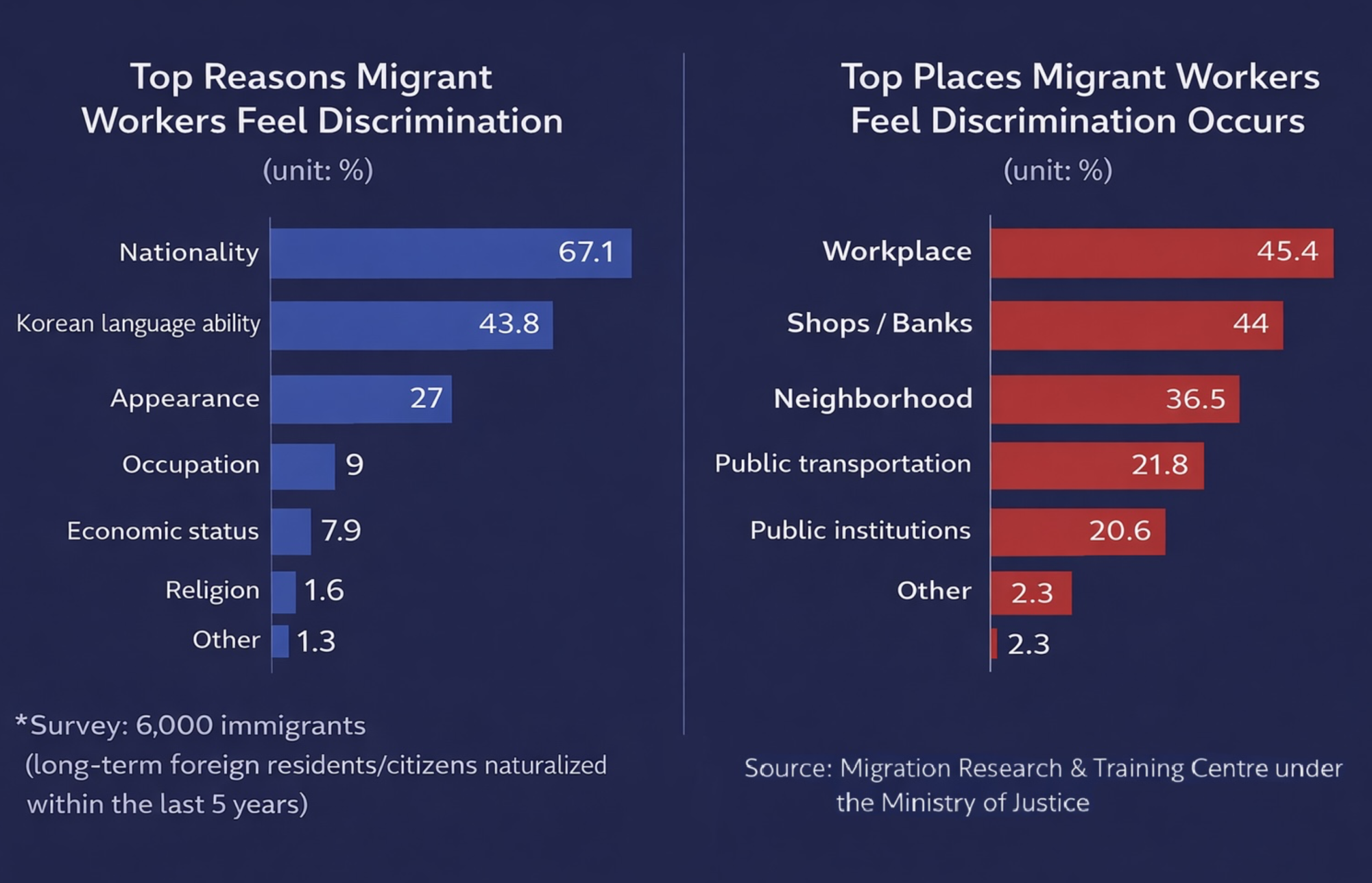
The Korean government seemed to move toward inclusivity when it acknowledged dual citizenship to confront the influx of foreign immigrants in 2010. Still, legal citizenship did not always secure full societal recognition and integration. Even now, Chinese migrant workers often face stereotypes that label them as criminals, low-class, uneducated, and undesirable tenants compared to white Westerners. Discriminatory norms persisted as a culture engraved in the national consciousness.
Yujun Piao, a second-generation Joseonjok (조선족)—ethnic Korean with a Chinese nationality—shared his experience of anti-Chinese sentiments in Korea. “When I was attending a Korean elementary school, I used to be class president for three consecutive school years…except for this one semester. My teacher, who stigmatized Chinese people, held the election on the one day I was sick. At the time, I was too young to understand, but now, I see her intention.”
The descending racial hierarchy among inter-racial children
In the early 2000s, the country saw a sharp rise in foreign migrants who immigrated for marriage and labor. But foreign migrants did not enter Korea as a monolithic group; rather, they entered a stratified racial order defined by the intersection of national origin, skin color, and global economic standing.
Studies attributed Korea’s racial hierarchy to the people’s need to understand their country’s position within the global economy. Unlike European colonialism, Korea’s racial order links to modern capitalism and places races commonly associated with lower economic status subordinate to white-predominant, first-world countries.
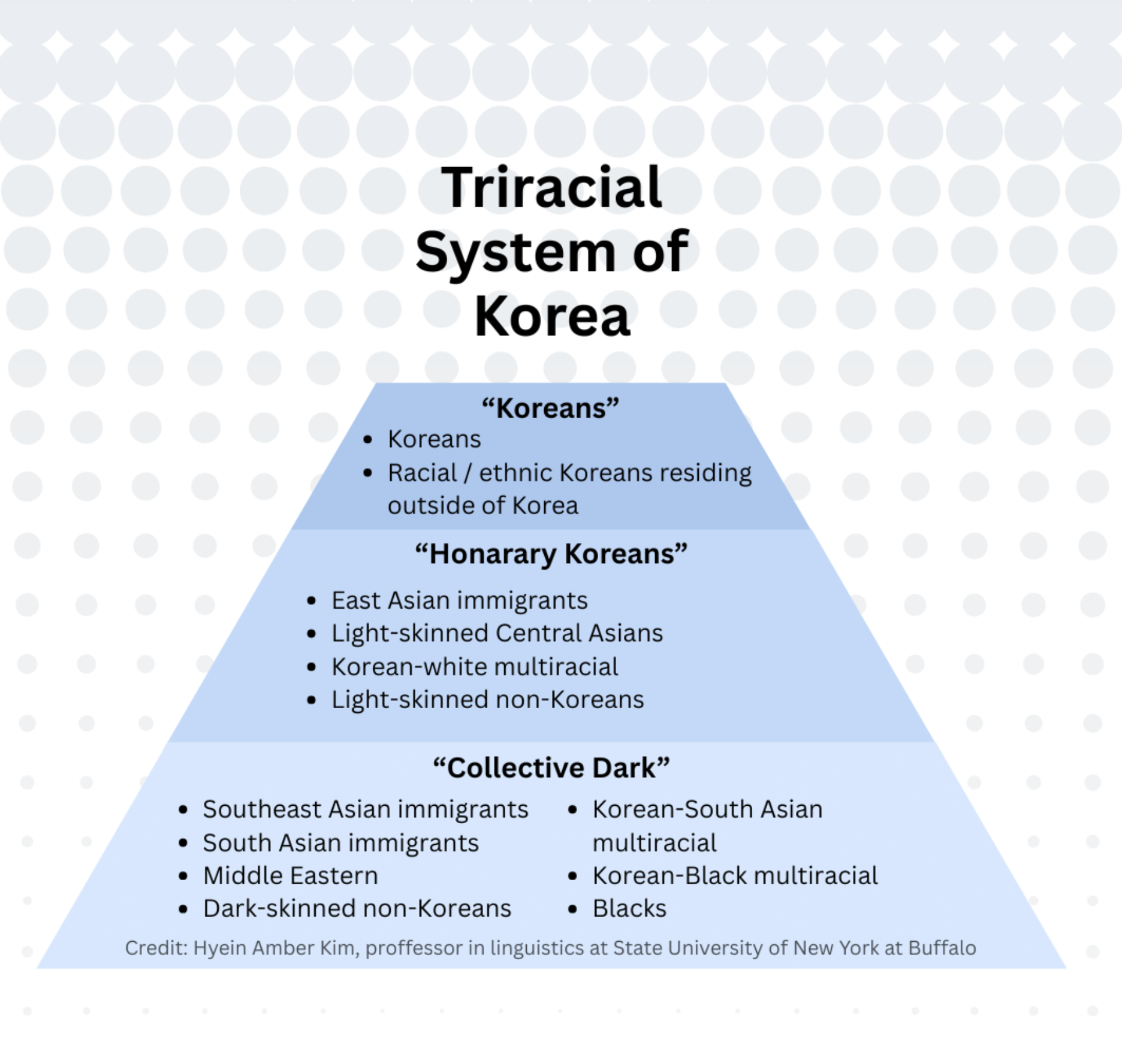
Ethnographic research on foreign migrant workers and marriage immigrants in Korea uncovered a new racial category after the sudden influx of foreign demographics: “tongnama” (동남아), used to group Southeast and South Asian migrants. The Korean state, culture, patriarchy and exploitative capitalist labor practices reshaped South Koreans’ understanding of this new racial category. Over time, the term became a shorthand for manual and low income: traits viewed as inferior in Korea’s capitalist racial hierarchy.
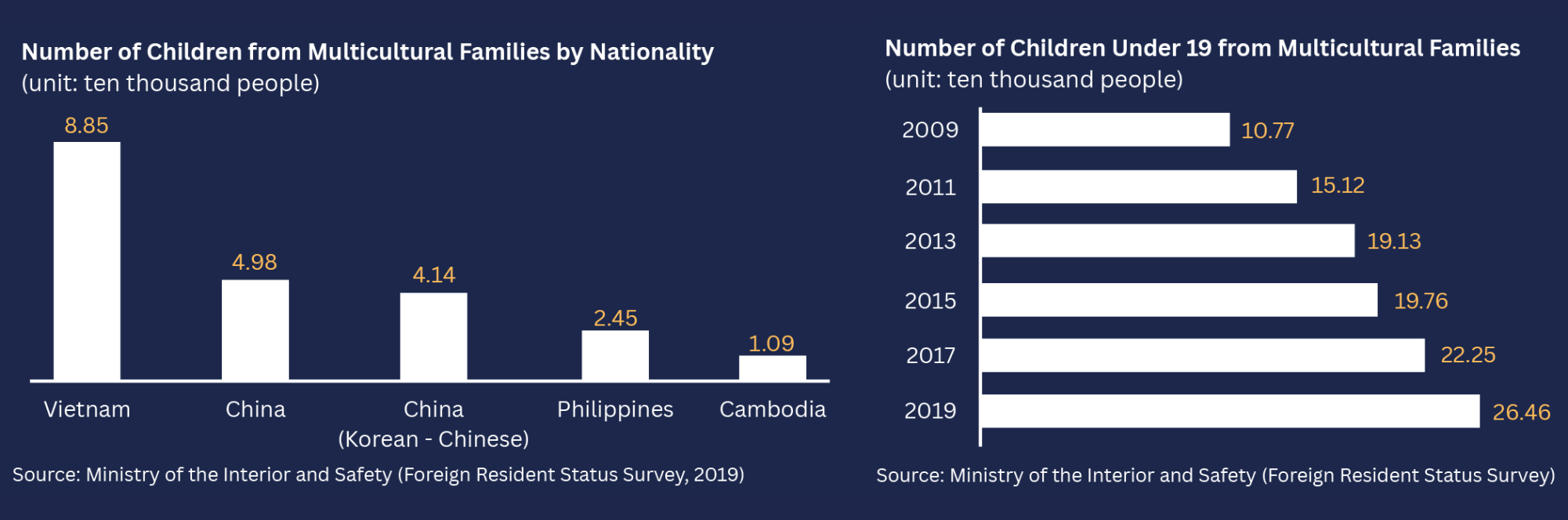
Inter-racial children, who now consist of 0.5% of Korea’s population, navigate through the inherited legacy of racial bias. Jayden Hayward, a junior with Korean and Canadian heritage, said, “When I was younger, I definitely wanted to see myself as fully Korean because everybody around me would always say things about me not looking like them…Then I moved into a stage of being like ‘I’m Canadian and everybody thinks I’m so cool.’”
Hayward’s shifting sense of identity follows a pattern embedded in how Korean society assigns foreignness, Western affiliation in particular, as status. “People glorified [the West] a lot. Whenever they saw me, they would say ‘wow, there’s an American around here’ since I speak English…anybody who spoke English would automatically be American in their standards…people viewed America as a distinctly white place,” said Hayward.
Purnima Cha, a Korean-Indian sixth-grade student, shared how these perceptions take shape in everyday interactions. Non-Western identities became something to explain rather than to embody. “When I go into a new afterschool academy, sometimes they look at me like they’re interested. And a lot of times, the kids look curious and ask what ethnicity I am, and if I’m Indian…I don’t mind it that much, but not a lot of them come up to me to get to know me, so it’s lonely, I guess.”
“I can’t speak Indian very well, so I usually think of myself as Korean…but the Korean grandmas in my building never really acknowledge me and [the other inter-racial children] as fully Korean,” said Cha.
A reciprocal system between institutions and culture
Cultural norms continue to reinforce existing racial hierarchies in tandem with institutional racism. An analysis of educational content featuring “family life” in Korean middle school home economics textbooks found a lack of representation for multicultural social contexts—out of 112 instances, only two included multicultural family structures.
Likewise, Korean education curricula largely omit multiethnic families of Southeast Asian cultures through economic stereotypes. Elementary texts highlighted content that prioritizes Hanminjok (한민족), narratives that emphasize the unity of ethnic Koreans, while ethics textbooks added a token “mixed kid struggles” section without acknowledging the structures that shape such disparities.
Omissions do more than limit representation; it shapes how students understand and internalize a multiethnic society. Over time, institutional narratives reflect and reproduce normalized forms of subtle biases against pre-existing racial hierarchies.
Hayward highlighted how such curricula reinforce biases among the younger generation. “I think there’s less outright discrimination today, but that internalized belief, I think, still remains. Even within the younger generation, I will hear side comments or things that would be considered microaggressions, but are normalized.”
On top of this, South Korea still lacks a comprehensive anti-discrimination law, slowed down by nearly two decades of stalled efforts by the National Assembly. The National Human Rights Commission first urged such a statute in 2006, but cited patchy sectoral rules that neglected harms rooted in racism. By Jan 2026, 11 bills failed to pass as lawmakers from the People Power Party, dominant at the time, claimed race, sexuality, and pregnancy clauses to be “unfair privileges” to minorities. With the absence of a unified legal framework, racial and ethnic biases largely remain unregulated.
As institutional gaps persist, the burden of navigating Korea’s capitalistic racial hierarchy falls increasingly on the individuals who live within them. Piao highlights how the country’s rapid demographic shift now collides with social norms that have yet to adjust. “At the end of the day, sooner or later, Korea will be flooded with immigrants…Korea’s mono ethnic background creates a culture where they treat people with diverse backgrounds as ‘others’. This social ambiance should change.”
“I’m proud of my identity…I’ve learned that there’s nothing to be ashamed of and also that there’s much more kindness in this world. I hope that kind of community grows here in Korea,” said Piao.
South Korea has long been regarded as a nation of ethnic homogeneity: a distinct unified “we” and the subsequent salience of “others.” Within this framework, a capitalistic racial hierarchy assigns status to values based on proximity to whiteness, nationality, and economic power.
As this structure descends through generations, it teaches multiethnic children in Korea to see themselves through others’ definitions before their own. As the country moves toward an increasingly multicultural demographic, the future demands structural reform in law and education to redefine belonging itself.




Ms Nunes • Apr 29, 2026 at 6:18 pm
Nice work Sally
Yujun • Apr 27, 2026 at 9:43 am
Thank you for writing this article