
































For decades, the South Korean government scrambled to reverse the near-zero birth rates with desperate attempts from fertility dances to an allocation of 88.5 trillion won in 2025 alone. But even after more than two decades of fiscal support, the fertility rate fell from 1.13 in 2006 to 0.8 in 2025, one of the lowest in the world.
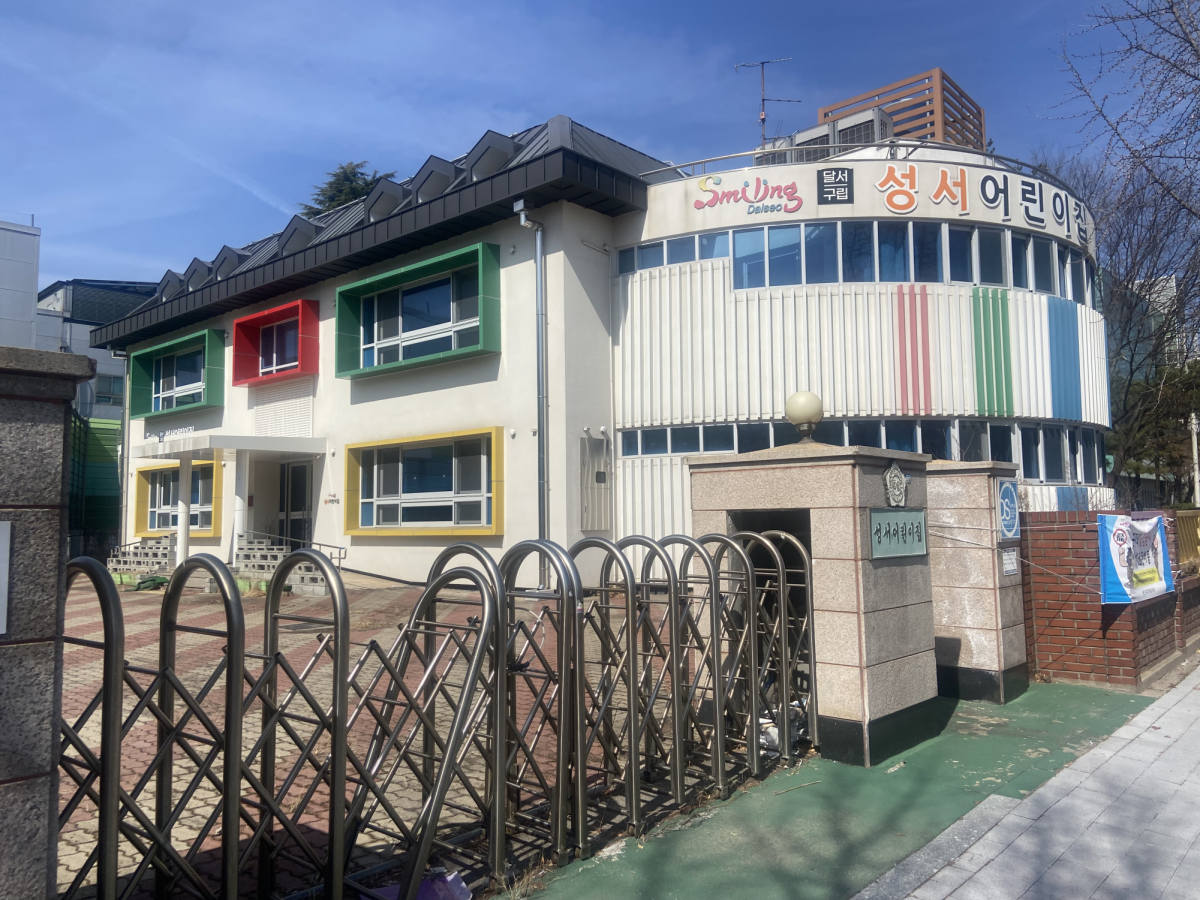
As policies failed to produce fruitful rebounds, communities and institutions have slowly started to accommodate the aging majority. Even Seongseo Daycare center, the oldest childcare facility in the peninsula’s fourth most populous city, closed its gates. The building will soon reopen as “Dalseo Senior Club”.
Ever since Korea saw a rise in its economy in the 1980s, urban planning has assumed rising school enrollment and expanding childcare needs. The Seongseo Daycare Center, established in 1993 in the Seongseo National Industrial Complex, aimed to support working mothers and nearby residents. But over the years, enrollment plunged from 1663 children to just 32, and the center shut down in 2024. The next year, it announced its transition to a senior facility that supports job-seeking mature workers to cater to the rising demands of elderly employment.
This reflects the current demographic shift across the entire region. According to Daegu Metropolitan City and the Ministry of Health and Welfare, childcare enrollment in Daegu fell by 36% since 2019. Concurrently, the population aged 65 and older increased 17% from 407,000 to 476,000.
As the population ages, the necessity for senior facilities and employment support continues to grow. Soyeon Kim, the civil service coordinator from the Dalseo District Office, said, “ In 2025, the number of senior citizens looking for employment was about 5,773, but this year the number increased to 6,456.” The transformation of Seongseo directly reflects this demand, ensuring work opportunities and social engagement for the elderly.
Beyond this single case, local governments also reshaped their infrastructures to offer helpful public services. “In our district’s welfare center, we have a department dedicated to senior employment. As the senior employment program expanded, the scale of the project also grew, and the number of staff working on it increased,” said Kim.
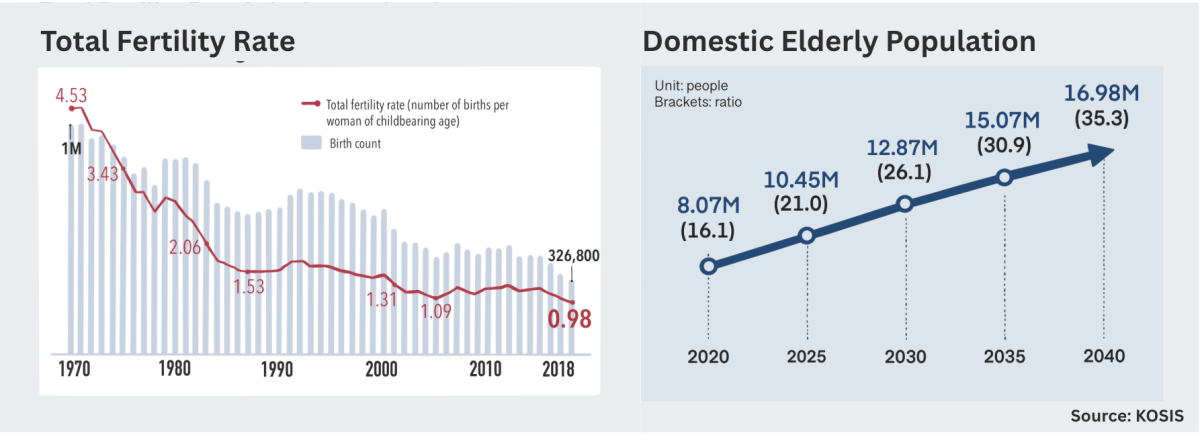
The transition traces back to the deeper cause of the demographic change—low birth rates. In fact, the steep decline reflects Korea’s socio-economic conditions that narrow the perceived window for parenthood. The 150% rise of housing prices over the past decade greatly outpaces the 39% wage growth in the country’s capital; the cost of childcare and education averaged 1.1 million won per child; and career interruptions carry professional penalties, particularly for women.
As a result, South Korea transitioned into a super-aged society within a single generation—one of the fastest demographic reversals among developed countries. Despite expanded parental leave policies and government subsidies, birth rates continue to plummet while life expectancy rises. Officials in Dalseo District describe the conversion of Seong-seo Daycare Center as a practical response to such shifts.
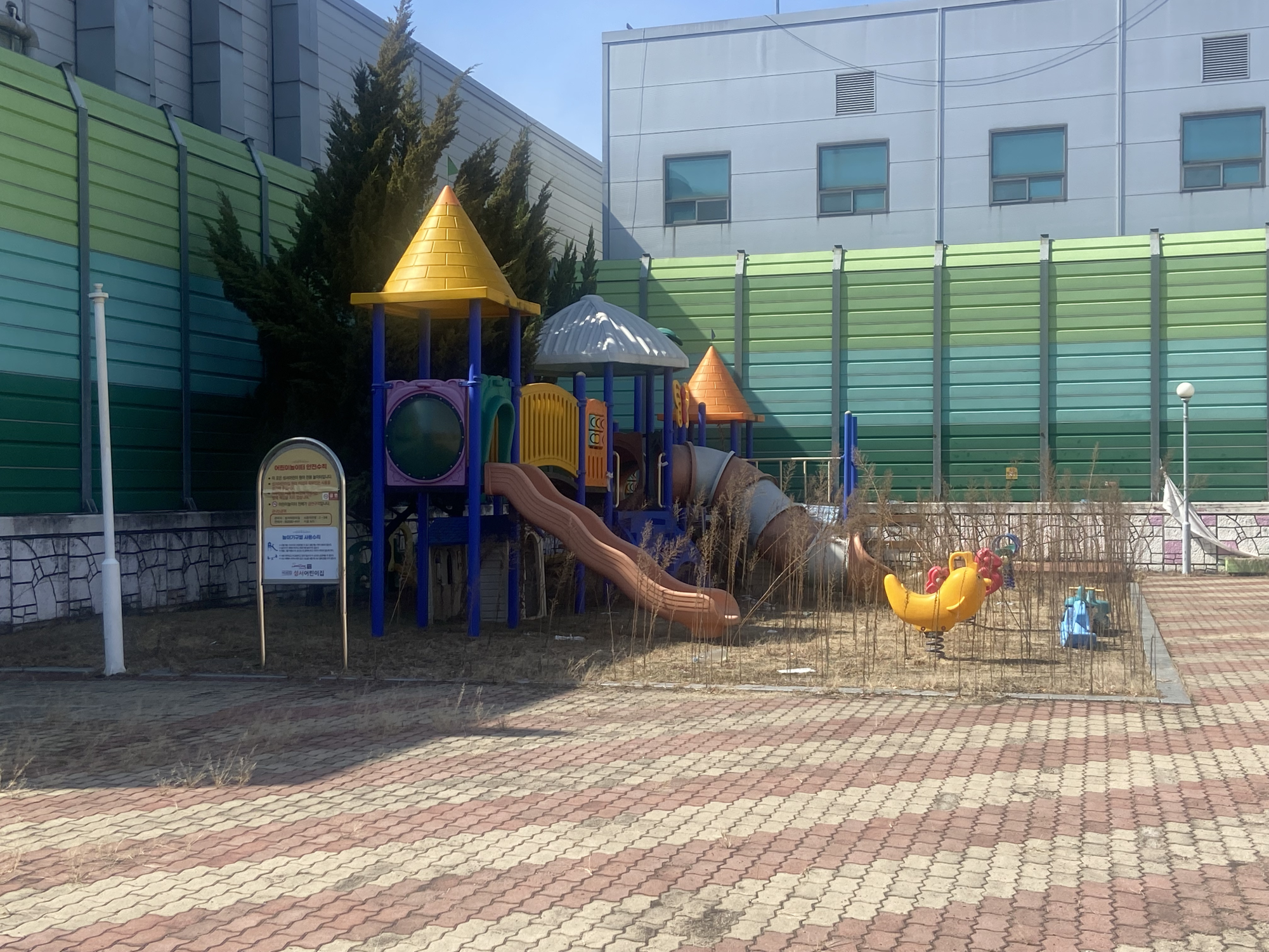
For the growing share of older residents, the change provides more than support for employment and financial means. For them, work offers a sense of belonging to their communities and a tangible proof of their continued role in society. “People in their 70s, 80s, and even 90s still want to work. They still want to work and feel the joy of working. By working, they feel they are contributing to society and can engage with their communities…every year the number of people who want to participate is even higher,” said Kim.
Dalseo Senior Club will serve as a base for employment support and community programs for residents. Hongsik Lim, the manager of Dalseo Senior Club, echoed this sentiment, “Our center provides opportunities for seniors to become active participants of society through jobs. We help them prepare for a new state of life.”
The case of Sengseou Daycare Center extends beyond a single building; it marks a shift in the institutions communities choose to build, fund and preserve. In Daegu, a place once designed for youth and growth, cities are increasingly organized to support older residents. As South Korea and countries such as Japan, Italy and Germany enter an aging demographic, the challenge now extends beyond simply reversing declining birth rates to adapting a society built for the young to one that supports and includes all ages.