




















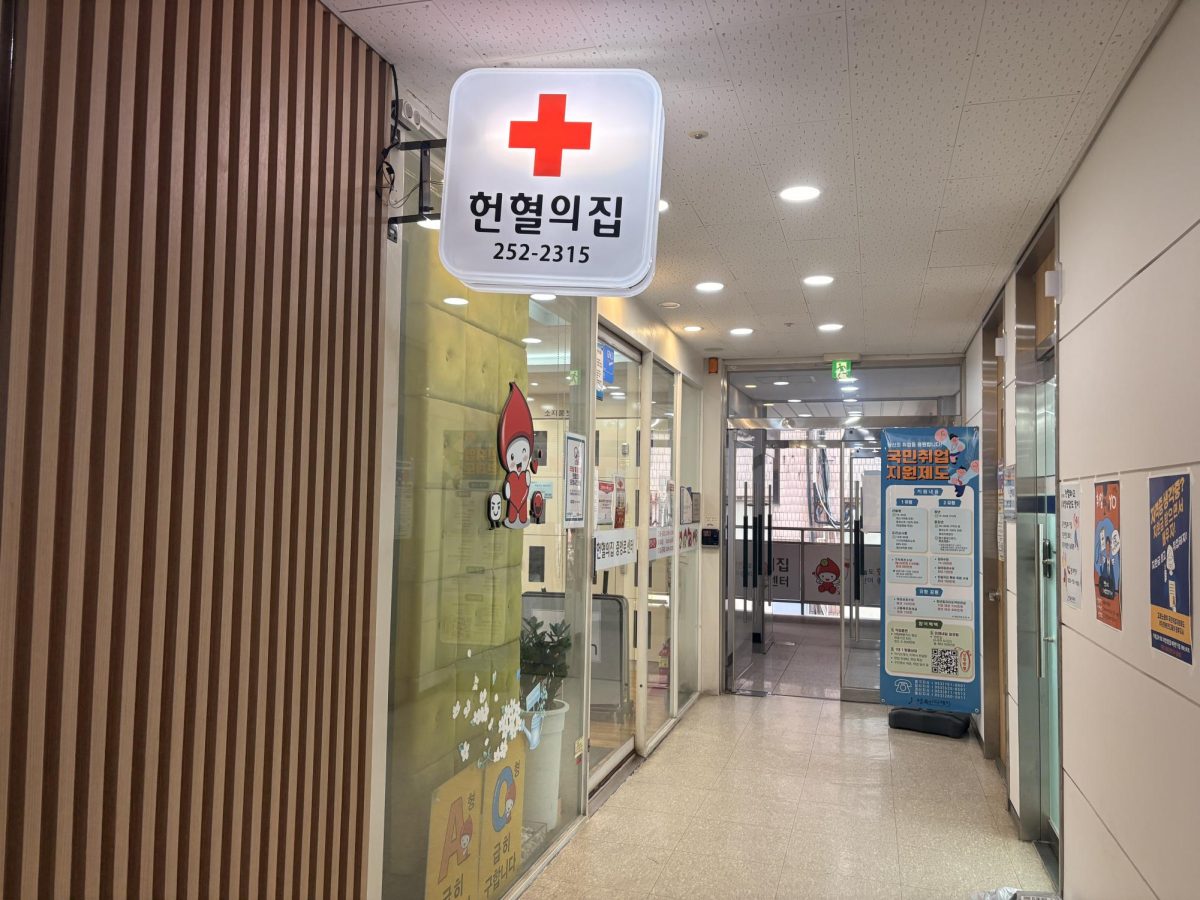
The Korean Red Cross (KRC) recruits blood donors, distributes transfusion supplies, and ensures blood safety for eligible recipients nationwide. However, blood donations plummeted by 43% over the last decade, and this January, the Korean Red Cross classified South Korea as a nation with chronic blood supply instability.
Severe hemorrhage, the profuse escape of blood from a ruptured blood vessel, leads to death without a timely transfusion, driving up death rates to 50%. Thus, hospitals rely on blood reserves for surgery, trauma care, cancer treatment, and other critical conditions.
Despite this, public participation in blood donation remains limited. Although the risks of contamination remain extremely low at just 0.1–0.2%, fear mongering surrounding this statistic disincentivizes participation. Soehun Kim, a regular donor at Daegu’s KRC, said, “While some people cannot donate because they have certain illnesses or take medication, others avoid it, only considering the negative aspects and the side effects of the donations.”
Youth have the greatest donation capacity, yet remain uninterested for different reasons. Seohyun Park, a current Daegu high schooler, said, “Because blood donation doesn’t count toward college admissions or student records, the percentage decreased.”
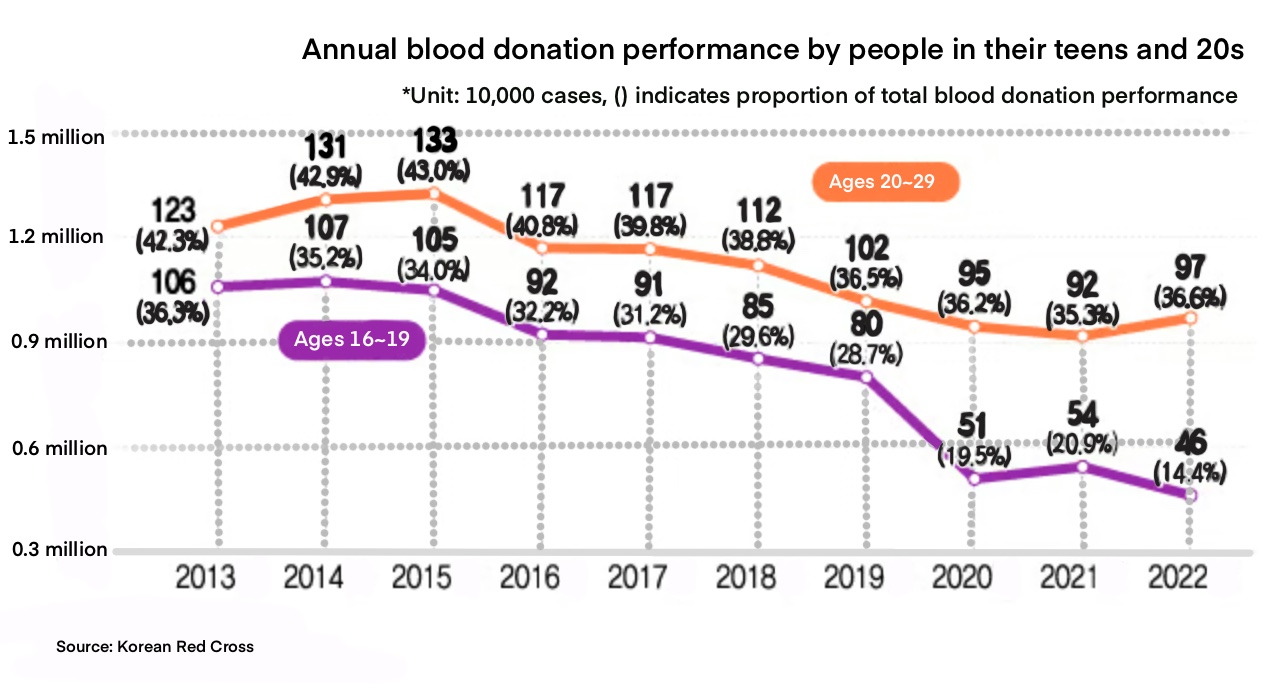
Likewise, youth participation further plunged in the absence of institutional incentives. Yeo said, “In the past, institutions such as schools and the military encouraged participation. However, the system has shifted toward voluntary donation, which has reduced overall participation compared to earlier years.”
Cognizant of these problems, the KRC aims to revive institutional and material incentives. For example, since 2023, the KRC has provided incentives such as gift cards, vouchers, and travel items. Yet, these unappealing promotions failed to convince people to donate.
In their second attempt, the government and KRC introduced campaigns that target the younger audience. From mid-January to late February, blood centers nationwide offered Dubai Chewy Cookies (a viral dessert popular among Generation Z) to participants. It also announced a promotional partnership with Enhypen on January 15, and other major artists to broaden outreach among younger audiences.
The campaign sparked widespread public interest, and participants lined up outside centers to participate. Donations increased nearly fivefold.
Despite this temporary increase, supply deficiencies remain. High demand and limited long-term participation continue to strain the system. To continue the interest, the KRC plans to expand student programs to raise awareness and encourage sustained participation. Yeo said, “We are also reaching out to Daegu City Hall and other government agencies to discuss joint initiatives, including campaigns to encourage donations within the city.”
As Kim says, public interest must follow incentives for long-term blood donation to ensue. “Everyday participation, institutional support, and improved awareness are necessary; otherwise, a blood-donation culture will not take root.”