






















Influenced by K-dramas and K-pop, many university students undertake dramatic steps to journey to the Hermit Kingdom; what greets them falls short of the exchange program they were promised.
South Korea, given its longstanding reputation as a homogenous nation, struggles to adjust to a multicultural society. Of the 51 million Korean residents, the foreign population doubled since 2010, from 2.5% to 5.3%.
In 2024, university students comprised approximately 37% of those residents, which includes full-status and exchange students, an insignificant subsection of the entire population. These students, while marginal in size, are large in spirit and voices.
Ana Martorell, a Norwegian Graphic Design major, was greeted with a dirty apartment provided by the University and a brief acquaintance with the “Korean Buddy,” a native undergraduate who the University promised would help her acclimate.
Martorell lamented the short exchanges with her Korean Buddy and cited that her only consolation comes from fellow international students. With insufficient exchanges between classmates, she and others will leave without local friends to keep in contact.
“The only class [I have] where our professor puts foreign students and Koreans in the same group is this one,” she said, although all of her classes are in English.
Reportedly, Korean teachers occasionally segregate students on purpose, Korean-only groups kept separate from foreign students, to prevent possible cultural clashes that could occur and debilitate proper teamwork.
Foreign students commonly encounter these preventative measures while in the Land of the Morning Calm. Several students expressed that although they came to experience the culture and interact with Koreans, their only interactions with locals take place at the grocery store and immigration office.
“One main reason is the language barrier,” Lukas Haskamp, an international student from Germany, said. “The other thing is cultural.”
Naturally, local students prefer their native tongue, timid to speak English in public. As a result, foreign students, who lack experience with Hangeul, find themselves isolated from the campus community and homesick for their country.
Another exchange student, Dautovic, said, “If you are in a group with three Koreans, they will speak Korean, and then you have to stand there and just know nothing.”
“Without many opportunities to interact with Koreans… the foreign students stick together,” Haskamp and Martorell arrived at a mutual conclusion.

Another barrier stems from the lack of language support in their everyday lives.
Korea, as a nation, is very connected to the Internet, to the point where it is nearly impossible to get by without a phone. Nonetheless, all programs and platforms, including university applications, come solely in Korean, an oversight for the increasing foreign population. Consequently, foreign students like Martorell struggle to get by without assistance.
“The apps are all in Korean, including announcements for clubs and activities around the school,” Martorell said. “[I] didn’t even know the festival was happening until the music started, because the flyers and posters and things are only in Korean.”
The apps that these announcements are sent out on do not have translation options, and without Korean friends to help clarify details, the foreign students will often miss school activities and festivities.
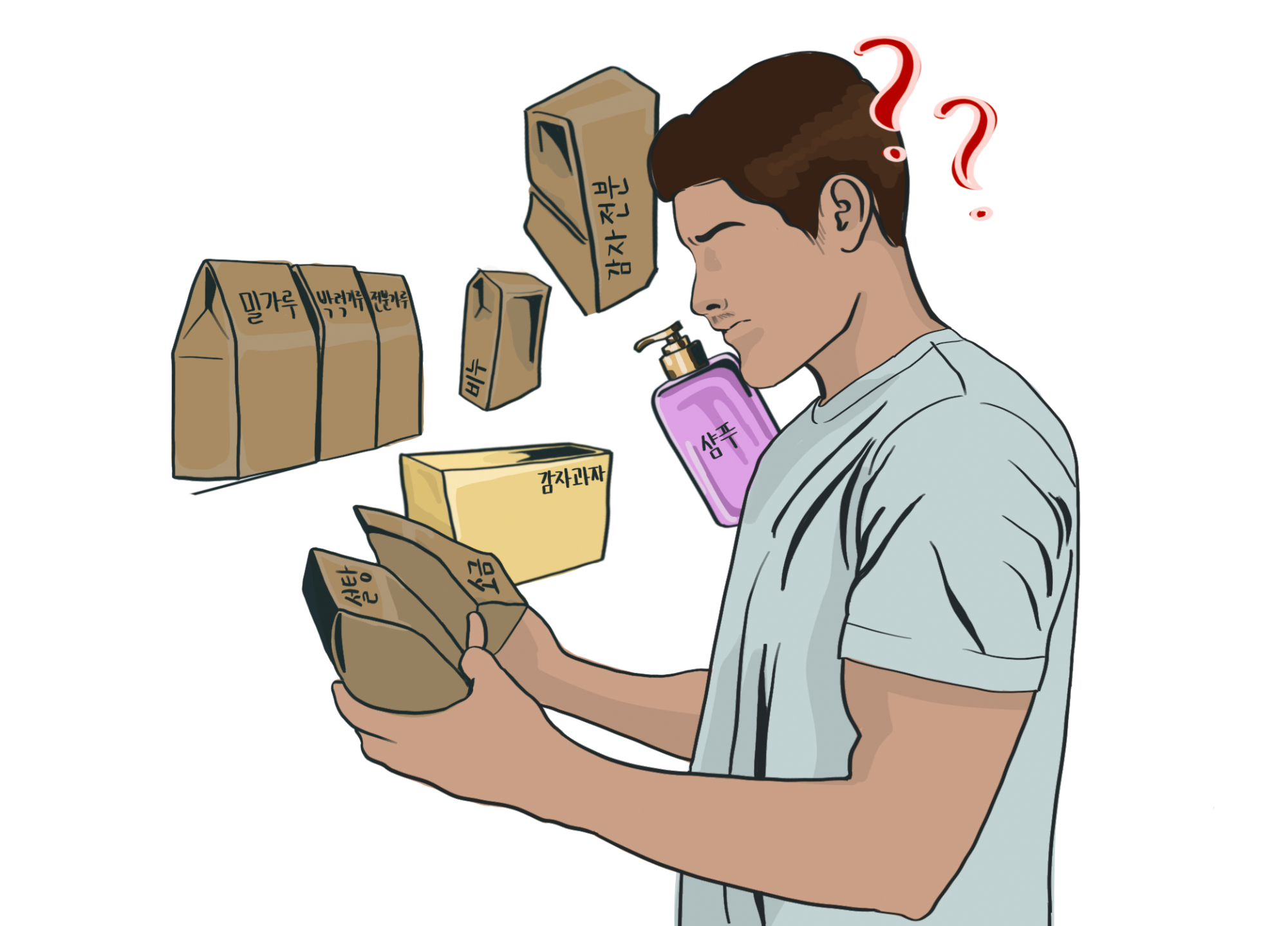
However, the language barrier doesn’t only affect their involvement in the campus community; it also affects how they buy things at stores, including necessities such as food and dish soap. Every country has distinctive ins and outs to comfortably navigate life, from where one can buy certain items to places to establishments one should never set foot in. Korea is a particularly difficult place for outsiders to navigate.
“When we got here, we didn’t know where to buy food or stuff. Nothing was where I expected, and the labels are all in Korean, so I was never sure if I bought the right thing or not.” After her Korean Buddy left, Dautovic had no assistance in any aspect of life except for the first time she received her Alien Registration Card, so she struggled with where to buy basic items such as
Although the nation struggles with the surge in popularity, the Universities emerge as the bigger culprit as catalysts for these students’ struggles by supplying inadequate support. No language or cultural support is provided, and little to no opportunities for the students to interact with the Koreans are presented.
Korea continues to change to fit into the mold of a multicultural nation, and this youngest generation is the most open towards outside forces. Yet foreign students still struggle to fit in, shadows of Korea’s isolated past still loom over them as institutions juggle with these newly opened doors. Whether or not Korea continues to change for these people, these foreign students will never fall out of love with the allure of the K-culture, and will continue to set forth on their own journeys to experience it for themselves.