



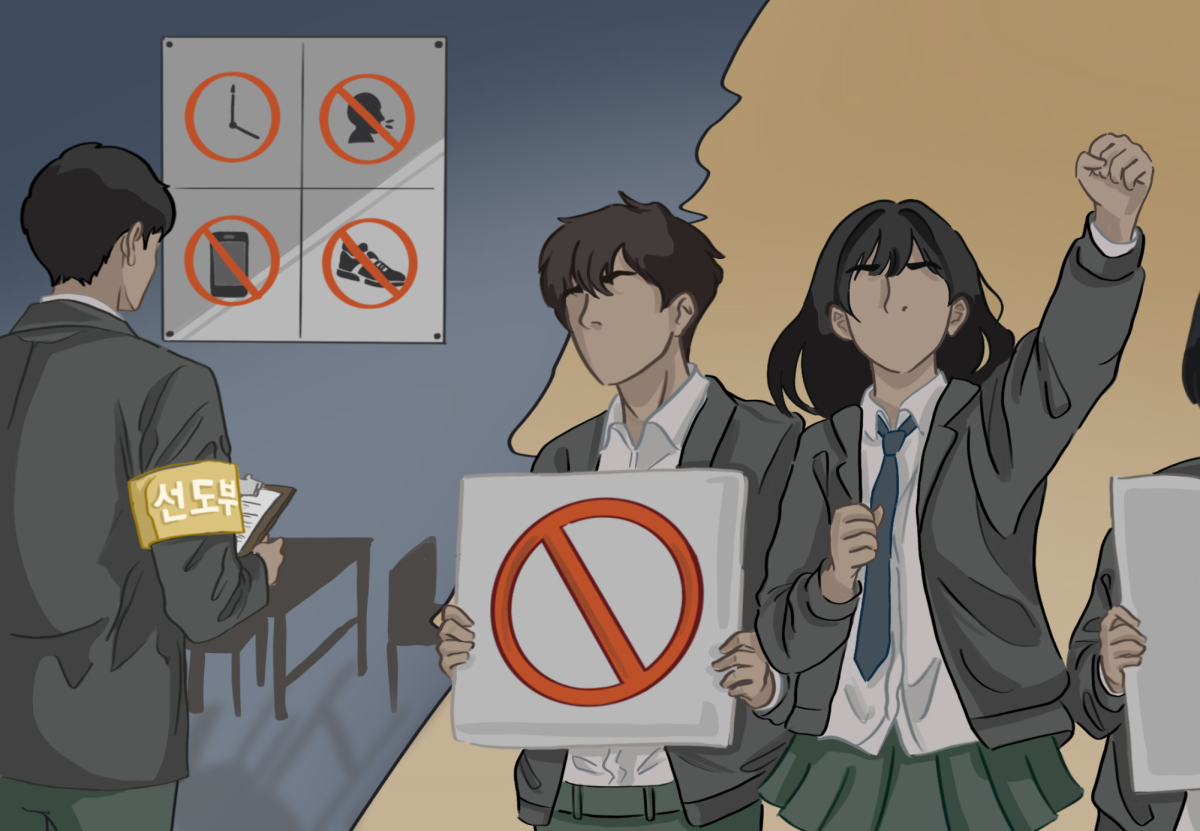

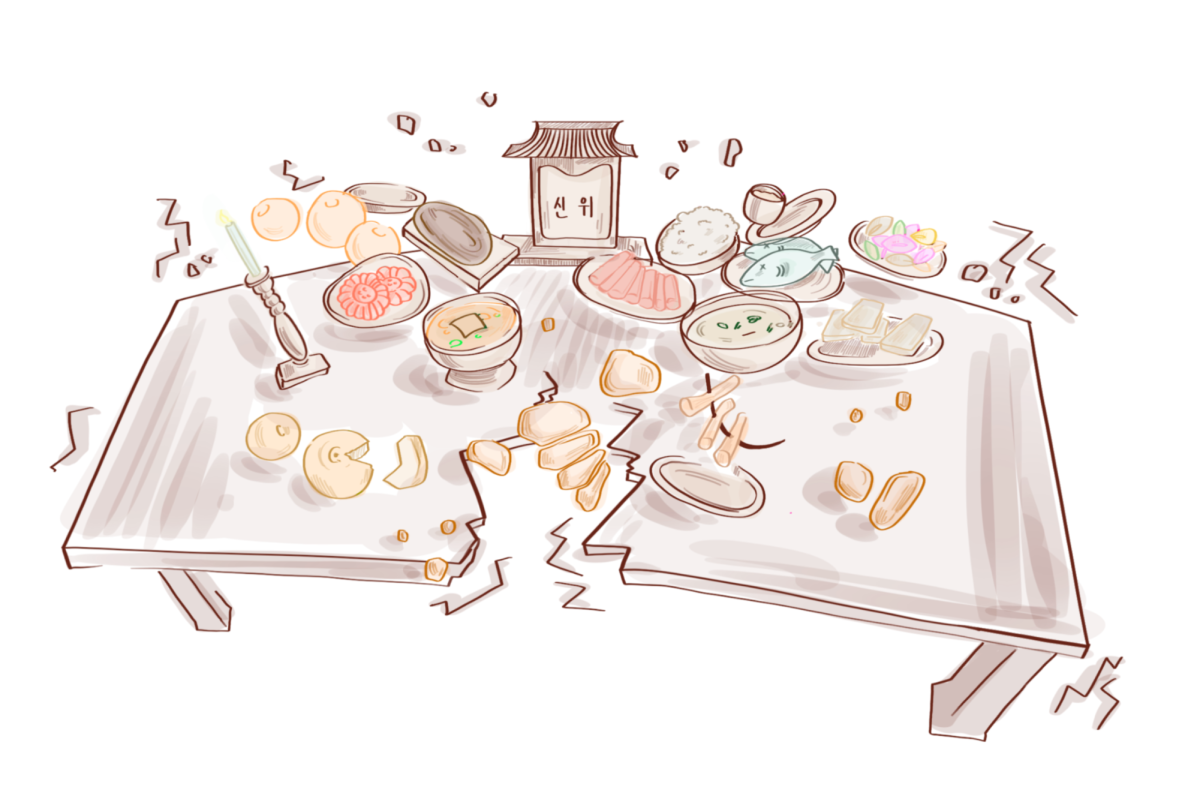




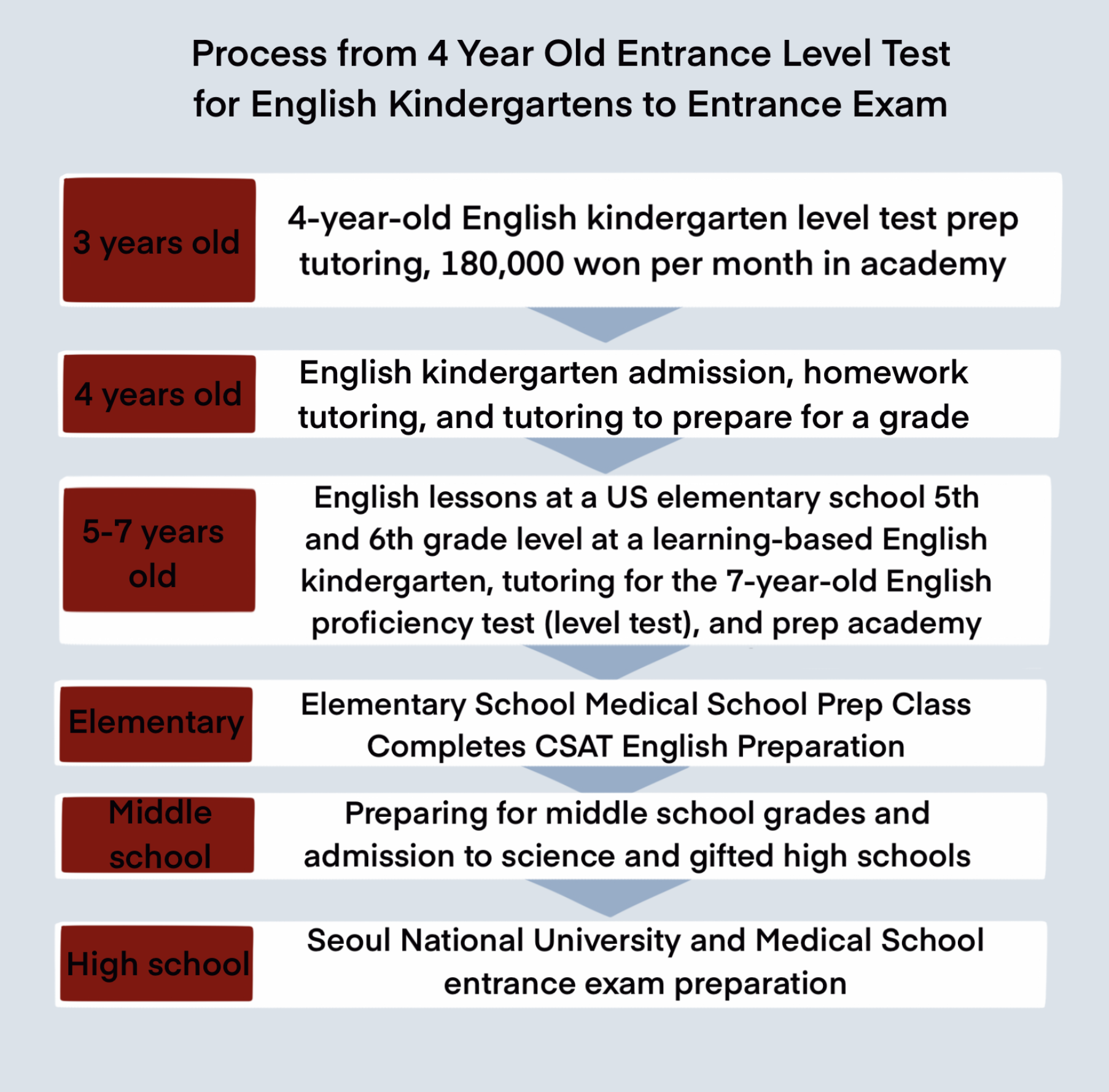
Every parent tells their child to reach for the “SKY”—an acronym for Korea’s top three schools: Seoul National University, Korea University, and Yonsei University. The race to college begins as early as pre-kindergarten as students hone their language skills to buy time to study for harder subjects later. To combat this violation of children’s rights to rest and play, the Ministry of Education banned English preschool entrance exams for 4-7-year-olds on Dec. 9, 2025.
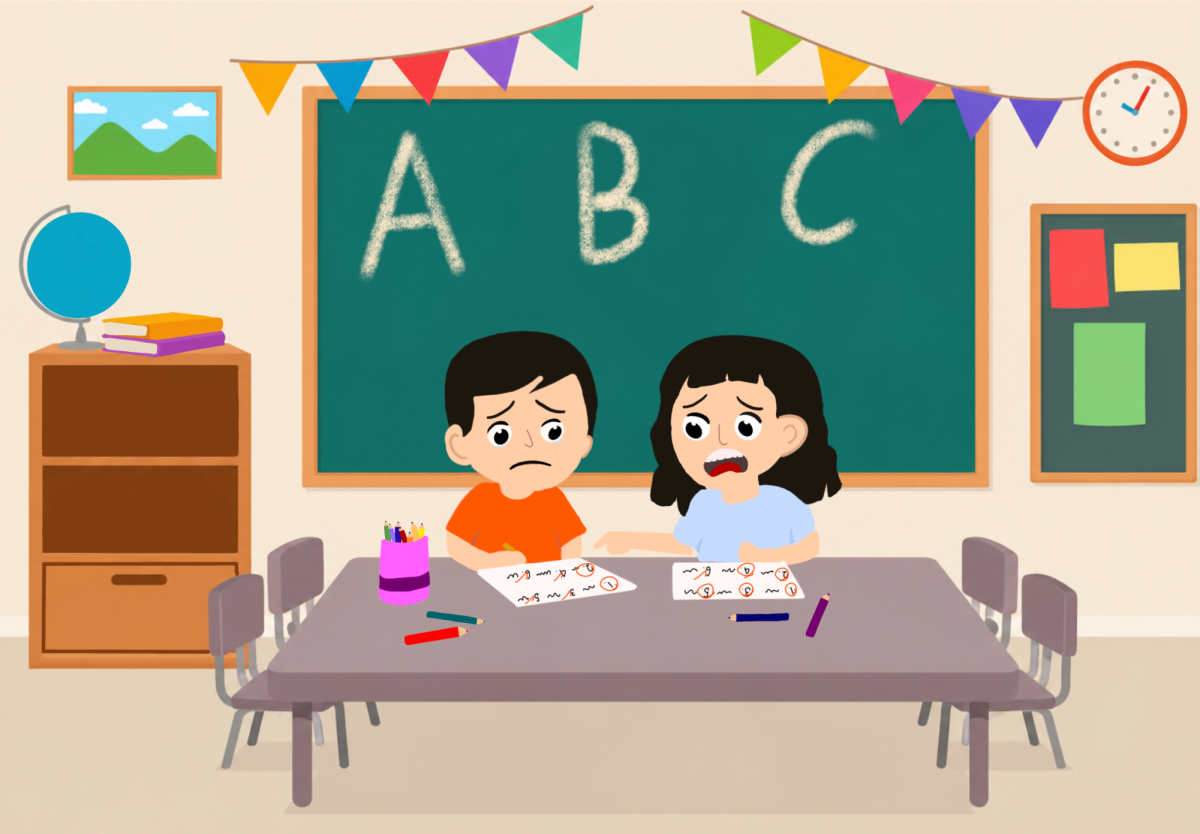
Before the policy, children as young as four sat rigorous entrance exams and mock interviews to enter prestigious English-immersion preschools. Cramped inside small test rooms, teachers ranked young students and divided them into classes based on test scores. Of them, 68.9 percent are under age three, and 46.7 percent are under the age of six.
Ms. Youn, a teacher at an English preschool, stated that most institutions relied on entrance exams to optimize management. “From the perspective of operating a kindergarten, it is true that selecting children with a certain level of English proficiency is helpful for running classes. When there is a wide gap in language ability, it becomes difficult for teachers to set appropriate goals within a single class,” said Ms. Youn.
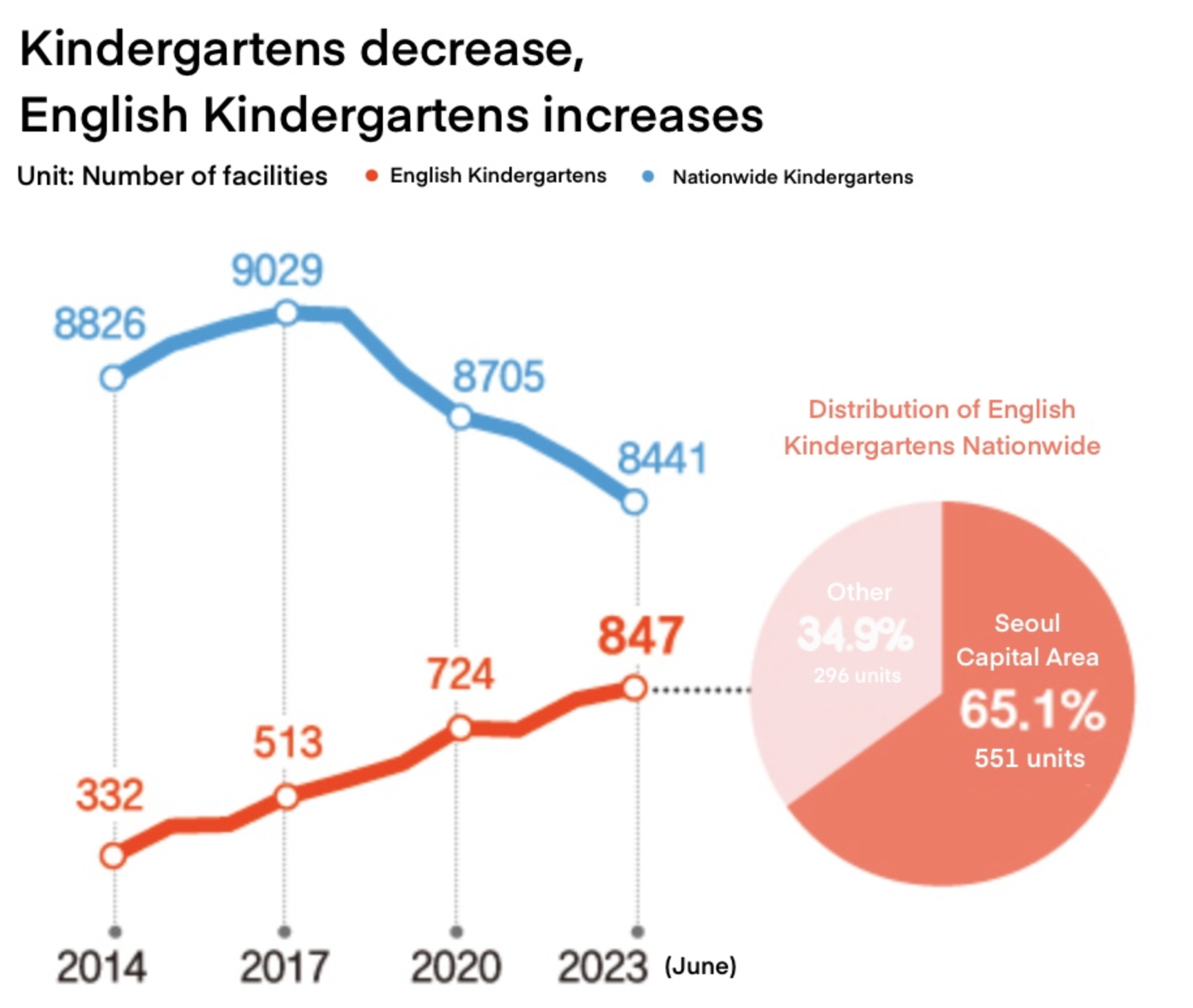
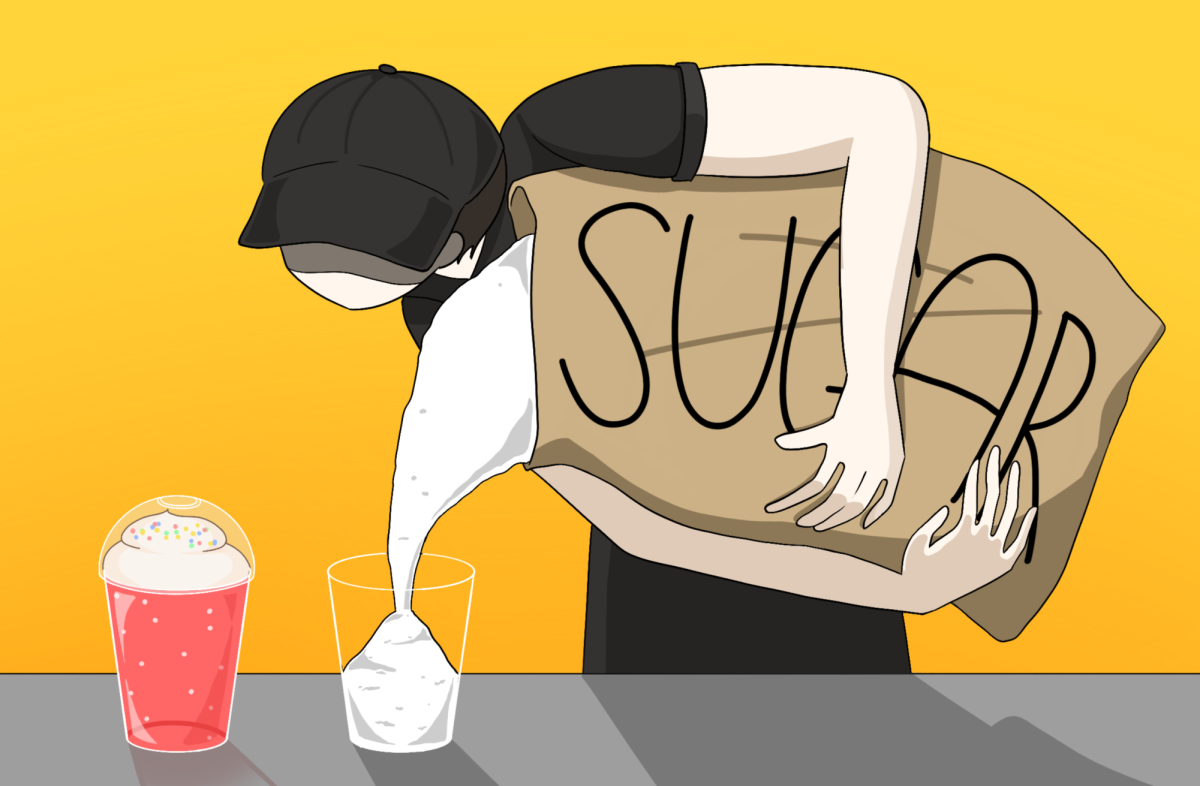
As multilingualism becomes essential, more and more parents push their children into English pre-schools. Korean tiger moms attend strategy seminars to secure a spot in the top English schools with an acceptance rate of just five percent. In 2024, the high demand created one of the most profitable industries in Korea: the private education market reached 34.2 trillion won.
Mr. Park, a parent of a kindergartener, described that the competition looms from parental ambition, “It seems that competition among kindergarteners begins with the parents’ selfishness. I don’t think kindergarteners even understand what competition means.”
These exams, seen as the center of extreme early private education, reported three to four times the citywide average in insurance claims for depression and anxiety among children under nine in Seoul’s Gangnam 3 district. Education offices warned that such level tests and screening procedures risk children’s emotional development and create excessive academic pressure.
The bill notes that all 17 regional education offices support limits on early English education, citing concerns that high-stakes testing for preschoolers undermines their rights and well-being. Initially, the July 2025 English Preschool Ban restricted private English education for 36-month-olds and set a maximum class time of 40 minutes. To further help place children as peers rather than competitors, the December bill prohibited the evaluation of children’s sufficiency through tests.
Youn highlighted the trade-offs of the bill. “The reduction of admission test preparation will allow young children to spend more time playing and engaging in diverse experiences. Additionally, fewer children will be denied educational opportunities simply because they started at a different level…On the other hand, children who have already had sufficient exposure to English may lose the chance to learn alongside peers at a similar level.”
Even so, Youn came to acknowledge how the bill realigns education to its core purpose. “An English kindergarten is not an institution meant to filter out children who are already proficient, but a place where children go to learn English. Requiring English ability before admission does not fully align with the educational purpose of such institutions…although it may create some difficulties in terms of operation, I support the policy from the standpoint of expanding educational opportunities,” said Youn.
Ms. Shin, parent of a two-year-old child, stated that “as long as academic success remains tightly linked to early preparation, parents will continue to seek alternatives. “Even though kids are not allowed to go to this English preschool, it depends on their parents. If the parents try to give their children more study hours, then [children] need to study a lot.”
The amendment challenges an education system that pushes competition at the expense of children’s well-being. It draws a necessary line that secures kindergarteners’ fundamental rights to rest and leisure.