





































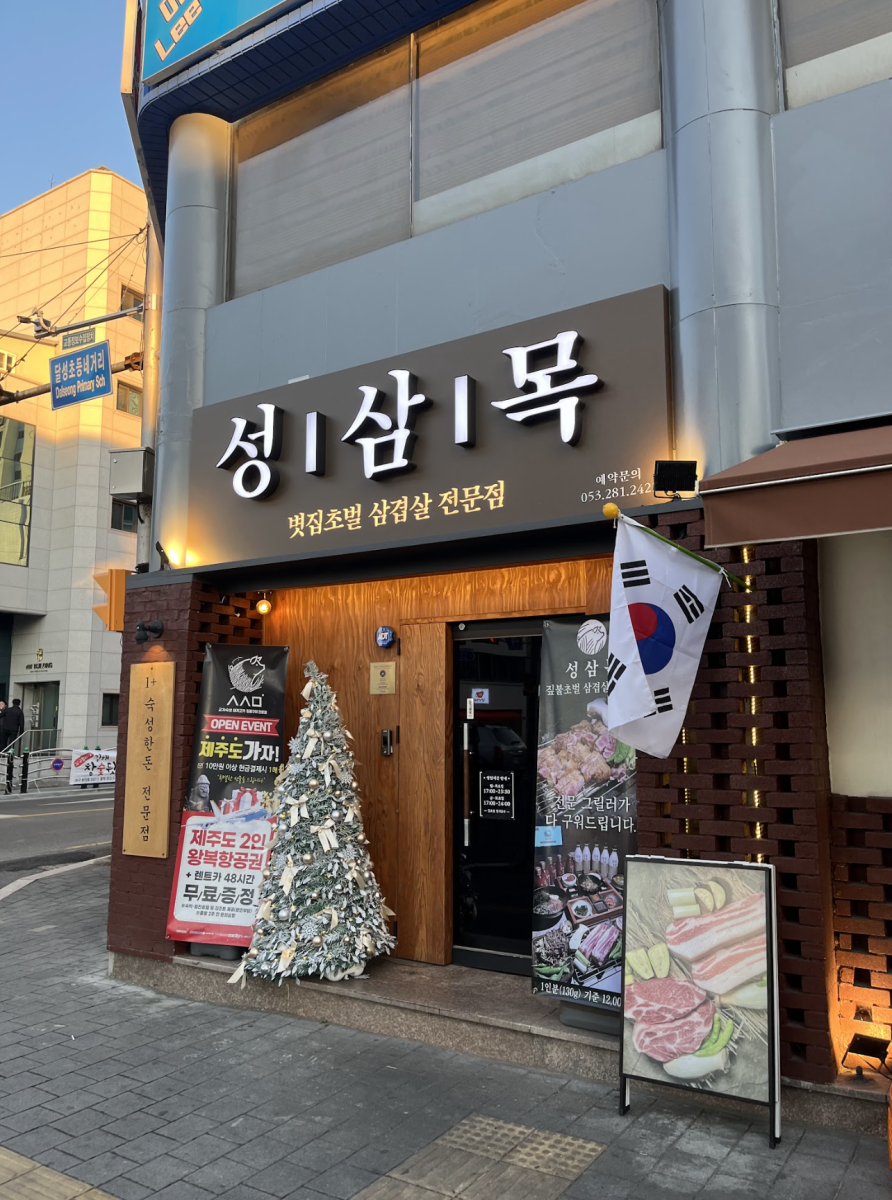
A Korean flag flutters outside Seongsammok (성삼목), a restaurant in Buk-gu, just north of central Daegu. Beneath this seemingly decorative display lies a more controversial message that grabs pedestrians’ attention: “No-Chinese Zone.”
Last October, Seongsammok announced on its official social media that it would refuse service to Chinese customers. The post stated, “It’s fine for Korean customers to be loud in the restaurant, but we don’t want Chinese customers being noisy,” and included the phrase “No China Restaurant (중국인 사절 가게).”
From a geopolitical perspective, Seongsammok operates in Daegu, a town marked by a strongly conservative political climate. Seonguk Bae, the owner, said the policy mirrors both personal experience and social sentiment. “I have worked in the food service industry and have served many Chinese customers. I was already aware that there is a widespread negative perception of them,” Bae said.
However, this discrimination transcends the borders of the peninsula’s most conservative city. A cafe in Seoul’s Seongsu-dong, a major tourist district, also declared that it would not accept Chinese customers. The controversy intensified after a Chinese influencer denounced the policy as discriminatory, which prompted widespread commentary on the potential surge of xenophobia in South Korea.
Public reactions within the nation remain split: while many view the policy as discriminatory, others argue that private businesses have the right to refuse service. Some online commenters compared the practice to “no-kids zones” and claimed that owners are entitled to set their own rules, but were soon met with doubts on whether similar restrictions on Koreans abroad would be tolerable.
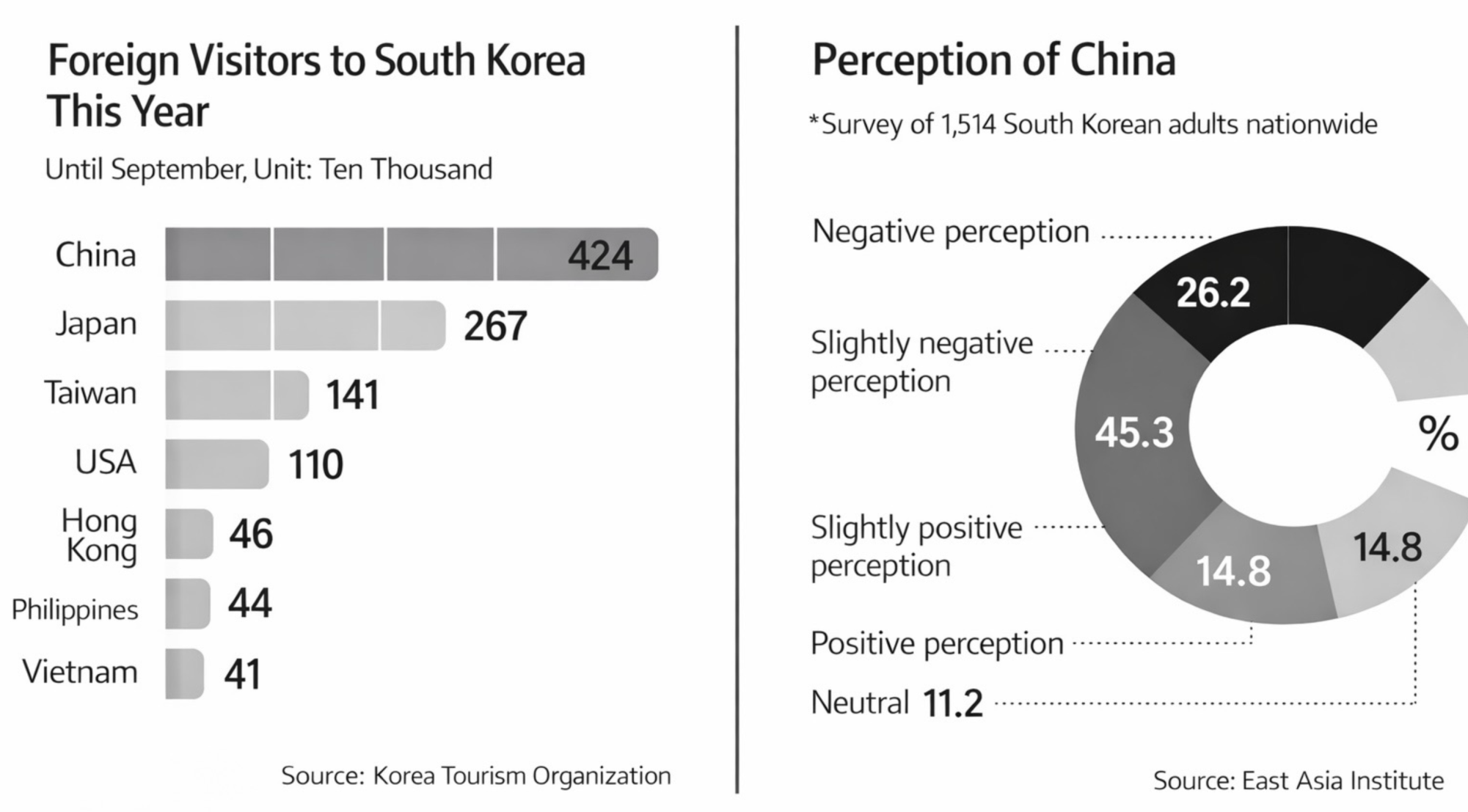
Taken together, these incidents reflect Korea’s deepening internal divide over its relationship with China. Across the nation, anti-Chinese sentiment has grown steadily – especially in the form of protests – after the government decided to allow visa-free travel for Chinese groups as a diplomatic strategy.
(Reina Li)
As these attitudes become more visible in daily life, some Koreans question whether the exclusion they condemn abroad should be tolerated at home. “I personally felt deep disappointment when I saw ‘No Koreans Allowed’ signs at certain stores in Tsushima, Japan,” said Gyuyeong Jeong, a customer at the restaurant. “I later heard that many Koreans felt similarly, and that tourism to Tsushima sharply declined. Korea is where people come from all kinds of backgrounds, so excluding groups like this is risky.”
Bae also acknowledged the controversy. “You could call it discrimination,” he said, “but the real question is whether there is a right or entitlement regarding it. Our business is neither a public enterprise nor state-owned, so… I believe this decision falls within our rights.”
Beyond a few overt cases, though, such incidents disclose a broader discriminatory trend experienced even by long-term immigrants in Korea. “I’ve experienced biased or prejudiced looks several times,” said Gwangsoo Joo, a Chinese immigrant with a working visa. “When that happens, I feel hurt, and at times, a sense of helplessness.” These anecdotes suggest the widespread embedment of racism across society.
Experts warn of broader consequences of such pervasive discrimination. “China is a highly important economic and trade partner for South Korea,” said Changbae Seo, a professor at Pukyong National University’s Department of China’s studies. “Promoting hostility toward Chinese tourists would have an extremely negative impact on the national economy.”
Seo further noted that such normalized discrimination could ultimately bring animosity among individuals and damage Korea’s global standing. “We must recognize that unnecessary anti-China sentiment… could ultimately come back to harm Koreans themselves,” Seo said. As more incidents like this emerge, Korea may find it difficult to criticize discrimination against its own citizens overseas.
Despite experts’ concern on the proliferation of exclusionary policies, South Korea offers limited legal grounds to regulate them. The Constitution places strong emphasis on freedom of business and contract, which endows private owners with broad discretion in choosing whom to serve.
The only formal response mechanism currently lies with the National Human Rights Commission of Korea, which can issue corrective recommendations when it determines that an establishment’s policy constitutes unjustified discrimination. In past cases, including rulings on “No Kids Zones,” the commission classified entry bans on specific groups as discriminatory.
Still, such decisions carry no legal force, and the nation now debates where to draw the line between free speech and harmful discrimination. The key goal for the future lies in the balance between respecting and maximizing business profit while fostering a safe, welcoming environment for everyone.
“As a responsible country operating within a global community, we need a greater understanding of other cultures and nations, along with the mindset and behavior required to coexist with them,” said Seo.