




































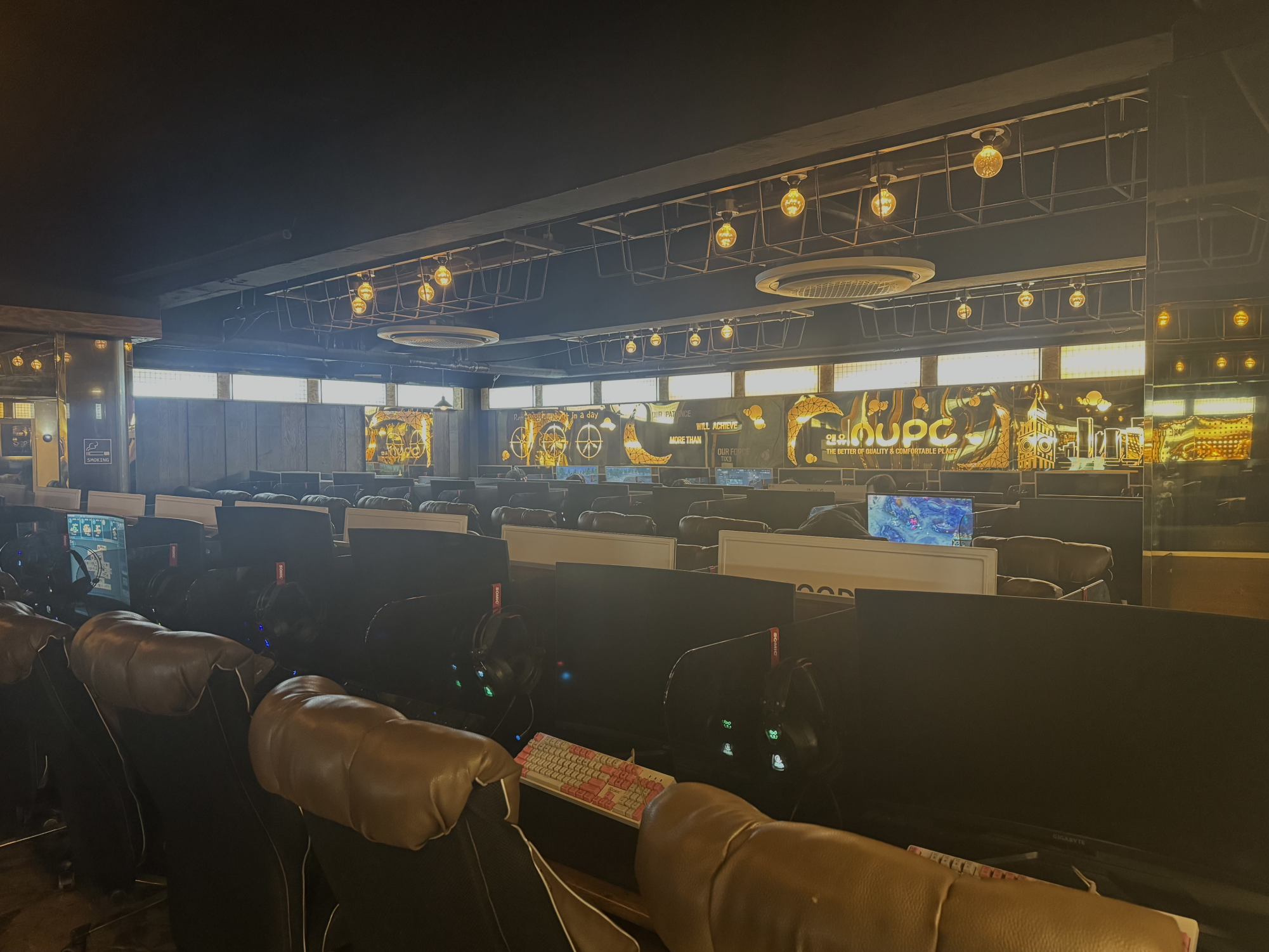
South Korea’s PC-bang – an internet cafe with hourly fees – once full of cigarettes – has now transformed into social hubs for teenagers to socialize between hagwon shifts. In these newly built environments, the peninsula’s E-sports market diverges from global trends – in an unexpected way.
Recently, the global E-sports market continued to rise in popularity and revenue, as shown in the continuous growth in viewership. Due to the young age demographics of professional gamers, ranging from 16 to 22 years old on average, main consumers consist of people in their teens and 20s.
Customer ages in PC-bangs reflect the industry’s core audiences. “We mostly see age groups of 10s and 20s, but we sometimes see the 40s and 50s who come to play retro games that they used to play,” said Hee-sang Lim, an employee at BOB PC bang.
Despite the rising trend, controversies persist over whether E-sports should be categorized under the genre of sports. Critics dismiss the professional as a hobby or a “waste of time,” more than a competitive job. The lack of physical activity also questions the legitimacy of E-sports from the traditional definition of athletics.
Even so, the expansion of the sports industry brings benefits. “It’s a different type of sport than the traditional type of sport we play. But recently this new industry has been getting a lot of spotlight and attention, and it’s a good thing a new industry is evolving,” said freshman Charlie Park.
The E-sports industry still has a long way to go, especially in terms of gender inequality. Over 95% of the professional gamers consist of men. This imbalance extends beyond players—audience demographics also remain heavily male.
“I like to watch E-sports and also play E-sports with my friends. Almost all the boys at our school, and I bet in other schools, play games. Playing games is what got us so close with each other,” said Hyunwoo Kim, a student attending Cheonggu High School.
In the peninsula, gender demographics in audiences deviate from global crowds. Southeast Asian countries and South Korea report the highest proportions of female viewers, at approximately 40%. In Korea’s League of Legends scene – the most prominent E-sports category in the nation – females account 64% of ticket buyers.
“For gender groups, around 80% consists of males and only 20% consists of females. It feels like more female individuals are interested in E-sports, but they don’t play as much,” said Lim.
This phenomenon surges from the “deokjil (덕질)” culture in the K-pop industry. Their fan practices, such as sending coffee trucks and designing short-form videos, blend as a center of a cultural product in E-sports, shaping the consumer culture for devotees.
“It’s interesting to see that there are more female viewers than males in League of Legends, because there are only one or two girls that play the game at our school, at least. However, I did notice lots of the girls have the goodies that E-sports companies sell,” said Kim.
As these two distinctive industries overlap, E-sports companies in the peninsula establish new revenue streams uncommon in global markets: adorable goodies, photo cards and uniform sales.
To attract these consumers, organizations leverage players as marketing, which sparked controversies on how promotional activities restrict athletes’ time to practice.
Despite these tensions, the continuous interest and growth form benefits. “It’s normal to have audiences, whether they are female or male. The gender really doesn’t matter, and the more the audience, the more popular E-sports get, which is a good phenomenon,” said senior Brian Cho.
While Korea’s idiosyncratic E-sports market still faces challenges, the blend of the gaming culture and K-pop fandom signals a bright future for fans, players, and companies to evolve on.